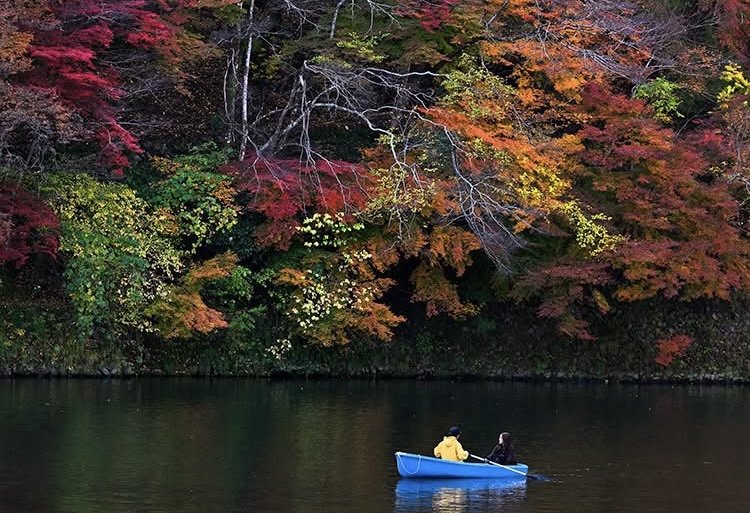

Everyone goes to Japan with some kind of itinerary — a list of places, food, and experiences they want to fit into the time they have. Ours was no different.
Looking back after a few trips, there are certain experiences that consistently stood out across seasons and cities. These are the ones I would personally prioritize again on a first visit.
1. Wear a Kimono and Slow Down
You can dress up in a kimono anywhere in Japan, but if there’s one place where this experience fits naturally, it’s Kyoto—especially in areas like Gion District or Higashiyama.
It looks simple from the outside—rent a kimono, take photos, walk around—but once you’re in it, the experience changes how you move through the city.
I have shared previously in detail The Kimono Experience in Japan (What No One Tells You).
2. Step Into Traditional Culture
There’s a moment in Japan where you realize culture isn’t something displayed for you—it’s something you’re briefly invited into.
Tea Ceremony (Stillness in Practice)
A Japanese tea ceremony looks simple, but once you’re inside it, everything slows down.
In Kyoto, beginner-friendly experiences like Camellia Tea Ceremony or Maikoya Tea Ceremony guide you through the process gently, without requiring prior knowledge.


Tip: Tea ceremony reservations often include kimono rental as part of the experience. After the ceremony, you can continue wearing the kimono until you’re ready to return it, as long as it’s before the shop’s closing time.
Samurai & Ninja Experiences (Hands-on History)
If tea ceremony is quiet and reflective, samurai and ninja experiences are the opposite—active, physical, and surprisingly educational.
Places like Samurai Kembu Theater or Ninja Experience Cafe focus on movement, posture, and technique rather than performance.

It feels less like entertainment and more like learning a historical language through your body.
Geisha Culture (Respecting Context)
In areas like Gion District, geisha (and maiko, their apprentices) are part of a real, living cultural profession.

If you want to experience this properly, structured performances such as Gion Corner (Kyoto) are a more appropriate and meaningful way to see it.
3. Stay at a Ryokan
A stay at a Ryokan can be one of the most grounding parts of traveling through Japan. You’ll find them all across the country—from cities like Kyoto, to lake towns like Kawaguchiko, to mountain regions like Hakone—each offering a slightly different version of the same idea: slowing life down.
A ryokan is a traditional Japanese inn featuring tatami-matted rooms, futon beds, yukata robes, and communal onsen baths. On a previous trip, we stayed at Aura Tachibana (Hakone) and chose the full-board option (Kaiseki dining). Not all ryokans are the same. The experience varies depending on where you stay.

In a city like Kyoto—especially around areas like Gion District or Higashiyama—the experience feels seamless. You spend the day walking through traditional streets, temples, and wooden architecture, and then return to a ryokan that continues that same atmosphere. There’s no contrast between outside and inside; it all feels like one continuous story.
In scenic regions like Hakone or areas around Mount Fuji, ryokans often lean into the landscape itself. Rooms, baths, and dining spaces are designed around views of nature, and the experience becomes as much about what you see outside the window as what happens inside the building.
In a modern city like Tokyo, staying in a ryokan feels very different. The contrast is sharper—you step out into a fast-moving city and then return to a quiet tatami room.
The Onsen Experience
One of the defining features of many ryokans is access to an Onsen.
Inside a ryokan, the onsen is usually a guest-only communal bath, and it becomes part of your stay, rather than a separate activity. This is different from standalone onsen towns like Hakone or Kinosaki, where the bathing itself is the destination.
There are also in-room private onsen baths, which feel more like personal relaxation than shared cultural experience. Note that no clothing is allowed in the onsen. So, if you are not comfortable with being naked around other people, this would be a good option for you.
What a Ryokan Stay Actually Feels Like

Check-in sets the tone immediately. Shoes come off. The pace slows down. Dinner is scheduled (if choosing half or full board option). There’s very little decision-making once you arrive.
One night is usually enough to experience the ryokan stay.
4. Kaiseki Dining
A Kaiseki, a traditional Japanese multi-course tasting menu, is one of those experiences in Japan that looks like fine dining, but behaves more like a timed sequence than a meal. A kaiseki emphasizes seasonal ingredients, meticulous preparation, and artistic presentation, often regarded as Japan’s haute cuisine. The menu is pre-selected so there’s no need to order dishes. You simply sit and enjoy the structured dining progression.


This was our included Kaiseki dinner at Aura Tachibana Ryokan.
Timing & pacing
Kaiseki is not flexible in pacing. Courses arrive in sequence, and the experience is designed so that you do not rush or pause it artificially.
At ryokans, dinner is often scheduled in advance and served either in a private dining room or directly in your room.
Seasonal logic
Each course reflects seasonality — not just ingredients, but presentation, texture, and even color tone. In Kyoto, places like Kikunoi Honten are known for this approach. Kaiseki feels most coherent in Kyoto or ryokan settings, where the environment already matches the pacing of the meal. In modern cities, it still exists, but it feels more formal than immersive.

5. Onsen Beyond Ryokan Stays
The Onsen experience changes dramatically depending on where you encounter it.

Whether onsen is:
- Urban
In Tokyo, places like Thermae-Yu turn onsen into a controlled wellness environment; it’s more like a spa system than a natural bath culture. - Themed
In Osaka, Oedo Onsen Monogatari recreates an “old town onsen” atmosphere. - Or Lived
In places like Hakone or Kinosaki, you move between baths, walk in yukata through streets, and the entire town becomes part of the bathing experience itself.
6. Do the Seasonal Things
One thing that becomes very clear to us after a few trips to Japan is that the experience is not static. It’s not just that the scenery changes — it’s that certain experiences (or food) only exist during specific windows of time. It’s about doing the seasonal things while you’re there.
- Spring
- If you’re in Japan during spring, cherry blossom viewing (hanami) becomes one of those experiences that naturally becomes part of your day.
- In places like Ueno Park or along Kyoto’s rivers and temple paths, you don’t really schedule it the way you would a museum or attraction; you just walk through it.
- People sit under trees, food stalls appear in temporary clusters, and even ordinary parks feel like they’ve been temporarily redesigned for that moment.

- Summer
- Summer in Japan changes the rhythm of the day. Heat pushes most activity into the evening, which is when festivals, fireworks, and outdoor food stalls start to define the experience.
- Autumn
- Autumn is the next most popular time in Japan, after spring.
- If spring is about moments, autumn is about movement.
- In Kyoto especially, walking becomes the main activity. Temple paths, hillside areas, and residential streets all shift visually, and what you would normally pass through quickly becomes something you slow down for. The scenery is just breathtaking!

- Winter
- Winter is where timing becomes even more important. This is when onsen experiences matter most — not just as a cultural activity, but because the contrast between cold air and hot water is part of what makes it feel complete.
- It’s also when quieter streets, fewer crowds, and colder air completely change how places feel compared to any other season.
What becomes obvious to us after a few trips is that you don’t get the “full version” of Japan in one visit. You get one part of it — depending on when you go. And the difference isn’t subtle. It changes what you end up doing every day, often without you planning it in advance. Which is why these seasonal experiences matter less as “nice extras” and more as things you only get a chance to do if you happen to be there at the right time.
7. Experience a Festival
One of the things worth trying at least once in Japan is attending a local festival while you’re there. Not because it’s a famous attraction, but because the atmosphere changes completely once the sun starts going down.
What normally feels orderly and quiet suddenly becomes louder, brighter, and much more alive. Streets fill with food stalls, people walk around in yukata, music carries through entire neighborhoods, and areas that felt calm earlier in the day stay crowded late into the night.
Summer festivals
Summer festivals are probably the easiest for first-time visitors to experience. You’ll find rows of food stalls selling grilled seafood, yakitori, candied fruit, takoyaki, and festival snacks that somehow taste better when eaten while standing outside in a crowd. People aren’t rushing, most are simply walking slowly, eating, talking, and staying out much later than usual.
- In Kyoto, festivals feel especially immersive because the setting already looks historic even on a normal day. During Gion Matsuri in July, traditional floats move through streets lined with lanterns, wooden buildings, and crowds wearing yukata.


- Tokyo festivals feel completely different. Everything becomes bigger, denser, and louder.
- At Sumida River Fireworks Festival, huge crowds gather along the river hours before sunset, carrying mats, food, and drinks while waiting for the fireworks to begin.
- Another famous one is Sanja Matsuri in Asakusa, where portable shrines move through packed streets with an energy that feels much more intense and physical than Kyoto’s slower-paced festivals.
- Osaka festivals tend to feel louder and more energetic overall. The atmosphere feels less restrained than Kyoto and less overwhelming than Tokyo — somewhere in between.
- During Tenjin Matsuri, crowds gather around the river for boat processions, festival performances, and fireworks that continue late into the evening. And because Osaka already has a more outgoing street culture, the festival energy feels very natural there.
Other festivals worth planning around
Some festivals are so visually unique that they’re worth planning an entire trip around if timing works.
- Nebuta Matsuri is known for giant illuminated floats moving through the streets at night, which looks completely different from the more traditional atmosphere in Kyoto.
- During winter, the Sapporo Snow Festival transforms the city with massive snow and ice sculptures that feel almost unreal in person.
- And in spring, cherry blossom festivals across the country blur together with hanami gatherings, food stalls, and nighttime illuminations that make parks feel completely different after sunset.
8. Eat Beyond Familiar Food (even the “same” food tastes different here)
One of the easiest assumptions to carry into Japan is that you already know the food! You’ve probably had ramen before. You’ve had matcha. Maybe even wagyu. But once you’re there, it becomes very obvious, very quickly, that what you’ve had elsewhere is only a version of it. Even the most familiar things taste different — and sometimes unexpectedly better.
Matcha
Matcha isn’t just something you drink in Japan — it shows up everywhere, in ways that feel almost excessive at first. You’ll see matcha ice cream, matcha lattes, matcha latte floats, pastries, desserts, and even savory dishes like matcha pasta.


But what actually stands out isn’t the variety — it’s the quality. In Uji, where much of Japan’s highest-quality matcha is produced, the taste is noticeably different. It’s deeper, smoother, and far less bitter than what you typically find outside Japan.
When you sit down at Nakamura Tokichi Honten, it becomes very clear why people go out of their way for it. It doesn’t feel like something trendy or decorative. It feels intentional.
Ramen (the same dish, but never really the same)
Before traveling through Japan, I thought of ramen as one thing with small variations depending on the restaurant. Most of the ramen we have eaten in the U.S. are with tonkotsu broth. But once you start moving between cities, you realize how quickly it changes.
In Tokyo, there’s a wide variety of ramen: rich and heavy in one place, light and citrusy in another. It’s not defined by a single style.
- At Ichiran Ramen, the experience itself is part of what you remember — individual booths, minimal interaction, everything structured and controlled. It almost feels like a system designed to let you focus only on the food. It’s worth noting there are many Ichiran Ramen locations, and they are all open around the clock.
- At Afuri, the yuzu ramen is lighter, brighter, and doesn’t sit heavy at all, which is not what most people expect when they think of ramen.
- And then there’s Tsukemen — where the noodles and broth are served separately, and you dip each bite into a thicker, more concentrated soup. The first time you try it at places like Rokurinsha or Fuunji, it feels like a completely different way of eating the same dish.
As you move into Kyoto, the experience changes again, where the broth is more delicate.
- At Menya Inoichi, the broth leans into fish-based dashi. Another more classic spot to try is Honke Daiichi Asahi, where they feature soy-based broth & grilled pork, plus dumplings.
- Aburasoba Nekomata in Gion is my secret place (hesitated to share because I don’t want it to get too crowded.) The place has only maybe 3 tables and a few more seats against the wall. Besides the noodle soup, they also serve the dry ramen (my favorite) as well as fried chicken rice (my kids’ favorite). It’s a hole-in-the-wall ramen joint that you will not regret trying! We come here at least once every time we visit Kyoto.


By the time you get to Osaka, that restraint gives way to something more immediate. At Ramen Yashichi, the flavors feel fuller, the kind of bowl that feels satisfying right away without needing to think too much about it.
And then in places like Kawaguchiko, ramen almost stops being the point entirely. Instead, you find yourself sitting down for something like hōtō at Houtou Fudou — thick, flat noodles in a miso-based broth with vegetables. It’s closer to a stew than ramen, and after spending time outside near the lake or looking out at Mount Fuji, it feels exactly right for that moment. Take note that this is a very popular place so it’s recommended to arrive early before lunch or dinner times. Note that they might close early if ingredients run out.
Soba
If ramen feels expressive and varied, soba is the opposite. In places like Hatsuhana Soba, the experience becomes simpler — handmade noodles, light broth, minimal presentation. It’s the kind of meal you notice more when everything else around you slows down, especially in quieter places like Hakone.
Wagyu
Being Texans, we have had our share of beef!! But nothing prepared us for the wagyu we would taste in Japan!! The texture is softer, the fat melts more cleanly, and the overall experience feels more balanced than versions you might have had in the U.S. or Australia.

- At places like Gyukatsu Motomura, you get a more casual introduction — lightly breaded, quickly seared, and finished to your preference.
- At Yakiniku Jumbo, the experience shifts toward grilling, where you control how each piece is cooked.
- At Yakiniku Genchan in Shinjuku, besides some of the best A5 wagyu, also offers a few Korean dishes like sundubu-jjigae, Korean pancake, cold noodles. They offer both the all-you-can-eat (only Australian or American beef) or a-la-carte options. There are 2 nearby locations in Shinjuku, and are open 24/7.
But what stayed with me just as much wasn’t a high-end meal. It was a simple grilled beef skewer at Maruyama Park, about 1000 yen, from a small BBQ stall. It wasn’t planned, but it ended up being one of those small moments that sticks with you.
Yakitori, Teppanyaki & everything in between
Not every meal needs to be something you research in advance. Yakitori is one of the easiest ways to experience everyday food culture — simple grilled skewers, eaten casually, often in small spaces. Teppanyaki, on the other hand, turns cooking into part of the experience. At Ukai-tei, the preparation becomes something you watch.
- Omoide Yokocho Memory Lane (Tokyo) is a great place to try all sorts of skewers. Shops are very small, often have tiny upstairs seatings. But it’s a fun alleyway to walk and try out grilled skewers.


- At Nishiki Market in Kyoto, you’re basically walking through one long stretch of food from beginning to end. Small grilled seafood stalls, wagyu skewers, yakitori, matcha desserts, and sit-down restaurants all blend together across several blocks.
9. Theme Parks, TeamLab & Immersive Worlds
At some point while traveling through Japan, you start to notice that “theme park” isn’t always the right way to describe what you’re experiencing. Some places are closer to structured storytelling environments. Others feel like walking inside a fictional world that has been physically rebuilt around you. And what’s interesting is that you don’t really need to be deeply into anime or games to appreciate it.
TeamLab (where the space reacts to you)
Experiences created by teamLab were probably the first time I felt like I wasn’t just looking at an installation, but actually inside one: Light, sound, projection, and movement all blend together in a way where boundaries disappear quickly. You don’t stand in front of an artwork — you move through it, and it changes based on where you are.
What surprised me most wasn’t the technology itself, but how unforced it feels. You just enter, and your presence becomes part of the environment. Even if you’ve seen similar digital art installations elsewhere, the scale and immersion here feel different — less like a gallery, more like stepping into a shifting world. There are several options of TeamLab to experience: (more in other cities; I’m only listing ones in the Tokyo, Kyoto and Osaka).


- Borderless (Tokyo) – a museum where artworks move between rooms and interact with other pieces.
- Planets (Tokyo) – a popular exhibit where you walk through water and a garden, immersing your body in light and flowers.
- Botanical Garden (Osaka) – an outdoor nighttime exhibit in Nagai Botanical Garden.
- Biovortex (Kyoto): a newer location focusing on bio-interactive art.
Anime & manga spaces (where culture becomes physical)
You don’t have to be an anime fan to feel how present it is in Japan. In places like Akihabara, it’s not something you go looking for — it’s already part of the streets, the stores, the visual density of everything around you.

At first, it can feel overwhelming if you’re not familiar with it. But after a while, you start to see it differently — not as niche culture, but as something deeply integrated into everyday commercial and creative life. Then there are places like the Ghibli Museum, where everything slows down completely. Instead of loud visuals or crowded spaces, it feels more like stepping into a carefully constructed narrative world.
Nijigen worlds (where fiction becomes geography)
There are also places where fictional worlds are rebuilt in physical form, not as exhibitions, but as environments you can walk through. At Nijigen no Mori, you’re not just observing references — you’re moving through spaces designed around those worlds. It feels less like a theme park and more like stepping into a controlled version of a story.
10. Experience the Shinkansen & Specialty Trains
One of the most quietly impressive things about traveling through Japan is how quickly you stop thinking of distance as an obstacle. At some point, getting from one city to another doesn’t feel just a “transit” anymore; it’s an experience.
Shinkansen
The Shinkansen is often described as fast, but what stands out more isn’t the speed — it’s the calmness that comes with it. Seating is assigned, boarding is orderly, and even movement inside the train feels intentional rather than chaotic.
Regional and specialty trains
Outside of the Shinkansen, Japan also has themed trains that somehow make transportation feel like part of the attraction, and they’re not just for kids.
You’ll see everything from Pikachu themed trains to anime collaborations, sightseeing trains, retro-style trains, and even luxury scenic trains with huge panoramic windows. There are also themed trains connected to series like Demon Slayer, One Piece, and seasonal collaborations that rotate throughout the year depending on the region. The Hello Kitty themed train will end its service on May 17 after 8 years of operation.


And then in places like Hakone or Kawaguchiko, the experience shifts from themed to scenic. Larger windows, slower routes, mountain views, lake views… you end up spending more time looking outside than at your phone.
Final Thoughts
After visiting Japan in different seasons, I think one thing that surprised me most was how certain moments became attached to specific places in my memory.

Even small things ended up becoming part of the memory of the trip — convenience store runs (that fried chicken at the 7-Eleven is super good!), stopping for desserts we weren’t planning to buy, or finding ourselves spending much longer somewhere than expected because the atmosphere felt good and nobody wanted to leave yet.

And after going back multiple times, I don’t think the appeal is really about trying to “finish” Japan anymore. The experience changes too much depending on the season, the pace of the trip, and even what you happen to stumble into that day. And honestly, I think that’s part of what keeps making people want to come back.


