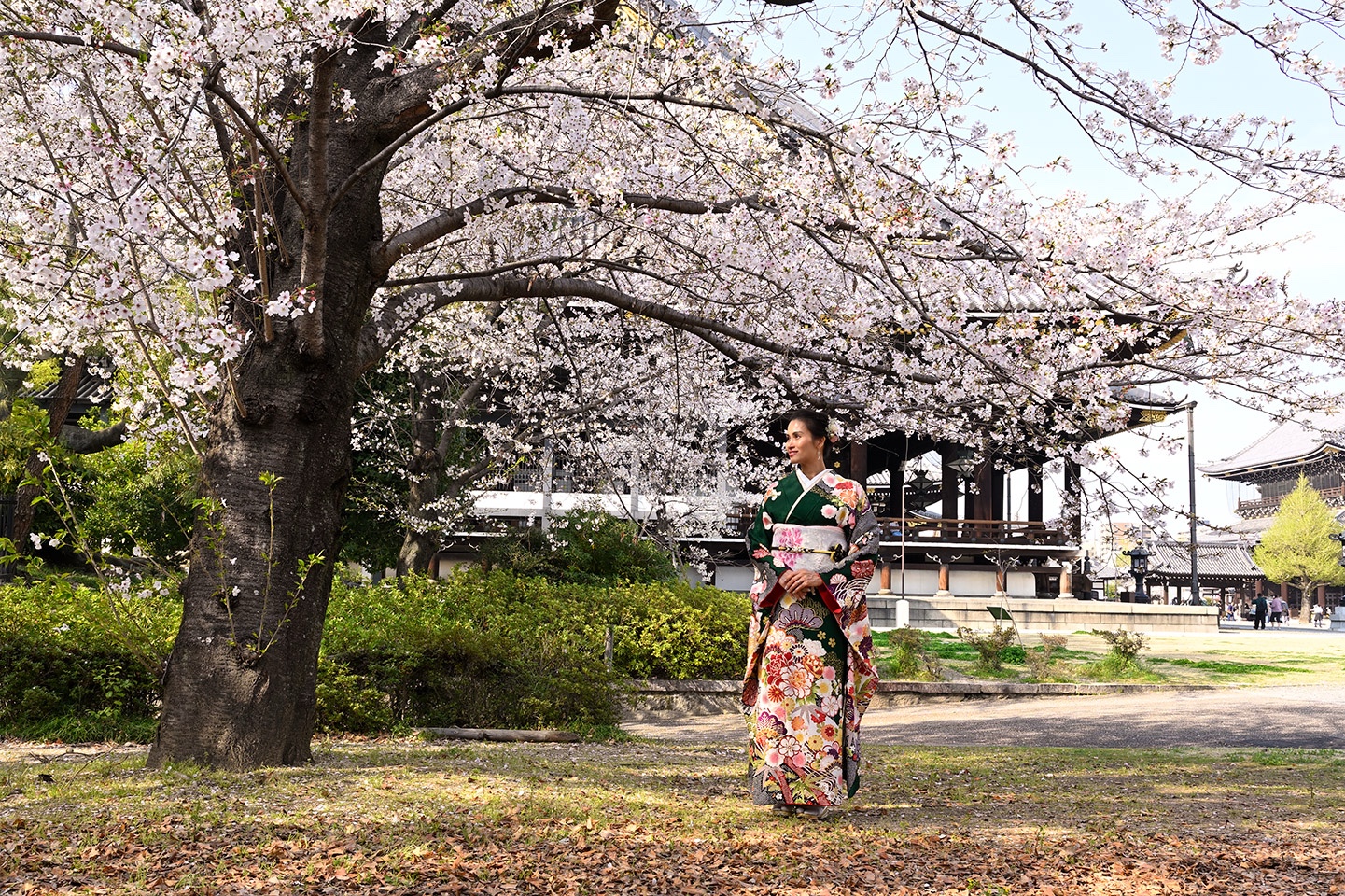

A kimono experience in Japan offers a deep, immersive dive into traditional culture. The experience feels very different when you approach it with curiosity rather than just as a photo opportunity.
The word “kimono” literally means “a thing to wear,” but historically, it evolved into a highly structured garment during Japan’s Edo period (1603–1868). What someone wore—the fabric, sleeve length, patterns, even how it was layered—reflected age, marital status, season, and social standing. It wasn’t just clothing; it was a form of communication.
In everyday modern Japan, kimono is no longer a daily wear. Most locals reserve it for specific occasions—coming-of-age ceremonies, weddings, tea ceremonies, or traditional performances. Summer brings a more casual version, the yukata, which you’ll still see during festivals and fireworks nights.

So where do travelers fit into this?
In cities like Kyoto, it’s become pretty normal to see visitors in kimono, especially in areas like Gion or Higashiyama. Locals generally don’t see it as inappropriate—as long as it’s worn respectfully. In fact, many appreciate the effort to engage with Japanese culture beyond sightseeing.
Your trip to Japan would be incomplete without having a kimono experience of your own. Below are some tips to help you plan the experience.
Timing & Hours
Most kimono rental shops operate around 9:00 AM – 6:00 PM, with flat day rentals rather than hourly pricing. So, there’s no need to rush through the day, as long as you return the rental before closing. Needless to say, be courteous and reserve time for changing, instead of coming right at the closing time.
There are also lesser-known options: early morning reservations and next-day returns.
Some shops will open as early as 5:00 AM, but only by advance booking. They open specifically for your reservation, which is what makes it possible to experience places like Kiyomizu-dera before the crowds arrive.
Some shops allow next-day returns for an additional fee, typically it is counted as another day’s rent. This option is especially useful if you want to take photos in the late evening when the day-time tourists have left.
I have personally used Hikari Kimono Rental in Kyoto, and everything felt smooth and well organized. It is conveniently located just a few minutes from Maruyama Park and Yasaka Shrine.
Pricing
Kimono rental pricing varies. In places like Kyoto, especially at well-located or more curated shops, most standard kimono rentals today typically fall somewhere in the ¥8,000–¥15,000 range.
At Hikari Kimono Rental, simpler styles were around ¥12,000, while more formal options like furisode ranged from about ¥25,000 to ¥40,000 depending on the design and fabric.
That difference in price isn’t random. It usually reflects the fabric quality, the range of designs available, and how much time and care goes into the overall experience—from dressing to styling to how rushed (or not rushed) the process feels.
Hair styling is often included or available as an add-on for women, and while makeup options exist at some shops, they vary widely in style and intensity.
Wooden sandals (geta) and accessories (hair pins, purse, umbrella, fan) are typically also included in the pricing.

Pricing is almost always per day, not per hour. Whether you wear it for a few hours or the entire day, the cost stays the same. If you start late, you’re essentially paying the same price for a much shorter experience. But if you begin early, you not only get better value—you also get the quieter, less crowded version of the place that makes the whole experience feel completely different.
The Full Process
From selecting your kimono, to getting dressed, to hair styling, the full process takes at least an hour or more.
This is one of the most common things first-time visitors underestimate. It’s better treated as the first activity of your day, not something you squeeze between plans. This way, you also benefit the full day rental, instead of just a few hours.
If you already have a specific style in mind, some shops allow you to pre-select your kimono in advance, which makes the experience much smoother on the day itself.
Kimono Types, Yukata & Options for Men & Kids
Most shops offer a range of styles that change depending on season and formality.
Standard kimono are the most common rental option, with simpler fabric, while more formal styles such as Furisode feature longer sleeves, richer textiles, and more elaborate patterns that stand out in photos.


In the summer months, many shops switch or expand their selection to include yukata, which are lighter cotton versions of kimono. They feel more relaxed, easier to wear in the heat, and are especially common during festival season or evening walks.


Most rental places also cater to men and kids (girls and boys), offering simpler but still traditional styles. Men’s kimono tend to be more understated in design, but also include the full outfit, obi belt, footwear, and accessories adjusted for comfort and movement.

Cultural Sensitivity
Some shops offer makeup services, but context matters.
Light makeup is common and perfectly fine. However, geisha-style makeup (white foundation, stylized eyebrows, red lips) is generally reserved for professional geisha/maiko performances or dedicated transformation studios.

This isn’t about strict rules—it’s about cultural context. In Kyoto especially, geisha culture is still a living profession, not a costume aesthetic. If you’re interested in that world, it’s better experienced through structured performances such as Gion Corner, where it is presented properly and respectfully.
In short, geisha-style makeup is frowned upon for those who are not geisha/maiko.
Best Places to Experience Kimono
Kimono experience is best suited in traditional settings, temples, or gardens.

A few to consider:
Tokyo
- Asakusa – Senso-ji
Kyoto
- Gion District/Higashiyama
- Kiyomizu Temple, Yasaka Shrine, Sannenzaka and Ninenzaka
- Gion Shirakawa
- Fushimi Inari Taisha
- Kennin-ji Temple
Osaka
- Osaka Castle Park
- Hozenji-Yokocho
- Katsuoji Temple
Small Tips
- If you’re choosing between morning and later slots, always go earlier. Even a few hours completely changes the atmosphere in Kyoto’s most photographed streets.
- Confirm acceptable payment options. Some shops only accept cash payments. Some even accept USD if you don’t have enough JPY, but beware of very low exchange rates.
- The shops will store your street clothes and bags for you until you return the kimono. Considering this, obviously, don’t bring anything valuable to the shop or leave any important documents.
- Some kimono rental shops also offer photo packages, where a photographer takes you to a few quieter spots for a more curated photo session.
- For the most economic option, kimono rental is often included in the tea ceremony (for the entire family). Note that standard kimono is typically the only available option.

Final Thoughts

Wearing a kimono in Japan isn’t just about how it looks in photos—though it certainly photographs beautifully. You walk differently. You plan your movements more intentionally. Even simple things—like sitting, climbing stairs, or choosing where to go—become more deliberate.
If you approach it thoughtfully, it becomes less about “trying on a costume” and more about stepping, briefly, into a different rhythm of life.
It doesn’t have to be perfect. You don’t need to know all the rules. But a little awareness—of timing, context, and cultural sensitivity—turns this from just another activity into something that actually stays with you long after the trip ends.
