You often hear that Europe is expensive, and that’s mostly true! However, today, I want to share with you a beautiful and friendly European country that is not expensive! Best known for captivating coastline, beautiful islands, crystal-clear waters and white-pebble beaches, as well as the ancient walls and Roman ruins, Croatia is the destination you don’t want to miss.
It would impossible to see the country in a week, so we picked a few coastal cities and island for our itinerary. The article would be too long if I go in detail about each city that we visited, so I will save them for another article. This article entails about Croatia in general and lightly touches on a few highlights.
How to get there?
By Air
The most popular airports for international flights are in Dubrovnik, Split and Zagreb. Since all three of those cities are worth visiting, I usually choose the one with the most convenient flight time/duration with the most reasonable price, of course, and then plan my itinerary from there!
By Land
If you choose to travel by train from another European country, then the main destinations in Croatia you can reach by rail are Zagreb, Pula, Rijeka, and Split (must travel via Zagreb).
The vast majority of the country’s visitors also get to Croatia by car. Millions of visitors from neighboring countries such as Italy, Austria, Germany, Czech and Slovak Republics drive to Croatia each year.
By Sea
From certain Italian ports, including Trieste (nearest), Venice, Cesenatico, Ancona, Pesaro and Bari, you can get to Croatia by ferry.
From these Italian cities, it is actually much more convenient to travel by ferry instead of train. We had originally planned to travel from Croatia (via Zagreb) to Italy (Trieste or Venice) by train, and it would be less convenient (1 stop with train change at midnight) and take longer than using the ferry.
Where to stay?
Both hotels and Airbnb are affordable. We personally stayed at Airbnb more than hotels since the homes provide more space, and as previously noted most hotels in Europe charge per headcount, so it’s less economical sometimes.
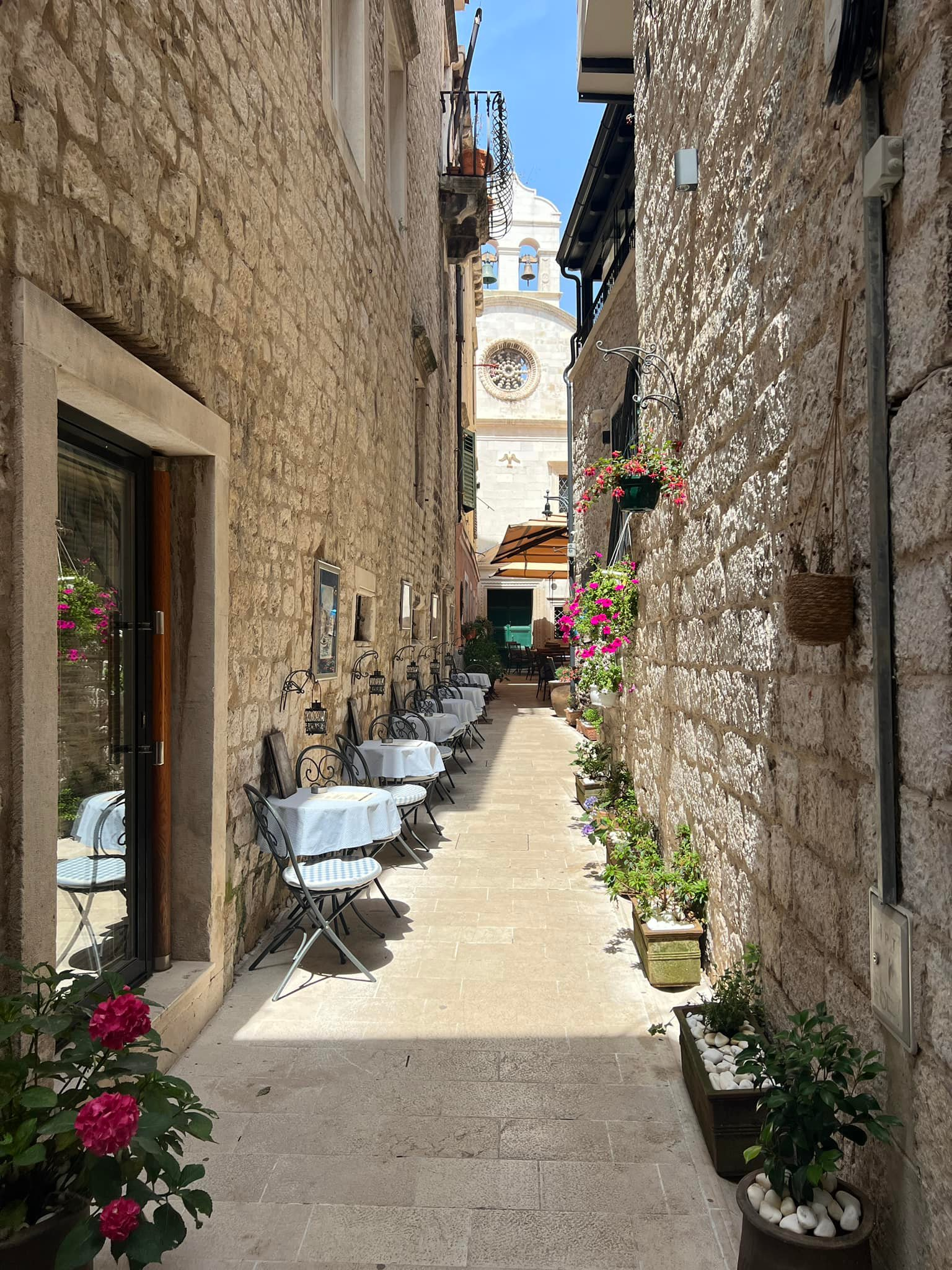
During our trips to Europe, we mostly stay in old towns, where most attractions are within walking distance. We also like the small-town feel, where strolling through alleys and walking up and down the steps are simply fantastic – and you’ll find a lot of these in these Croatian coastal cities.
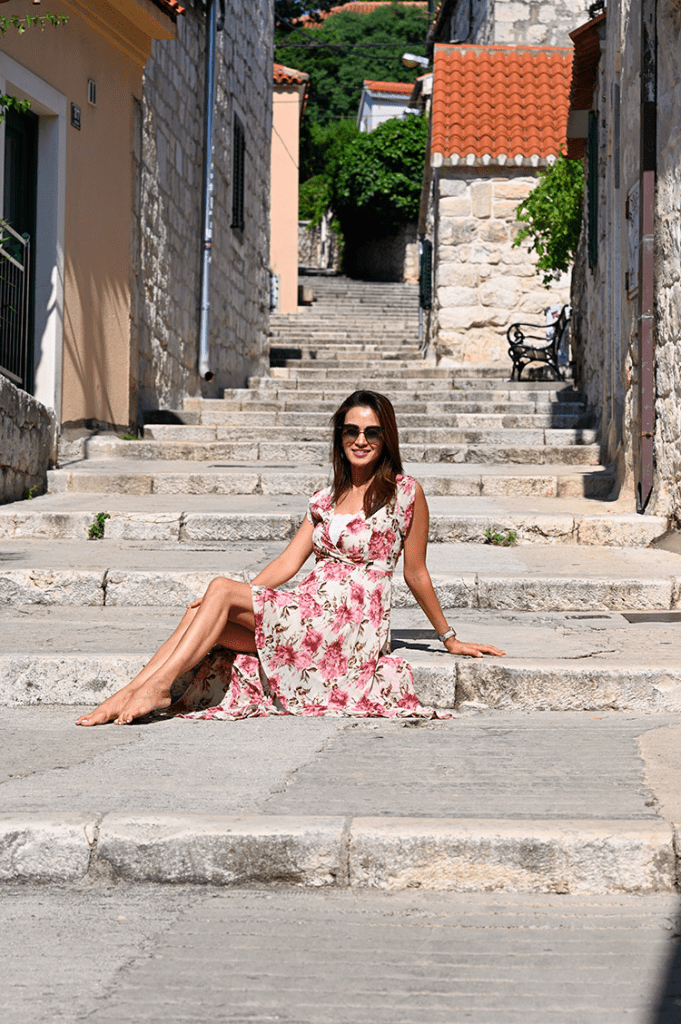
Note that the neighborhoods are tightly-spaced, and often rental homes can only be reached by foot (through cobblestone alleys and steps). Therefore, be mindful of the number of luggages you plan to bring.
Transportation
Croatia has an extensive bus and ferry network. It is advised to purchase the tickets in advance and arrive early to ensure you have a spot since most are on a first-come-first-serve basis. Since we were doing a road trip, we rented a car at Split airport, so we didn’t use the bus. However, we did use the ferry to get to Brac island. Note that there are ferries that allow cars and some do not, so pay attention to this when you purchase your ticket. There is a small charge for having a vehicle on the ferry. Note your arriving and departing ports as they may not be the same!!
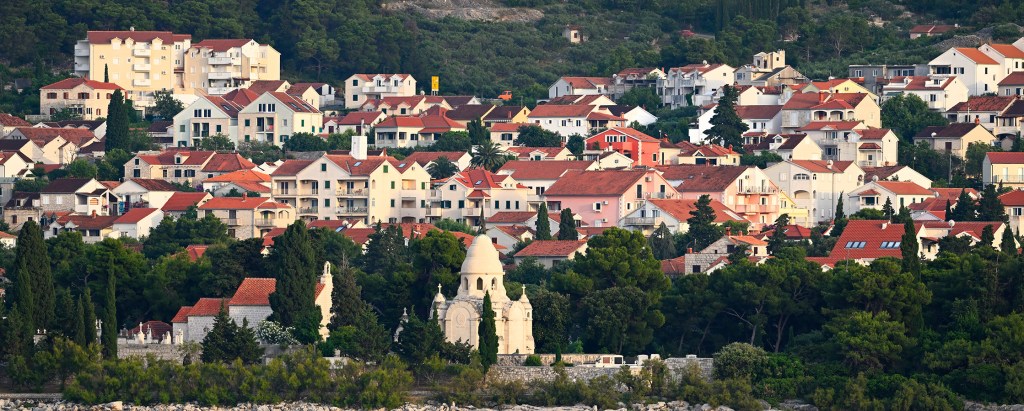
There are many beautiful coastal cities in Europe. So what sets Croatian cities apart? The famous orange roofs!! The tradition of using orange roof tiles in Croatia dates back to the Roman Empire, when terracotta tiles were commonly used for roofing. Terracotta is a type of clay that is baked at high temperatures, resulting in a durable and waterproof material that is ideal for roofing. (As always, I’ll spare you of the history lesson so you can learn about the Roman impact on Croatia as you explore the country yourself!) Traveling by ferry allows you to see the city/island from the sea, which gives you a terrific view of the cities with the iconic orange roofs. If you have a drone, this would be an amazing opportunity to use it to capture the cityscape from above (remember to check rules and regulations on using drones; they are not allowed everywhere.)
The road condition in Croatia is very good, so travel by car is quite easy. Big cities like Split sometimes have traffic jams, but that’s not uncommon of big cities in general. The road system is also not difficult so GPS works well (if you ever drive in Boston, you’ll know what I mean when GPS doesn’t work well!!) Parking, however, is another story! If you haven’t, hop over and read Off to see the world… where I retold a story of when we first arrived in Split and couldn’t park the car. There are public parking lots that you can be accessible 24 hours a day. There are also metered parking (pay via an phone app) that you can use after the businesses are closed. These metered parking spots along the side of the road are the most convenient and cheap, if you can move your car before 6 am! After 6 am, you will be ticketed (personal experience!!) What happens if you got a ticket? You can pay for it online, so not too worry; no need for a court-hearing or go somewhere! Paid parking would be your best option, as parking in the neighborhood is very limited. The neighborhood roads are very narrow with cars parked along both sides, making it almost impossible to drive if you are not accustomed.
Good-to-know things
Language
The main language used in Croatia is Croatian, with a small population that speaks Serbian, Bosnian, Italian, Hungarian and Albanian. Most Croatian speak English well, so it’s easy to navigate and communicate.
Currency
Although having been a member of the EU since 2011, it was only since January 2023 that euro became the currency used in Croatia, which is the only official means of payment in Croatia.
Weather
Weather in Croatia is pleasant. There are distinct seasons where Winters aren’t too harsh and Summers are not boiling! We visited in June and the temperatures were in the 70s to lower 80s (Fahrenheit). However, the beach wasn’t warm enough! The Adriatic Sea in June was still too cold, although it is reported that the surface temperature could reach 80°F during the peak of Summer. Locals didn’t seem to mind and find the water to be refreshing. We live in the southern US state, and are used to very warm water.
Safety
Croatia is a safe country with low crime rate. Nevertheless, it is always wise to be alert in crowded places (as in any big cities) where pickpocketing could be the most prevalent issue.
Uber/Taxi
Uber operates in most major towns and cities, including Zagreb, Dubrovnik, and Split. When using taxis, make sure to use use a licensed car either from an official taxi rank or ordered from your hotel.
Tipping
I previously noted in 10 things to know when visiting Europe that gratuity is usually included in bills (such as at restaurants) in most countries in Europe, but Croatia isn’t one of them! Once at a restaurant, I wasn’t sure if the service charge/tip was included, I asked the waiter and was told it was not and would appreciated very much. Although Croatia’s tipping culture is more laid-back than other countries, it’s customary to include 10-15% gratuity in restaurants, spas, etc. Even for services that don’t normally expect tipping such as taxi rides or tour-guides, rounding up the bill or adding a few euros to the bill would be appreciated.
Beach-ready
Croatia is famed for the rocky coastline and for the many islands scattered in the Adriatic Sea, whose beaches are pebbly. Therefore, be sure to pack a pair of water-shoe.
Nude beaches are very popular in Croatia, sometimes just a short walk along the shore from a non-nude beach!! Most nude beaches are marked with “FKK”, which stands for “Frei-Körper-Kultur“, a German phrase that means “free body culture”. (Why German? Germans make up the biggest number of tourists in Croatia.) Even at a non-nude beach, it is common to find topless bathing (the same in France!)
Dress appropriately
Even though dress codes are relaxed on the coast, Split, Dubrovnik and Hvar have passed laws against walking around the city in swimwear or bare-chested. And as with any other respectable and sacred sites , avoid baring shoulders and thighs when visiting. Hats should be removed upon entering churches.
Water
I have found that in many European countries, tap water is safe and very drinkable. You can even refill your reusable water bottles at public drinking fountains. This is not only convenient, but economical!
Emergencies/Important phone numbers
Dial 112 for general emergencies, 192 for police, and 194 for an ambulance.
Visit-worthy cities
I hope the general information provided here are useful to you. Now that you are equipped with good-to-know tips, I will share with you our itinerary and the visit-worthy cities, in the next post. Croatia has a lot to offer, be it history or natural wonder. So be on a look out for that next airfare deal to Croatia, and let me help you plan for your next adventure!

 Making Memories
Leave a reply to What to do in Croatia – Making Memories Cancel reply