

Gone are the days when I carried around a “Travel on a Budget” book (yes, the same one I mentioned in Off to see the world… ) or printed every single itinerary and hotel confirmation before the trip. Back then, I loved the feeling of flipping through real pages—scribbling notes in the margins, highlighting spots I couldn’t wait to see. These days, everything is stored on smartphones, so being without internet for even a day can make us feel disconnected—or downright dysfunctional. I learned that the hard way after two days without power or Wi-Fi during an Arctic blast!
Let’s be honest—it doesn’t even take a full day to feel the panic creeping in. Sometimes an hour offline at home is enough to trigger it. Now imagine that happening overseas, when every reservation, map, and must-see spot lives on your phone. Having access to data isn’t a luxury anymore—it’s a lifeline.
So, how do you stay connected while traveling abroad? Over the years, I’ve tried just about every method: carrier plans, local SIMs, eSIMs, and pocket Wi‑Fi. Here’s what I’ve learned, based on real experiences—and yes, some mishaps along the way. Let’s break down the options by convenience, cost, and availability to see what really works best.

Table of Contents
💡International Roaming Plans from Your Carrier
If you’re with a major U.S. provider like AT&T, Verizon, or T-Mobile, chances are they already have an international plan ready to go. The convenience is unbeatable—you land, turn on your phone, and everything just works. No swapping SIMs or fiddling with eSIMs after a long flight.
Most plans charge by the day, which adds up fast if everyone in your group activates it. One simple trick I’ve learned: turn on the plan for just one phone (mine!) and use it as a hotspot for everyone else. It’s not lightning fast, but it works perfectly for Google Maps, messaging, and quick searches on the go.
Here’s a quick peek at how the big carriers compare:
| Carrier | Plan Name | Cost | High-Speed Data | Billing Cap / Limit | Extras & Notes |
|---|---|---|---|---|---|
| AT&T | International Day Pass | $12/day for 1st line, $6/day for each additional | Full-speed domestic plan | Capped at $120/line per billing cycle (after 10 days, rest of month free). Cruises: $20/day, capped at $200. | Pay only for days used. One phone can share as hotspot for the group. |
| Verizon | TravelPass | $10/day (or $5/day in Canada & Mexico) | ~2 GB high-speed/day, then slower | No monthly cap — charged per active day | Works in 210+ countries. $100/month plan available for long trips (20 GB high-speed). Cruise & in-flight passes ~$20/day. |
| T-Mobile | Built-in international data (on most Magenta/Go5G plans) | Included in plan (free) | Usually 2G–3G speeds; upgrade for faster data via day pass | N/A | Unlimited text + data in 200+ countries. Add high-speed pass for faster speeds. |
💬 From My Experience:
Using one phone as a hotspot was a lifesaver, but the main limitation is that everyone has to stay close. But it keeps us connected without the headache—or the bill shock. Still, for solo travelers, it’s absolute convenience: land, turn it on, go. Even for a family/group: that first-day peace of mind of landing and having data instantly? Maps, messages, directions—it was all right there. Totally worth it.
💥Mishap alert! This has happened to me on more than one trip—Vietnam and Switzerland come to mind. Even though my phone shows perfect signal, nothing worked. Luckily, my husband’s phone was unlocked, so we got a local SIM card for his phone as a backup. So whenever my phone didn’t work, at least we weren’t completely lost—and I really mean lost, because we relied on it for maps and directions almost constantly. In Switzerland, this little fiasco hit us two or three times over our one-week trip, each bout lasting maybe an hour. Vietnam was similar. Those brief moments of helplessness really reminded me how much we take connectivity for granted!
📱Local SIM Card
Cheap, reliable, and perfect for solo travelers—but there’s a big caveat: your phone must be unlocked. If it’s still tied to a carrier or not fully paid off, a local SIM simply won’t work.
It also takes time—sometimes a lot of time—especially if shops are closed or there’s a language barrier. But if you’re staying in one country for a week or more, it’s a great way to “live local.”
💬 My Take
Only worth the hassle if your phone is unlocked. Otherwise, it quickly becomes a stressful extra task right after a long flight.
💥Mishap alert! If you’re using an older iPhone model and don’t have that tiny needle to remove the SIM card!! I mean, who carries that pin with them?!!
🌐eSIM
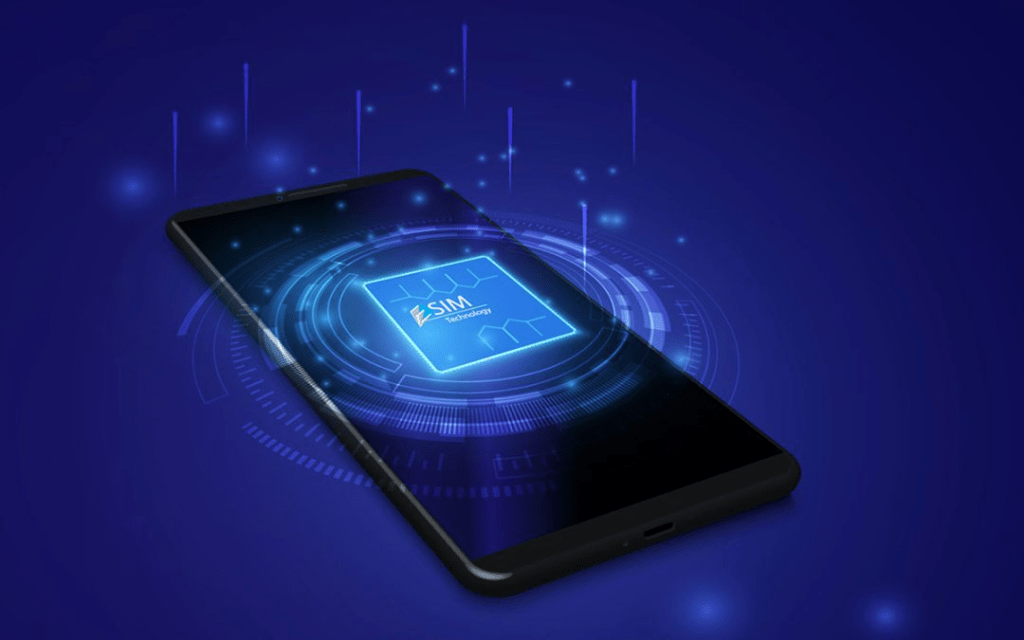
The eSIM is a modern dream—no trays, no tiny SIMs, no hunting for a kiosk. You just buy a plan online, scan a QR code, and you’re connected. Again, your phone must be unlocked. Not every device supports eSIM yet, and carrier locks will prevent it from working.
Perfect for multi-country trips or longer stays. Switching plans mid-trip is easy, and you avoid juggling multiple physical SIMs.
💬 My Take
If your phone is unlocked, eSIM beats a local SIM for speed and flexibility. If it’s locked, a single shared international roaming plan—become your fallback.
💥Mishap alert! Even though my husband’s phone was fully paid off, it wasn’t automatically unlocked. We only realized this when we tried to add an eSIM… and it failed. Cue the panic.
We had to request the unlock through AT&T’s website, but it wasn’t instant. First, they sent a link to his email that had to be clicked within 24 hours. Then came the dreaded waiting game—up to 48 hours for the phone to actually unlock. It was frustrating, stressful, and honestly a huge hassle, especially when we had just landed after a long flight. Lesson learned: don’t assume a paid-off phone is unlocked—always double-check before traveling.
📶Pocket Wi‑Fi
I discovered pocket Wi‑Fi in Japan, and honestly, I don’t know how we traveled without it before. One device connected all of us—my husband could wander around, the kids could play games, and I could plan the next stop—all without depending on one phone.
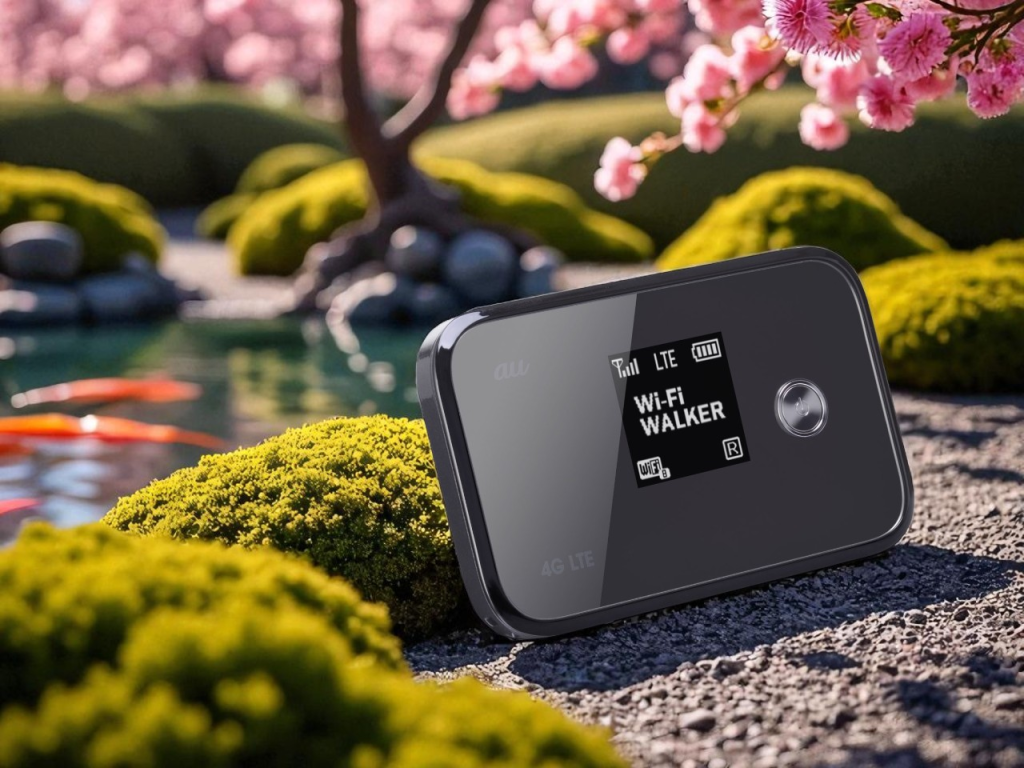
The major advantage over a shared phone hotspot? Anyone can take the pocket Wi‑Fi with them when leaving the hotel (during our trips, my husband usually goes out very early to hunt for the best photo shots at sunrise). No relying on one phone, no draining a single battery, and no juggling multiple hotspots.
Tip: Although almost all airports provide free Wi-Fi, I’d just like to have access to data without having to sign up anything at the airport. For Europe, certain providers give an option to have the device shipped to your home address for a small shipping fee. That way, you can order in advance, bring it in your carry-on, and activate it as soon as you land.
Downsides: you need to keep it charged and watch it carefully (as not to lose it.) Rental fees can add up, and they’re a bit bulky (imagine having to carry a pocket Wi-Fi device and an extra battery pack.) But for a group, it’s often cheaper and more convenient than individual roaming plans.
💬 My Take
Pocket Wi‑Fi is a game-changer for groups. My husband can go explore while the kids and I stay connected at the hotel—no one tied to a single phone. The freedom is worth carrying the extra device. Each pocket Wi-Fi device typically supports up to 10 devices. So, if you have a large group, this is when you benefit the most.
💥Mishap alert! There are limited and unlimited plans to meet your needs and budget. However, note that even unlimited plans slow down after you hit a certain data threshold. We didn’t realize this… until it happened, right in the middle of our road trip in Europe. Thankfully, our provider included a backup SIM card to switch out when speeds slowed, so we swapped it in a hurry. But the lesson was immediate—and painful: no more streaming for the kids in the car!
⭐ Convenience / Cost Table – Solo vs Group
| Option | Solo Convenience | Solo Cost | Group Convenience | Group Cost |
|---|---|---|---|---|
| International Roaming | 10/10 | 7/10 | 8/10 | 7/10 |
| Local SIM | 7/10 | 9/10 | 6/10 | 8/10 |
| eSIM | 9/10 | 8/10 | 7/10 | 7/10 |
| Pocket Wi‑Fi | 8/10 | 7/10 | 9/10 | 8/10 |
💬 Personal Take / Summary
- Solo Travel: The carrier international plan or eSIM usually wins for convenience. Pocket Wi‑Fi works too, but it’s extra gear to carry and may not be worth it unless you need faster speeds. Local SIMs are cheap, but only if your phone is unlocked (so is the case for eSIM).
- Group Travel: Pocket Wi‑Fi shines. One device connects the whole group, keeps one phone free, and allows anyone to go out while the rest stay connected. Shared carrier plans work too, but hotspots tied to one phone can be limiting if the group splits up.
🌍Stay Connected Abroad – Quick Comparison

| Option | Icon | Solo Travel | Group Travel | Key Takeaways |
|---|---|---|---|---|
| 1. International Roaming Plans | 📱 | Convenience: 10/10 Cost: 7/10 | Convenience: 8/10 Cost: 7/10 | Land and go. One phone can share hotspot. Great for short trips; T-Mobile free basic data. |
| 2. Local SIM Card | 💳 | Convenience: 7/10 Cost: 9/10 | Convenience: 6/10 Cost: 8/10 | Cheap, reliable, but phone must be unlocked. Hard to manage multiple SIMs for groups. |
| 3. eSIM | 🛰️ | Convenience: 9/10 Cost: 8/10 | Convenience: 7/10 Cost: 7/10 | Fast, flexible, perfect for multi-country trips. Everyone must have unlocked, compatible phones. |
| 4. Pocket Wi‑Fi | 📶 | Convenience: 8/10 Cost: 7/10 | Convenience: 9/10 Cost: 8/10 | Ideal for large groups. Everyone connects, someone can leave hotel with device. Extra gear to carry. |
💡 Quick Visual Tips:
- ✅ Solo traveler: Go with carrier plan or eSIM. Minimal gear, fast setup.
- ✅ Group/family: Pocket Wi‑Fi usually wins. Free roaming plan hotspot is good, but limited if group splits up.
- ⚠️ Unlocked phone required for local SIM or eSIM. Always check before departure.
- 🔋 Keep devices charged! Hotspot and pocket Wi‑Fi can drain quickly.
💡 Pro Tips for Staying Connected Abroad
- Track your data: Apps like My Data Manager help you avoid surprises.
- Hotspot wisely: Limit background apps on all devices to save data.
- Check eSIM compatibility: Not all phones support it; make sure yours is unlocked.
- Use offline maps as backup: Even the best plan can fail.
- T-Mobile’s free data isn’t fast: Works for messaging/maps; consider high-speed pass for heavier use.
- Airport kiosks aren’t always open: Check arrival times if relying on local SIM.
📝 Final Thoughts
Staying connected while traveling doesn’t have to be complicated—or stressful. A little planning goes a long way: grab a local SIM, explore eSIM availability, check your phone’s roaming options, or have a pocket Wi-Fi device shipped to you before the trip. Even when tech hiccups happen, there’s usually a simple workaround, and sometimes those little bumps lead to unexpected adventures. I hope you find these tips, from my own experiences and mishaps, helpful. At the end of the day, being connected isn’t just about Wi-Fi or signal bars—it’s about peace of mind, keeping in touch with loved ones, and having the freedom to enjoy every moment of your trip.




 Making Memories
Leave a comment