
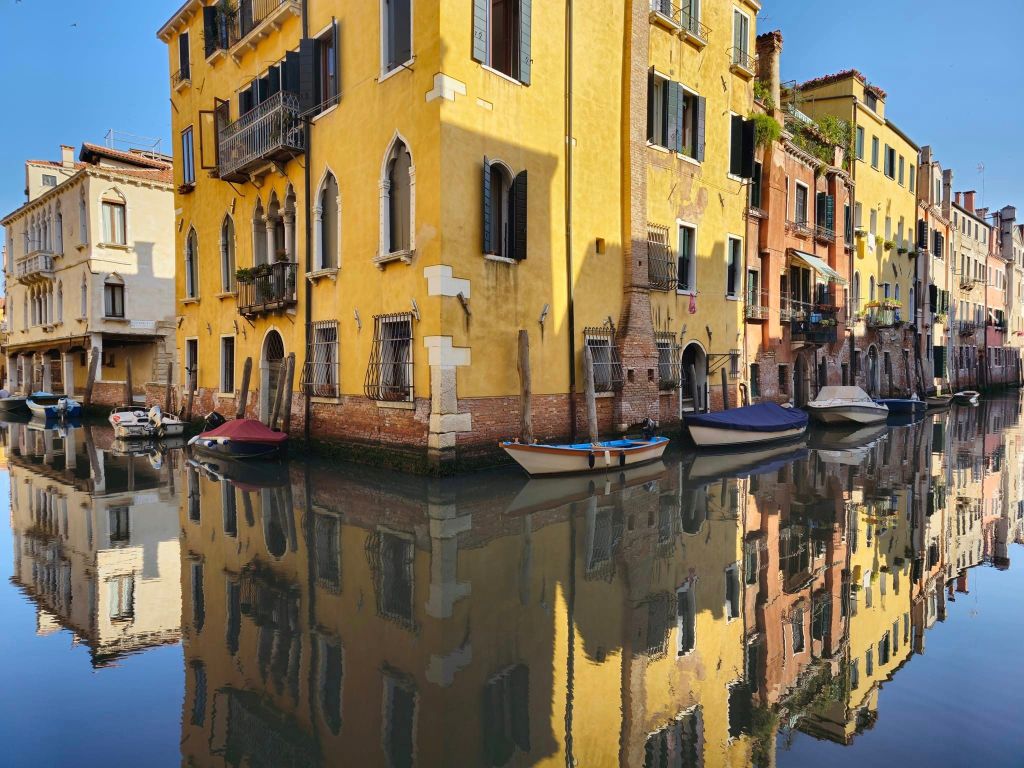
If you have visited Las Vegas, then you would have seen that the Venetian Resort is a tribute to the famed city of Venice. Some of the most famous landmarks of Venice were recreated as part of the hotel. However, the Venetian Resort could only give you a glimpse of what the real Venezia (Italian for Venice) has to offer.
Known for the iconic gondola rides, winding canals, and stunning architecture, Venice is rested on 118 small islands, connected by over 400 bridges and a complex network of 170 boat canals. As such, it captures the impression of a magical floating city in the Northern end of the Adriatic Sea. Venice was a major financial and maritime power during the Middle Ages and the Renaissance. Today, it remains a major Italian port in the northern Adriatic Sea and is one of the world’s oldest tourist and cultural centers.
- My Story
- How to get there
- How to get around
- Where to stay
- What to see
- Shopping in Venice
- Dining
- Best time to visit
My Story
I have visited Venice twice: once during my first trip to Europe and recently just last year. Venice has a special place in my heart because there’s an interesting story behind my first visit there!
Per the story I have shared in Off to see the world…, my first trip to Europe was right after I graduated from college. Venice wasn’t even on my itinerary. I was traveling through Europe using the youth Eurail pass (ages under 26) and wanted to book a train to Parma to visit a family friend. Instead, the agent at the Rome station thought I had said “Pisa”. I only discovered I was on the way to Pisa when the train was already in motion. Luckily, it was very close to Rome, so as soon as I arrived in Pisa, I took the train back to Rome (per the agent’s suggestion, since Rome is a bigger hub). It was later in the day when I returned to Rome, so there was no more train to Parma. I had no hotel booked and didn’t plan to stay in Rome that night (back then, there was no smartphone; I traveled with an AT&T phone card). I was given a few options and Venice was one of them. So I made a call from a pay phone at the Rome train station to my family, then picked a late/early train to Venice around 2 a.m. that arrived around 6 a.m. (I will spare you from the drama of how my family in the U.S., Paris and Parma panicked because I never arrived in Parma as expected, and there was no way to reach me – a young American college graduate traveling solo!) Needless to say, it was quite memorable!!!
Let’s put aside my foolish days’ stories. I will share with you tips on how to make your visit to Venice memorable as well!
How to get there
By Air
- Venice Marco Polo Airport (VCE), located in Mestre, the Venice mainland. From VCE, you can take a bus/shuttle (Alilaguna), Uber/private taxi to Piazzale Roma. And only in Venice, you can take the water taxi from the airport to the one of the ports on Venice islands.
- Treviso Airport is the smaller airport about 25 km from the city, and usually used by the budget carriers like Ryanair. You can use the same bus/shuttle to the city.
By Land to Venice Mestre. Yes, while Venice is actually a group small islands in the Venetian Lagoon, Mestre sits on the mainland and regarded as a suburb of Venice. Mestre sits at the foot of the Ponte della Libertà, the 2.6-mile long bridge that brings visitors to Venice’s historic center. Cars are not allowed on the Venice islands, so you would need to return your rental car in Mestre. The most convenient place to drop off your car is Piazzale Roma. If you arrive at later hours, then dropping the car off at the airport is more ideal since car rental counters remain open later. From there you can easily get to your accommodation by Vaporetto (water bus). Our accommodation was about 10-15 minutes by foot from Piazzale Roma, so we didn’t need additional water bus ride. But do mind that there are lots of bridges with stairs, so if you have a lot of luggage, then walking long distances may not be ideal. Or of course, pack light!
In addition to driving, you of course can also get to Venice by train.
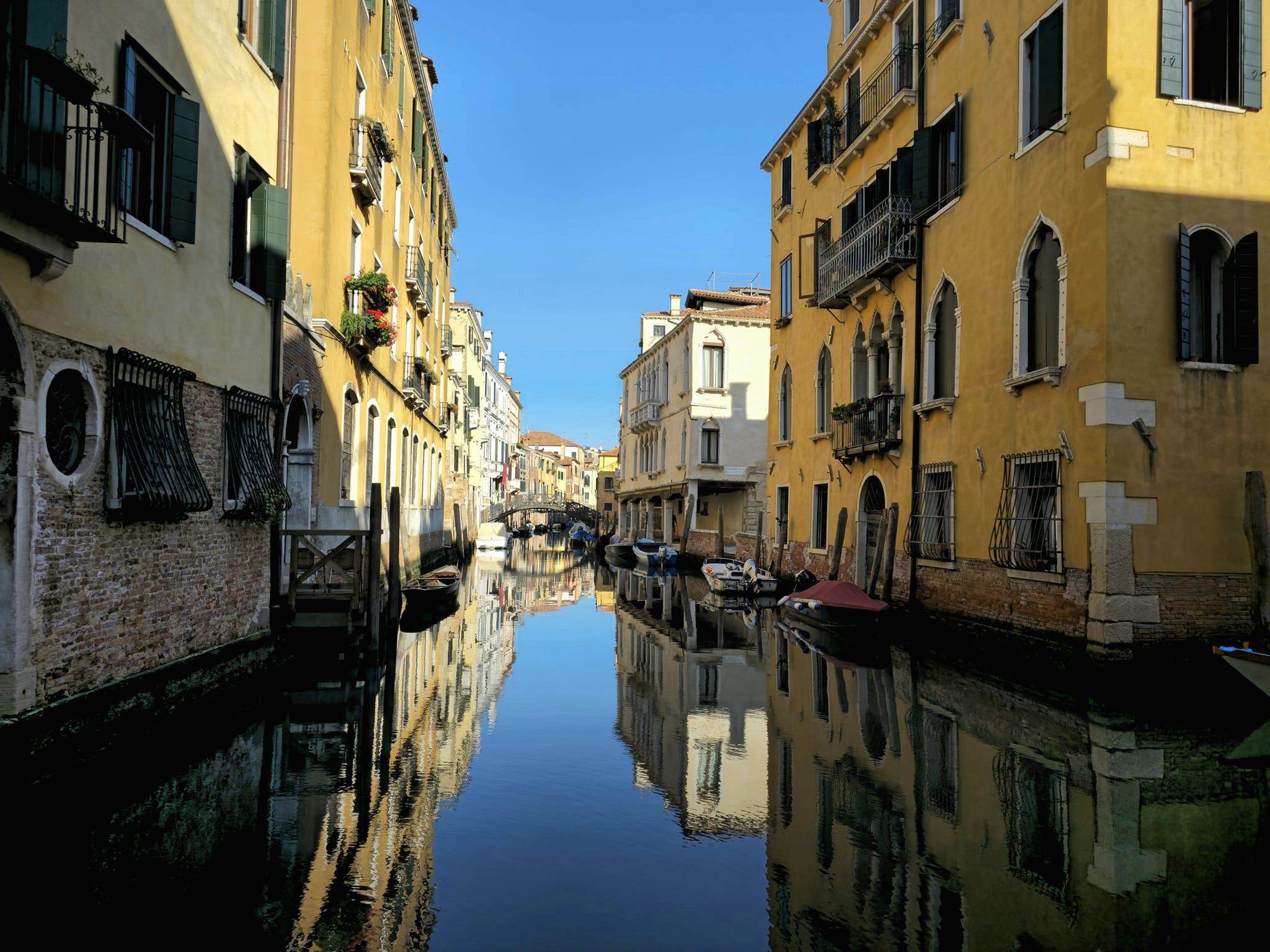
By Sea – There were cruises that stopped by Venice. But as of 2021, Venice was forced to ban cruises after damage to the lagoon threatened to put the city on UNESCO’s endangered list. Large boats cause pollution and erode the foundation of the city which already suffers from regular flooding.
We have arrived in Venice both by car and train, and have departed from the Marco Polo Airport, so we have experience in all 3 types of transportation in Venice. We have never taken a cruise in Europe, so can’t comment much on that front.
How to get around
As noted, cars are not allowed on the islands. Bikes, skateboards, rollerblades are also not allowed due to safety reasons. People generally just walk! So Venice is not ideal if you are not able to do a lot of walking and climbing up and down the steps from/to the bridges.
For farther destinations, you can use:
- Water taxis – You can order water taxis at the various tax stands throughout the city, or book them at the Consorzio Motoscafi. Their maximum capacity is 10 people, and the price will vary depending on the route.
- Gondola (private) is an iconic mode of transportation, but the price is quite hefty. If you’re on a budget and don’t mind sharing the gondola with other travelers, then Traghetto gondola is a cheap option to travel across the Grand Canal, which only costs about €2 (cash). You can either follow the Traghetti route map, or just look for a “Traghetti” sign.
Note that Traghetti operates during daylight hours only, often with a break for lunch. There are no official timetables: the boats travel back and forth almost continuously, taking two or three minutes to cross the Grand Canal.
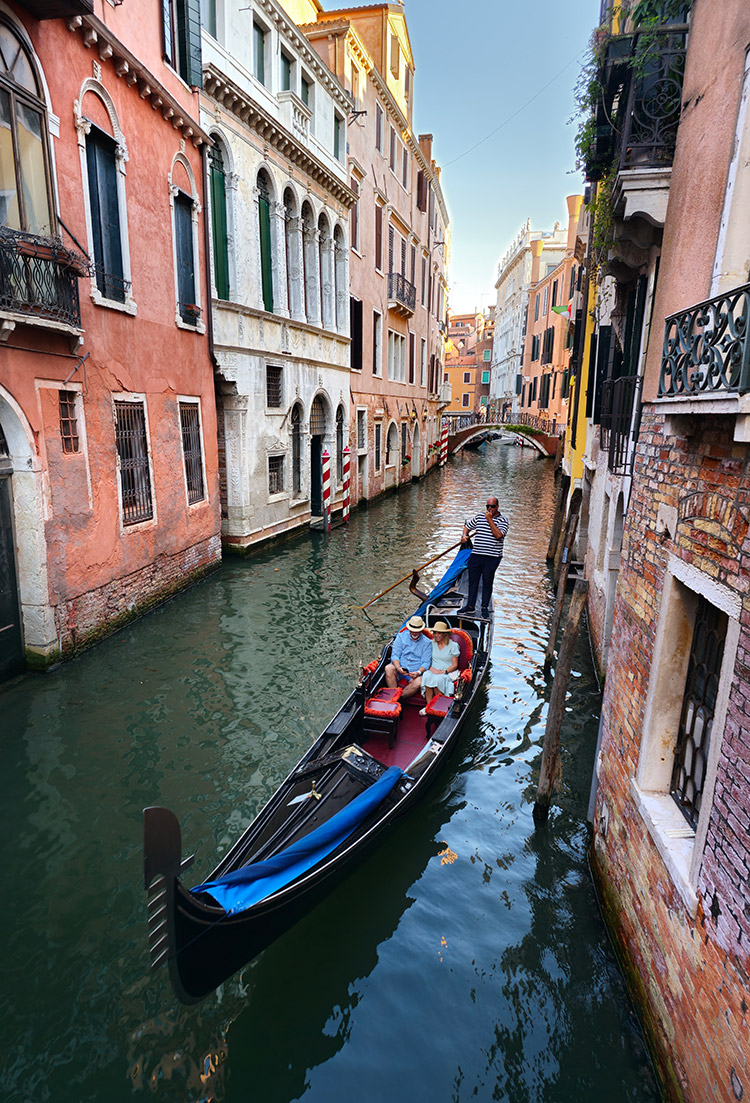
Inter-island transportations:
- Water Buses/Ferries – Vaporetti – operate 24 hours a day and connect Venice to other islands, including Murano, Burano and Torcello.
Where to stay
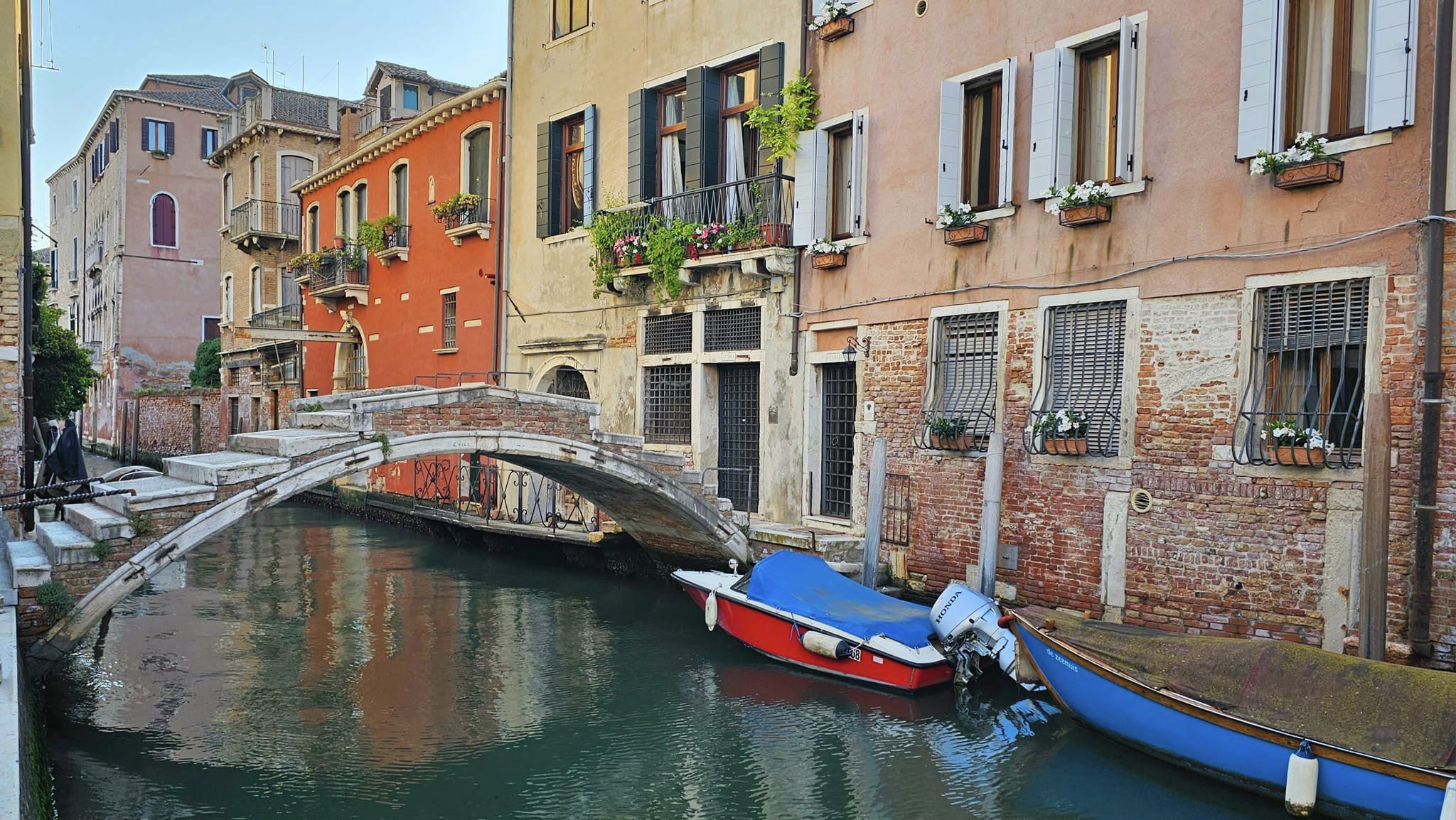
Accommodation prices in Venice are reasonable per European cost of living. Since it’s small and everywhere is full of history, I don’t think there’s a bad area. The area near the the top attractions like St. Mark’s Square, for example, would be more expensive, obviously. There are plenty of hotel and Airbnb options. Airbnb was more economical and convenient for our large group, from providing us with more space, allowing us to cook several meals and letting us do the laundry. Note that it’s typical in Europe not to have dryers, so reserve time to line-dry your clothes.
What to see
Is there a City Pass, and is it worth it?
If you plan to visit the museums, churches, monuments and use the public transportations, then I think it’s worth getting a city pass. There are options for a 1-day or multiple-day passes.
These landmarks are included in the Venezia Unica City Pass:
- The Doge’s Palace
- Museo Correr
- Ca’ Rezzonico
- Ca’ Pesaro
- The 18 churches included in the Chorus Pass
- Teatro La Fenice
- Fondazione Querini Stampalia
- Jewish Museum of Venice
- Venice Casino
- Naval Historical Museum
In addition to the entry tickets, city pass holders can have discounts to various exhibitions and excursions, some galleries, stores, cafes, bars and club. The pass also allows priority access (skip the line) to certain museums. Being able to “skip-the-line” is an amazing benefit as the lines to popular museums are always very long, and I mean about 2 hours standing under the scorching sun (I have always visited during the Summer, so it wasn’t pleasant at all.) Therefore, if the City Pass doesn’t include the priority access to the museum you want to visit, I recommend that you purchase the “skip-the-line” tickets.
For more details on the passes offered and their most updated prices, visit Venezia Unica City Pass website.
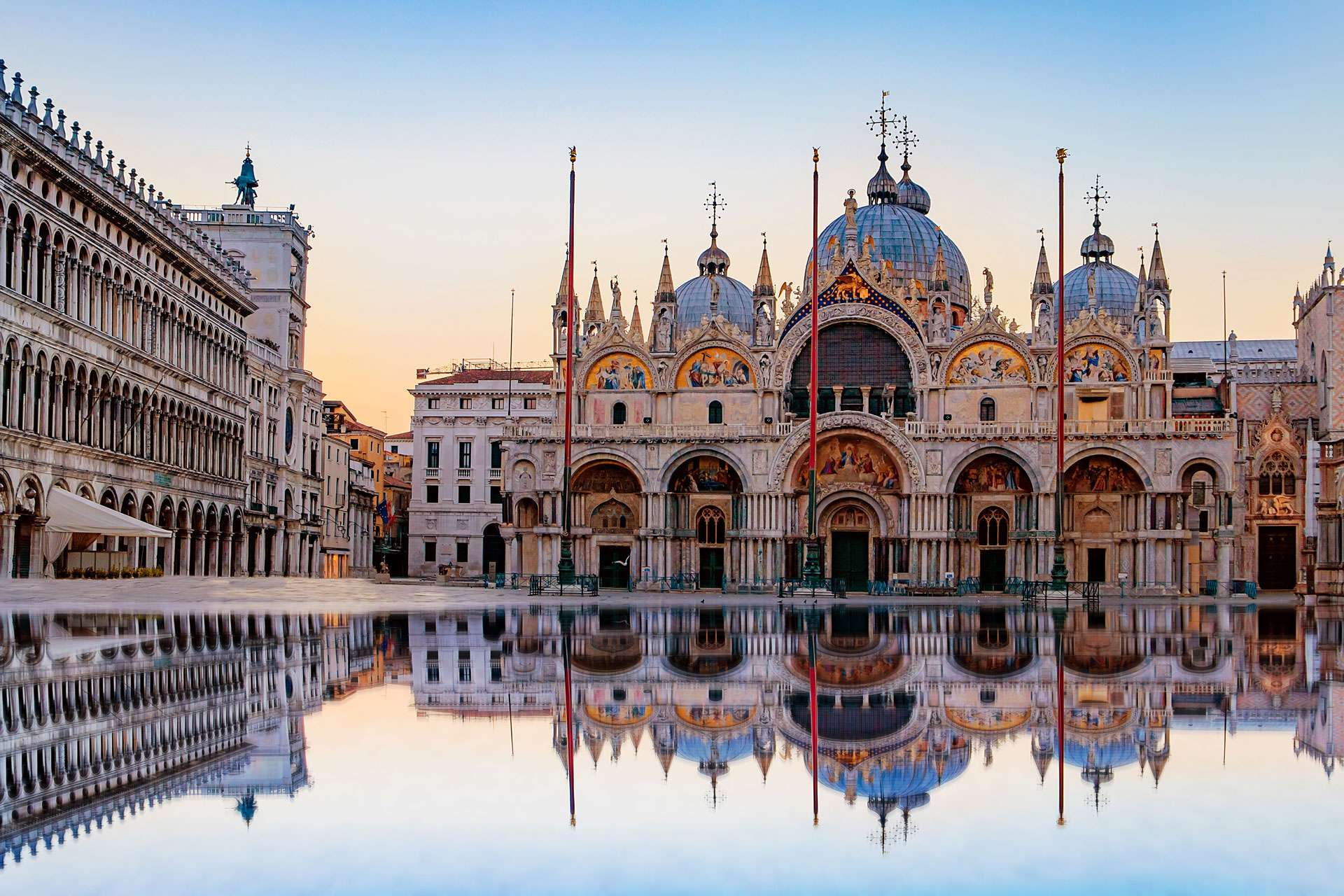
Photo from Google
Whether using a city pass or not, there are some landmarks and monuments you just cannot miss during your visit to Venice! These are the Top 10 on my list:
- Piazza San Marco – translated to be St. Mark’s square – is the starting point for many activities in the area. On the square are the Museo Correr, the Archaeological Museum, Torre dell’Orologio and the Basilica di San Marco and the adjacent Doge’s Palace. Close to the square is the Grand Canal. The square is especially notable for the galleries that surround it.
- Basilica di San Marco is the cathedral church of the Patriarchate of Venice. It is believed that St. Mark’s Basilica is the world’s most famous Catholic cathedral outside of the Vatican’s St. Peter’s Basilica and the Sistine Chapel. It is known as the “church of gold” and is renowned for its beautiful mosaic work. Considered as the number one attraction in Venice, it gets very crowded any time of the year. The optimal time to visit St. Mark’s Basilica is early morning, shortly after opening, or late afternoon, closer to closing time. Weekdays are less crowded comparing to the weekends.
- Doge’s Palace – also known as Palazzo Ducale – was home to the leader of the republic of Venice, the Doge. The palace highlights the masterpiece of Gothic architecture with Venetian influences.

Photo from Google
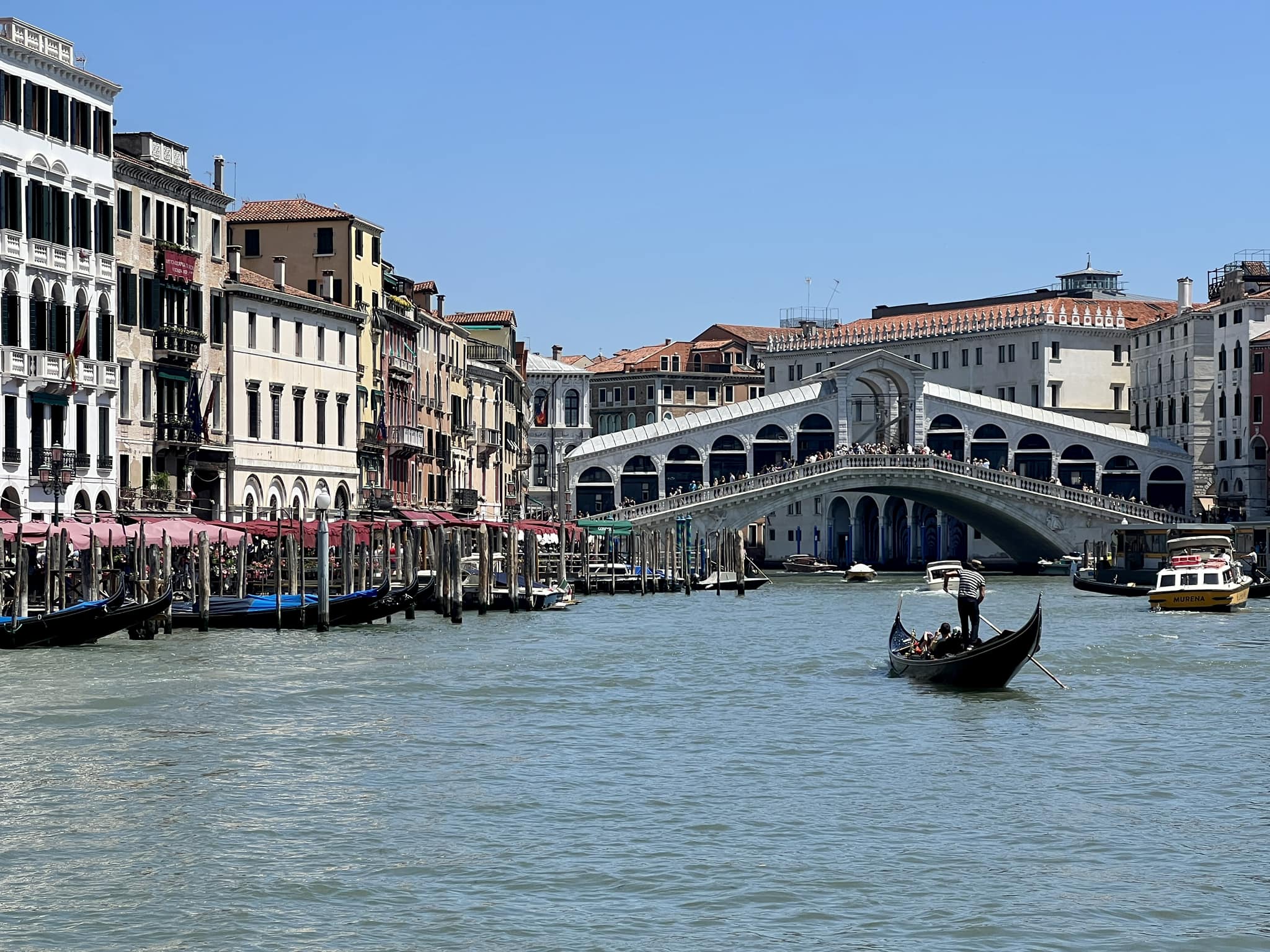
- Ponte di Rialto, built at the end of the 16th century, is the oldest of the four bridges spanning the Grand Canal, known as an architectural and engineering achievement of the Renaissance. It is a stone arch bridge crossing over the narrowest point of the Grand Canal in the heart of Venice. This is a covered pedestrian bridge that has many shops where you can buy souvenirs.
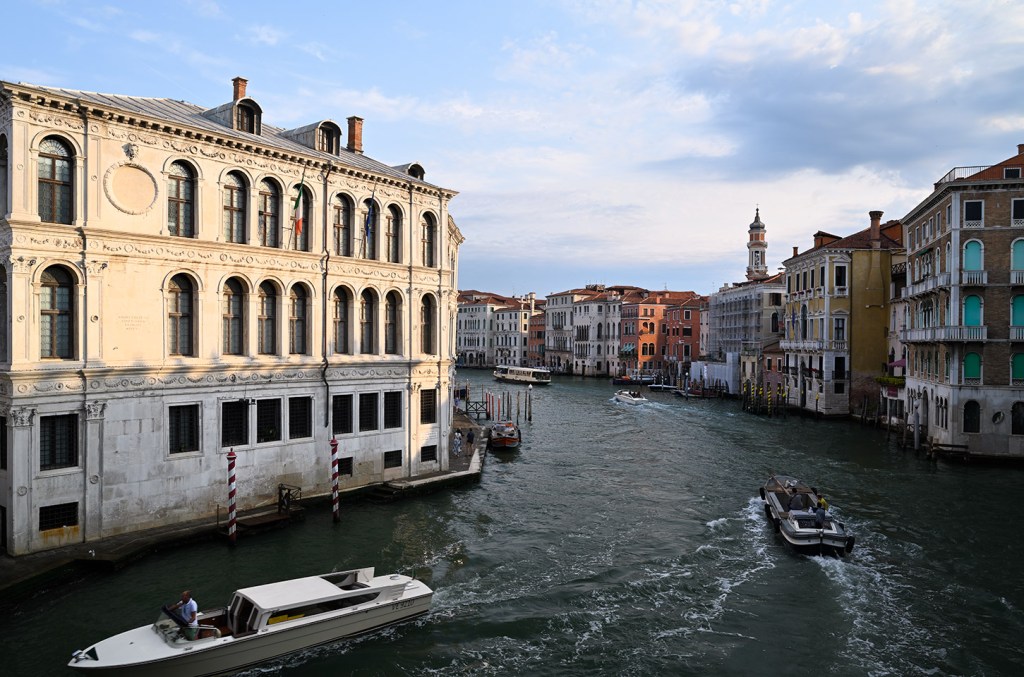
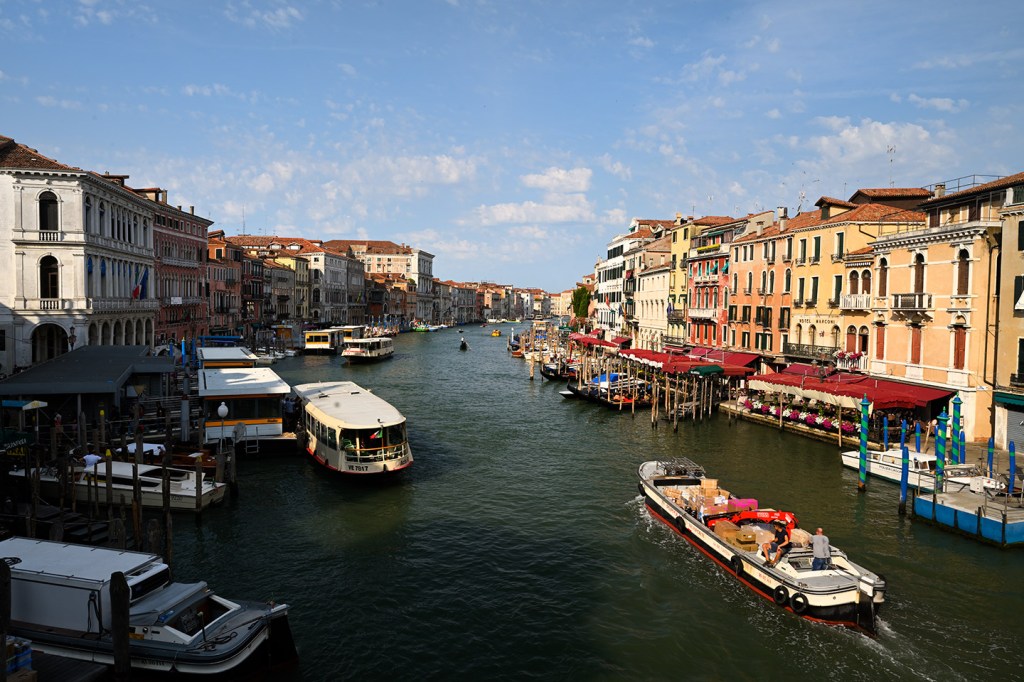
- Canal Grande is the largest channel in Venice, forming one of the major water-traffic corridors in the city. It flows through the 6 districts of Venice. The Grand Canal connects the city’s top attraction and is lined with stunning palaces.
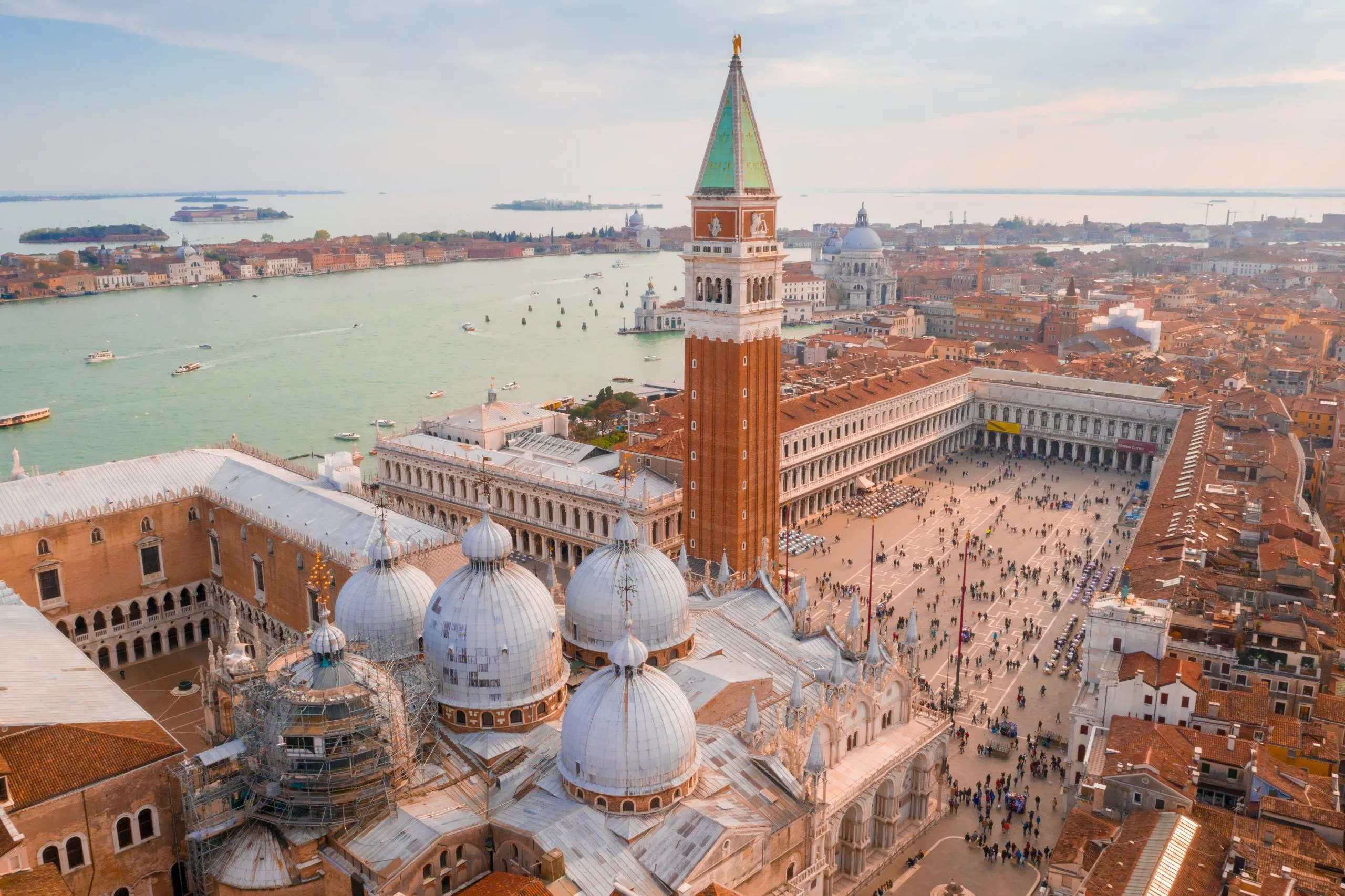
Photo from Google
- Teatro la Fenice is a historic opera house. It is one of the most famous and renowned landmarks in the history of Italian theatre and in the history of opera as a whole. The theater has a beautiful interior with the velvet armchairs, the richly decorated balconies, the lighting and the amazing ceiling. If you’re an opera lover, then attending a performance here is a must-do. Otherwise, you can also visit the theater when there’s no performance.
- Ponte dei Sospiri – also famously known as the Bridge of Sighs – the bridge that crosses the the canal from Doge’s Palace. This bridge was used by convicts who had heard their sentences to enter the prison on the other side of the canal. The bridge’s name comes from the idea that prisoners would sigh as they crossed the bridge, taking their last look at the outside world before being imprisoned.
Today, a popular legend of eternal love is passed by the word of mouth that if two lovers kiss under the bridge while in a gondola at sunset (especially when the bells of St. Mark’s Campanile start to ring), they will be granted eternal love. - St. Mark’s Campanile is the bell tower that is located on St. Mark’s square, between the Museo Archeologico and Torre dell’Orologio. Its pillars and decorations are very impressive. Climb the tower to enjoy the view over the Piazza San Marco and the lagoon.
Neighboring islands:
Around Venice city are several islands that you can visit with a sightseeing tour. We like to explore places ourselves instead following a tour, so we purchased the water ferry tickets which allowed us to make stops in Murano, Burano and Torcello.
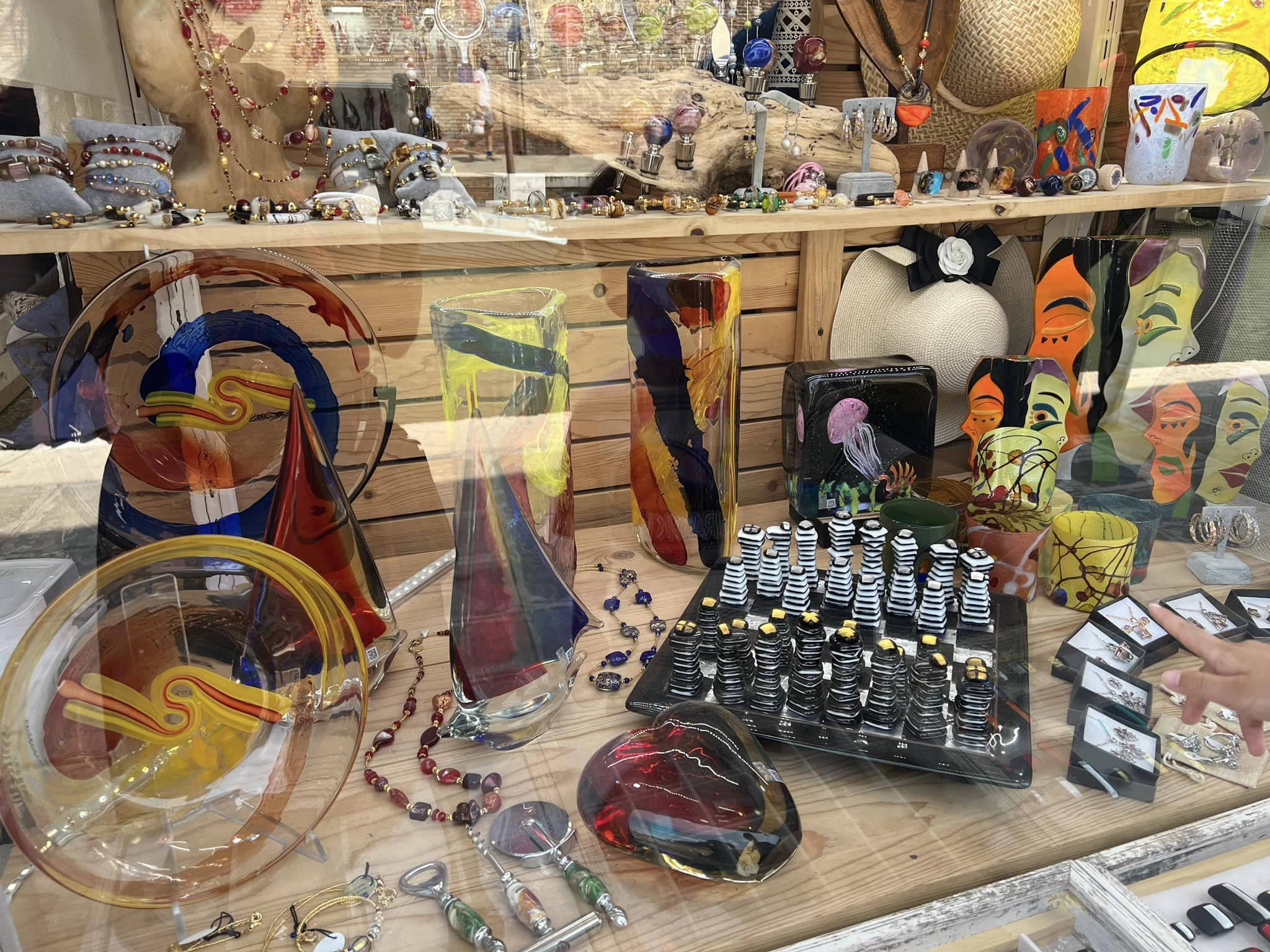
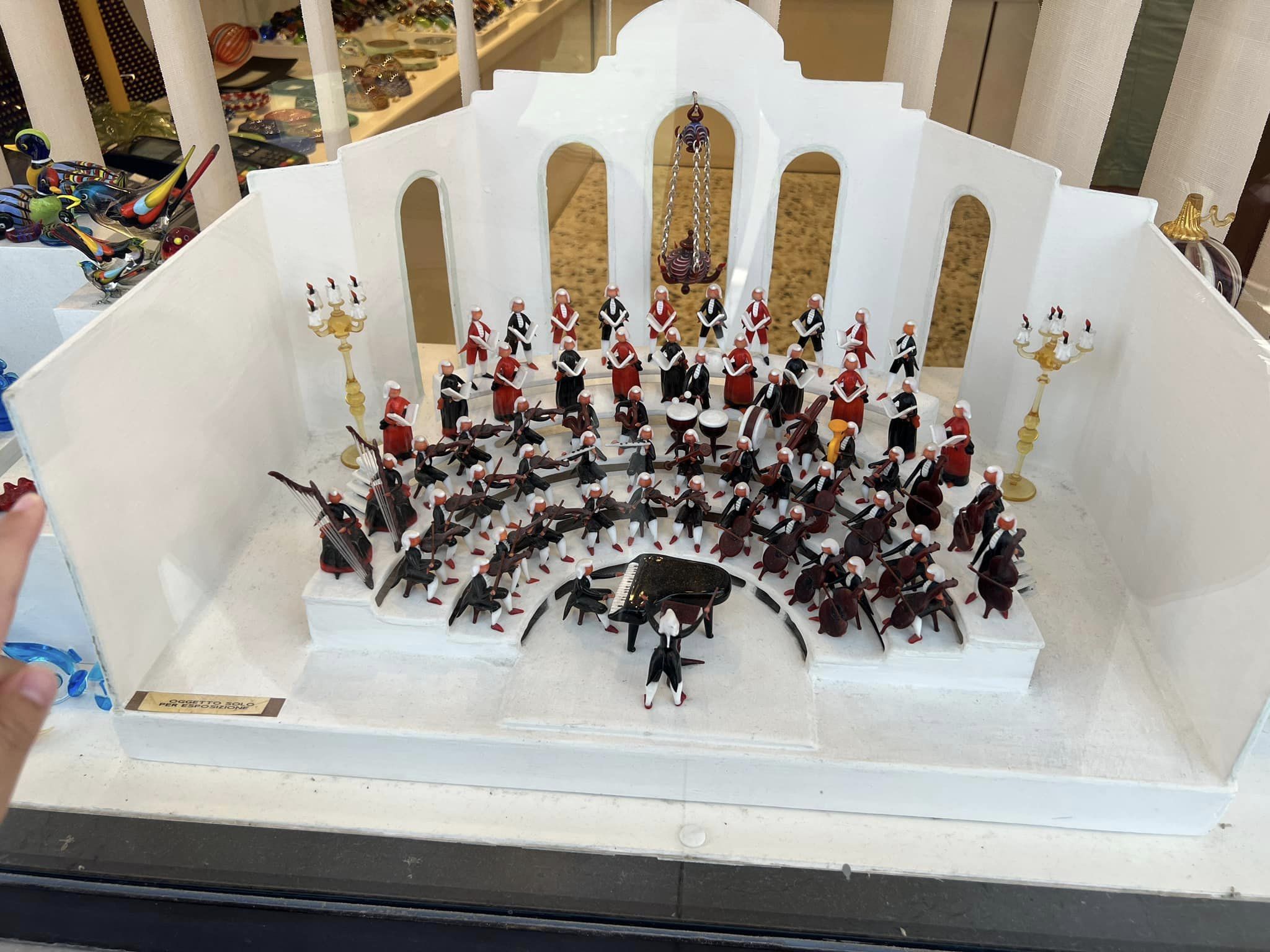
- Murano is a major island in the Venetian Lagoon about 1.5 km north of Venice, known for its glass production since the 13th century. Upon debarking from the ferry, there’s a glass factory that offers a glass-blowing demonstration and workshop. Window-shopping to admire the most beautiful glass artwork is a must-do activity. If you have time, the glass museums are worth a visit.
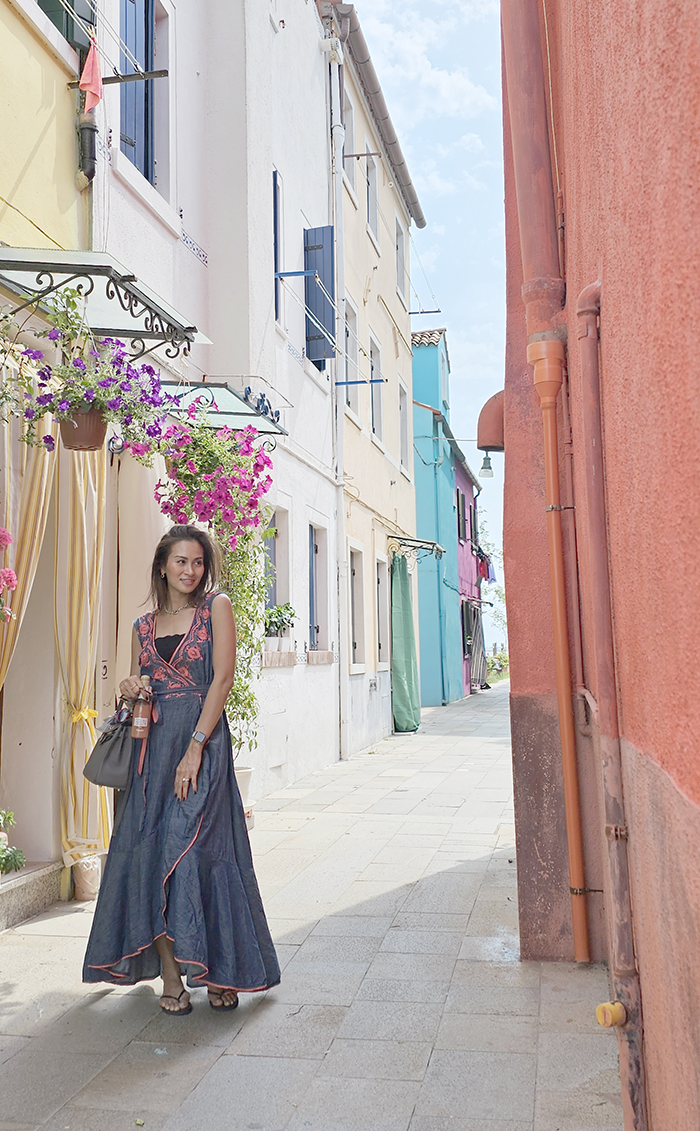
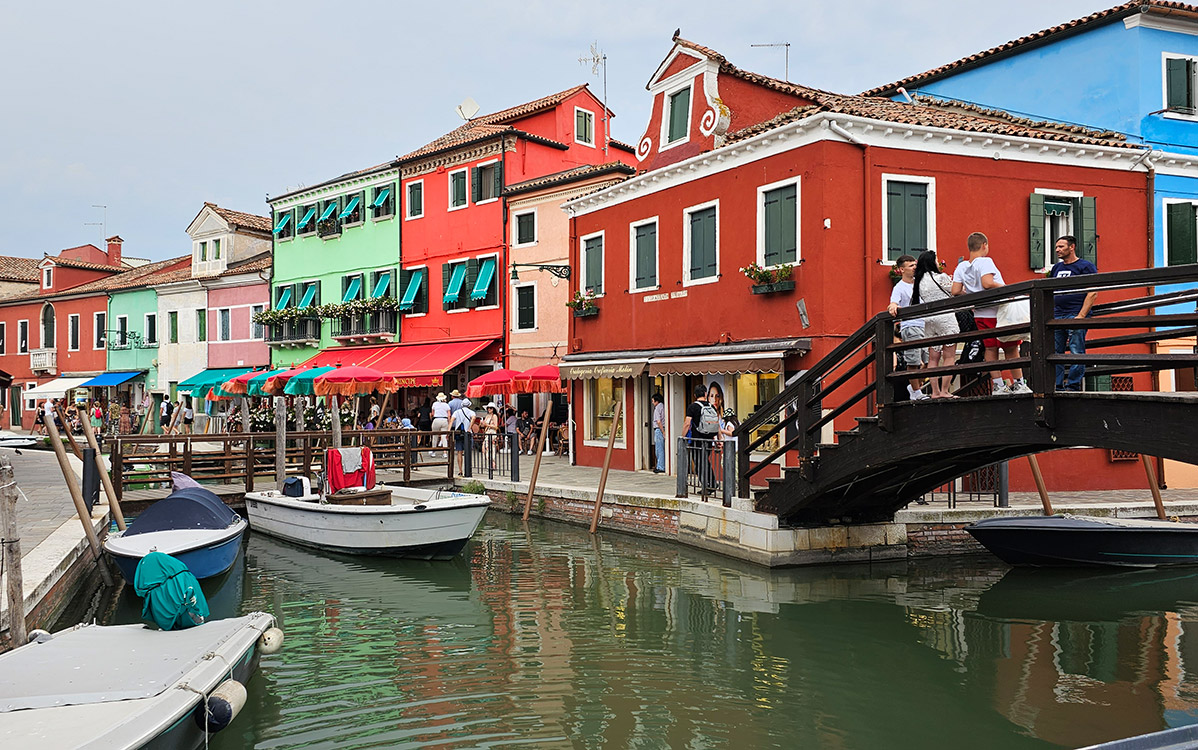
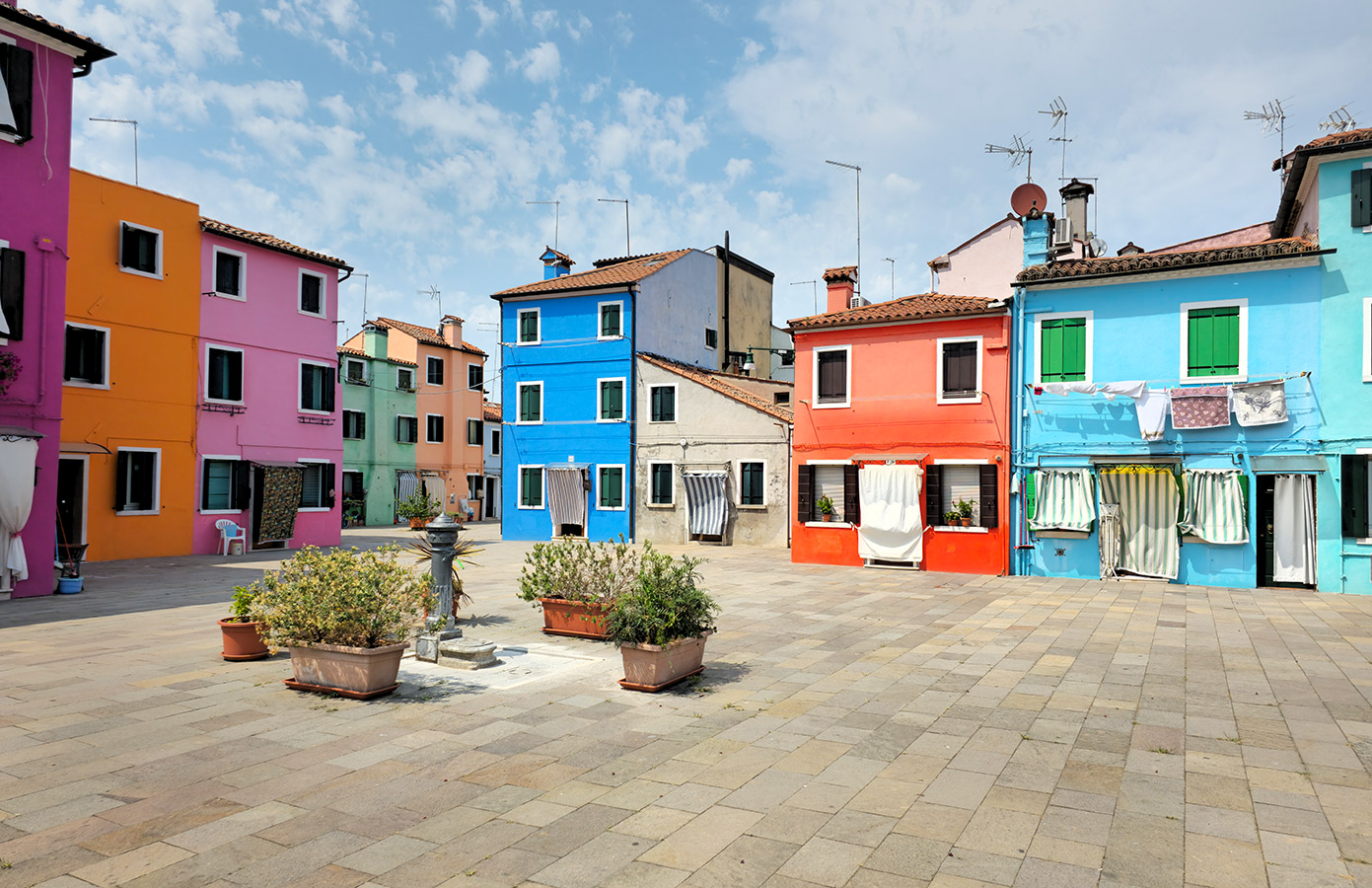
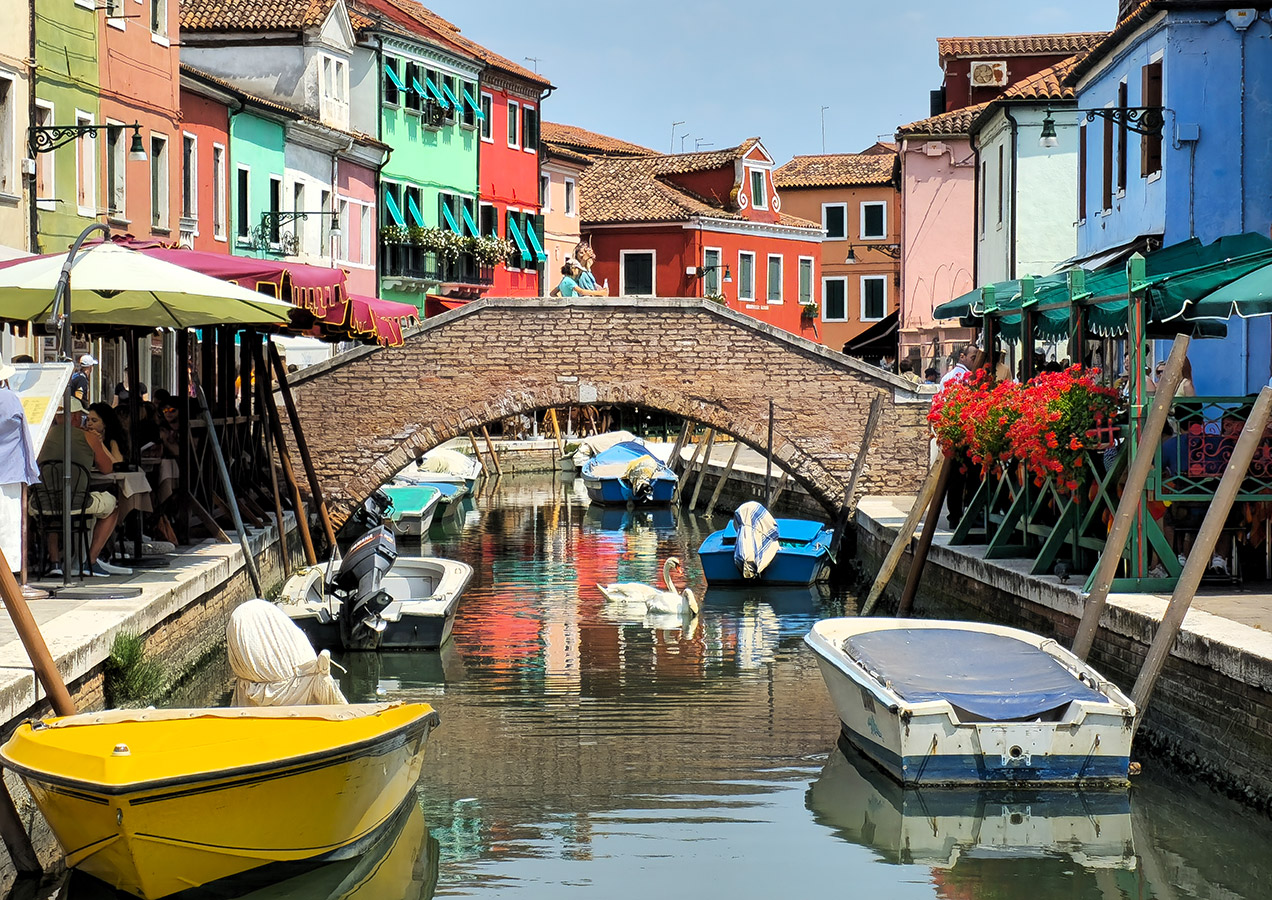
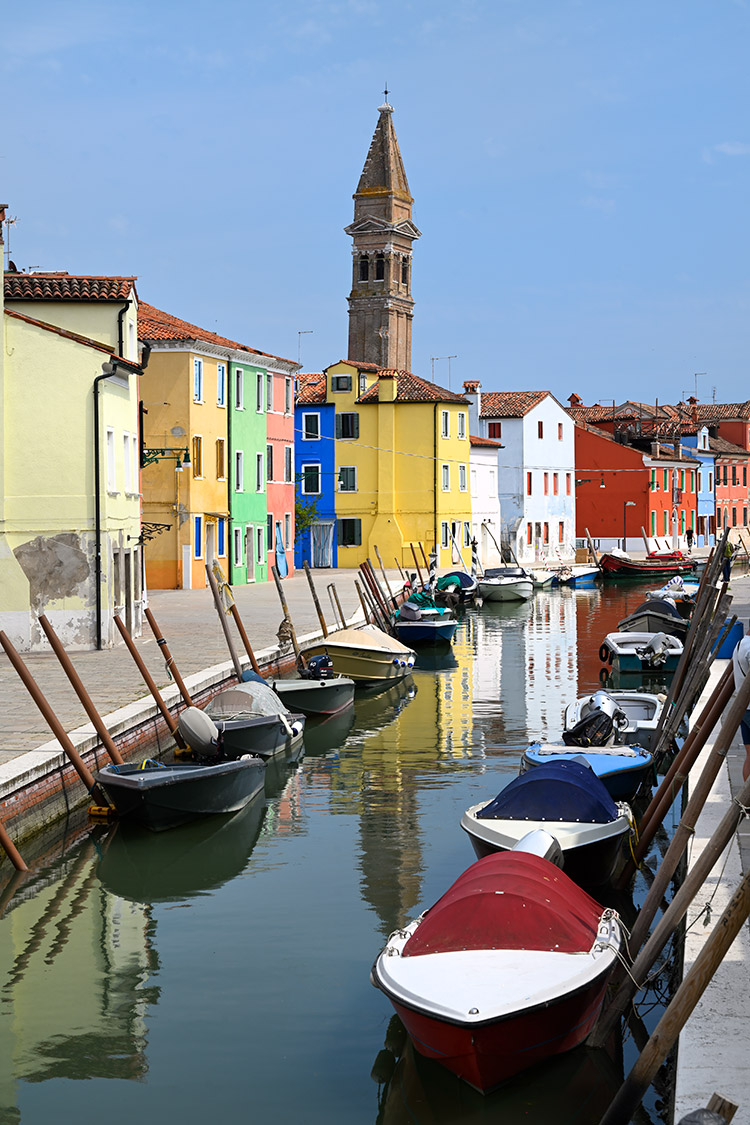
- Burano – the “island of lace” – if Murano is famous for glasswork, then Burano is famous for lace working art since the 16th century. Additionally, Burano is known for street-lined bright multicolored houses.
Why are the houses so colorful? The most common work on the island was fishing. Having to go offshore often, the fishermen decided to paint their homes with bright identifying colors so that they could see their home from afar, and also upon return, they could find their home and not get lost even in the thickest fog.
All houses are colorful, but the most colorful and the most well-known house in Burano is Bepi’s house, which has appeared in many postcards. It is decorated with geometric forms of any type such as circles, squares, triangles, dyed of yellow, orange, red, blue and all colors of the rainbow. Bepi was a local artist who used the walls of his home as a canvas to tell stories with his unique vision and love for art.
Besides admiring the colorful houses, at the Martina Vidal Atelier, you can observe how the experts lace workers still create lace using the same techniques since the 17th century.
- Torcello is the furthest away of these three islands. The island boasts the Museum of Torcello and the Venetian-Byzantine Cathedral of Santa Maria Assunta founded in the 7th Century, which was Venice’s first cathedral. There’s a bell tower that provides a beautiful view over the lagoon.
Shopping in Venice
There are many places to shop in Venice, including luxury shopping streets, artisan workshops, and glass shops.
As small as Venice is, I was very surprised to find a street filled with designer brands. Salizada San Moisè is the luxury shopping street in the San Marco district that’s home to many haute couture brands such as the house of Hermes, Chanel, Dior, Prada…
If you don’t visit the neighboring islands, then you still can buy the local crafts that have been produced here for centuries and are hard to get elsewhere: the glassware from Murano, the delicate lace from Burano, and the cartapesta (papier-mâché) Carnevale masks you’ll find in endless botteghe (shops), where you can watch artisans paint amid their wares.
Shopping Tips:
- Shop in the daytime, as prices tend to get steeper at night, especially after 8pm. This is true for gondola rides as well as souvenir shops.
- There are many options to consider, so don’t be afraid to haggle! If you’re not comfortable with the prices, just simply move on to the next merchant or gondolier.
Food
Dining out
Being one of the most touristy city in the world, you can find all kinds of cuisines here. So if you’ve had enough of the Italian food, then there are other options. Being Asians, we even tried Japanese and Chinese restaurants here as well. However, one of the best experiences in traveling is indulging in the local food, right?
Here are some tips to keep in mind for a pleasant dining experience:
- The restaurants in Venice are generally small. So if you have a large party, be sure to call and ask to make a reservation if possible. We read amazing reviews about a small family-owned restaurant called Osteria Antico Giardinetto and really wanted to have our last dinner in Venice there. I can’t remember if we couldn’t call (no one answered) or we forgot to make a reservation. We wouldn’t have minded the wait or if they split our group to smaller tables. In the end, our party of 9 people came without a reservation and were turned down. The busy lady came out and said it was only her and her husband, and they were already too busy to take us!!! Unheard of in America, right? But that’s not uncommon in other countries. Besides Venice, we have experienced a similar situation in Japan when our group was even larger! So, call before you come!!
- Preview the menu before deciding, instead of just based on reviews. TripAdvisor recommended Ristorante Campo Santa Maria Formosa, so we gave that a try. The food was very average at a very expensive price!! The service was good, but the food was disappointing to us. Moreover, we had several kids in our group, and the menu didn’t have kid options (or the typical Italian dishes that American kids prefer).
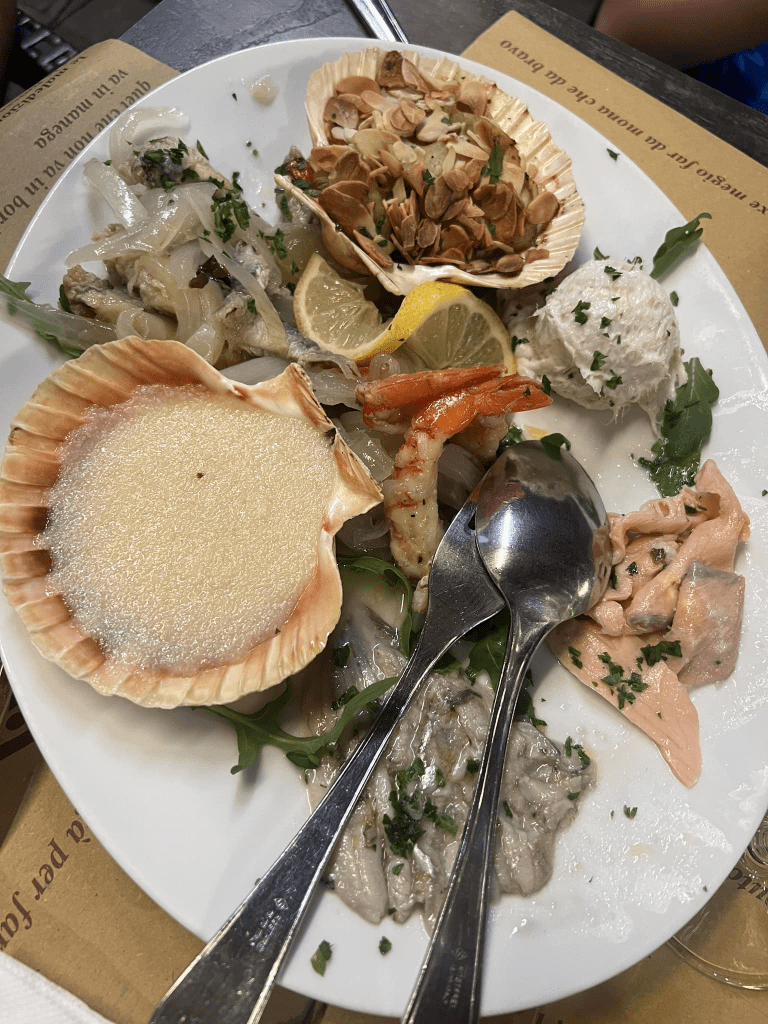
- Be spontaneous!! Follow your instinct! After being turned down by Osteria Antico Giardinetto, we wandered back to the Ponte di Rialto area and randomly chose this restaurant, Ostaria Al Garanghelo, because it seemed homey and laid back. It turned out to be the best ending to our 2-week trip in Europe! The owner and servers were very hospitable and accommodating. We were able to communicate with the owner in English. They recommended a few Venetian traditional dishes, and met our special request for our little picky eater. It’s a casual place so not ideal if you want a fancy experience. But the food was really great, and the atmosphere was relaxed. In short, this restaurant wasn’t in our plan. We chose it spontaneously and it was better than expected!
- Gratuity is not included in the bill, but it is optional. Typically, tipping is not expected, but should be given if the service is exceptional.
Cooking in
If you stay at an Airbnb with a kitchen, then you can save some money by cooking at home. The groceries stores have a wide variety of food and open pretty late (until 8 or 9 pm).
Best time to visit
The best time to visit is in the Spring and late summer when weather is pleasant and there are fewer tourists. Ideal months are March – May and September, October.
Low season (much fewer tourists) is from November to March. Also, the months from October to March are prone to flooding. Even if there’s no flooding, some stores and restaurants may close during this time.
Due to kids’ school schedule, we had to visit during the peak of Summer, when the weather is hot and there are lots of tourists. If you must visit during the peak months, then plan your itinerary carefully to avoid the crowds.
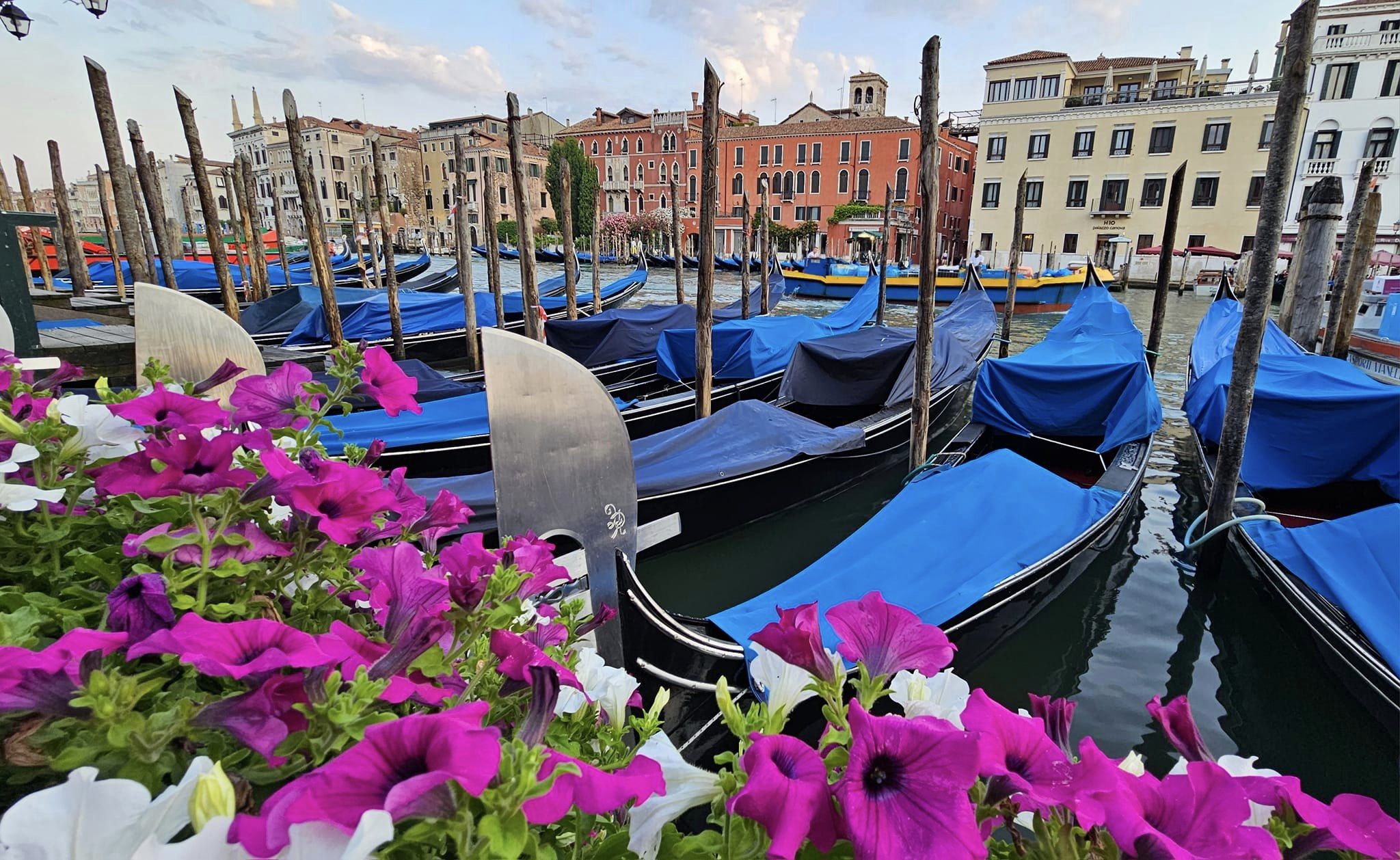
In recent years, Venice is becoming more exposed to flooding and storms. So yes, Venice is sinking! Venice’s ground level sinks arout 1-2 mm per year. So hop over to the islands of Venice before the city disappears!
Venezia is an Italian name that is associated with beauty and love. It is a city of romance and lust, where the entire history of Venice is intimately linked to Cupid. The famous love affairs of George Sand with Alfred de Musset, Lord Byron, Gabrielle d’ Annunzio and many others, were linked to Venice. The absence of cars makes Venice a romantic place because you can whisper sweet nothings into your lover’s ear without the noise of chaotic traffic. Imagine a couple holding hands while strolling through the alleys, then stopping at an intimate trattoria for dinner while admiring the sunset over the lagoon. Or the image of a couple sitting close together on a wooden gondola, while being serenaded with a romantic ballad by the gondolier, cruising down the Canal Grande in the sunset. These are just a few examples of why Venice is considered the city where love sublimates!!
So, more than just seizing the day as Venice will one day disappear, it’s a place where love is found and rekindled. Come and find, or rediscover, your love!!
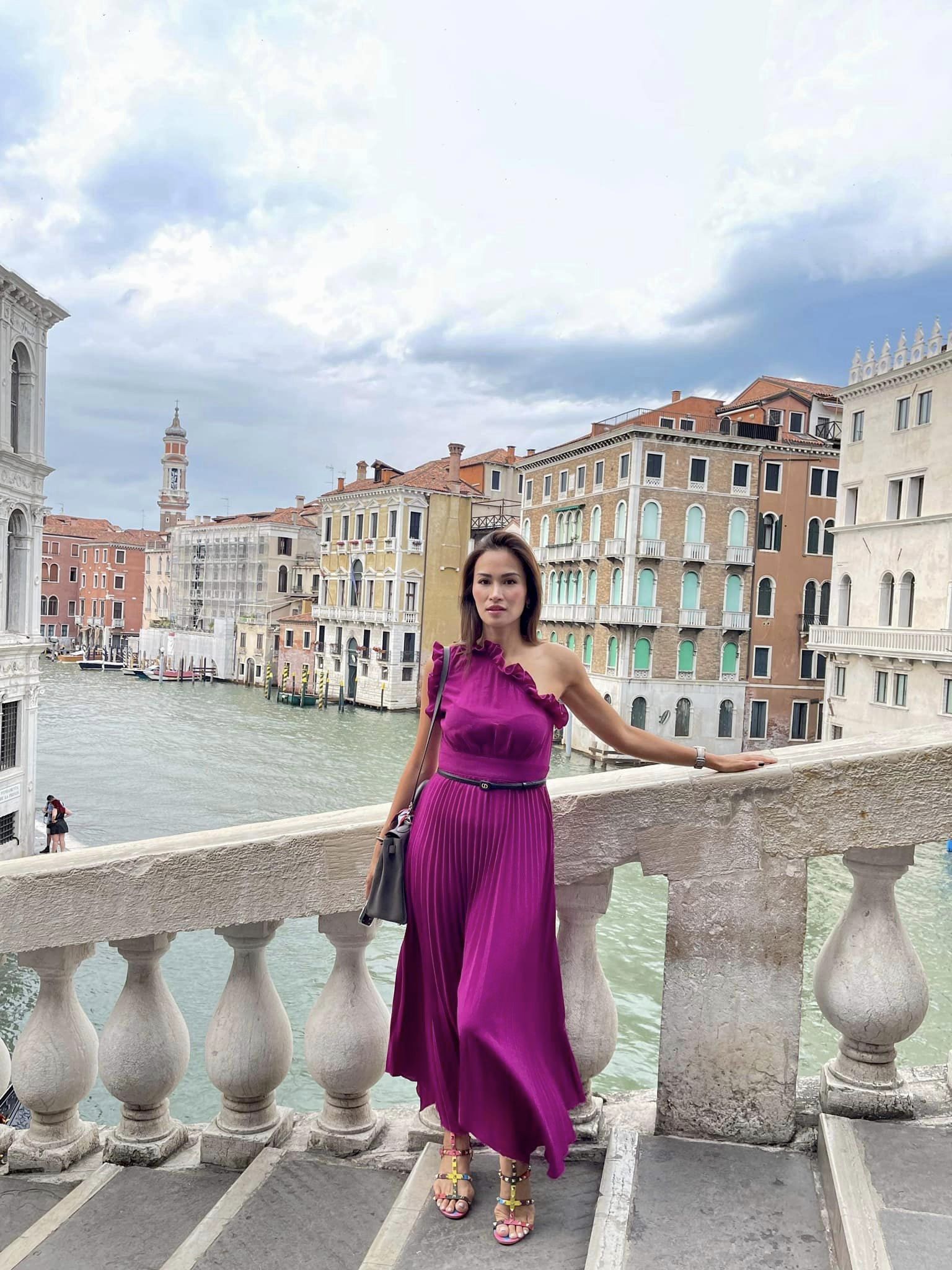
Last photo taken in Venice just before dinner. We departed early the next morning!
 Making Memories
Leave a comment