
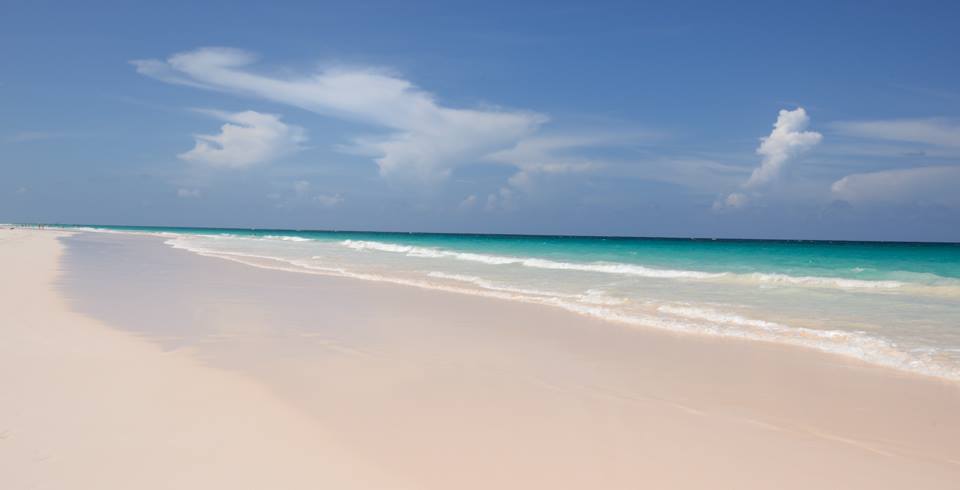
With the ease of travel these days, many people are more comfortable to travel with young children. As a world traveler myself, I have never let motherhood stopped me from traveling. In fact, I believe that allowing your children to travel at a young age enables them to learn to adapt to new environments, besides the obvious benefits of introducing them to new cultures, triggering their enthusiasm to explore new things, encouraging them to be more adventurous and outgoing, etc.
Firstly, let me note that this article is dedicated to my coworker who asked me for advice on traveling during pregnancy and later with kids. Although my kids are no longer babies, I have accumulated tips through personal experiences over the years that I hope to be helpful to you. Even if they are not new to you, then I hope you can use this compilation as a reference to refresh before your next trip.

Travel during pregnancy
Every pregnancy is unique, so it’s hard to give advice on whether mothers-to-be should travel during pregnancy, which is the exact question my coworker asked me.
Being an Asian woman whose pregnancy was not only cared for by my immediate family but by the entire extended family, it seems; adding the old tales and superstitions to the picture, being pregnant does not only call for a celebration but a bucket of worries along with it!!! This is just a long way of emphasizing that the first trimester is a very sensitive time, and typically news of the pregnancy is kept a secret from outsiders, just in case “it doesn’t work out”!! So being the Asian mother that I am, I would advise against traveling during the first trimester, unless it’s just a short road trip. Many women suffer from morning sickness during the first trimester as well, so if not for any other reasons, this would be the reason to stay grounded. Of course, if it’s at a very early stage and you don’t even know you are pregnant, then that doesn’t count!
The third trimester, especially the last month of pregnancy, is just uncomfortable. The belly would be too big and heavy by this time. And if it’s the last month, you don’t want to risk giving birth while being too far from your doctor.
This leaves the second trimester (and early third trimester) to be the best time to travel for… a babymoon! The pregnancy should be more stable, the belly should start showing a bit but not too big and heavy, you most likely have overcome morning sickness and can start enjoying food. But of course, always consult your doctor before making any travel plans: if it’s safe to travel, what you can and cannot do, etc.

Ultimately, the answer to the question: “Should women travel during pregnancy?” is YES, but only if your and your baby’s health are in good condition, and after consultation with your doctor. Reward yourself for carrying out such an important duty, and most of all, give yourself a nice break before the baby arrives. It would also be best to keep the flights relatively short, about 3 hours or less. So if your destination is a little farther, then opt for a flight with a stop. That way, you can walk around a bit, as sitting on a plane for longer than that would be too uncomfortable.
Please note that the above advice is my personal opinion alone. Since every pregnancy is unique and every woman is different, you really can travel any time during the pregnancy when your health is up for it. The only advice that I urge you to follow is to always consult with your doctor before taking any trip.
Travel with babies
Congratulations! You are now parents. Parenthood is not easy even being at home, let alone while traveling. But you may be surprised how new environments may be good for the baby, too. For example, doing a beach vacation is a great option for new families. The ocean waves and the nice breeze are soothing to everyone, including babies. I remember my kids used to love to nap on the beach.
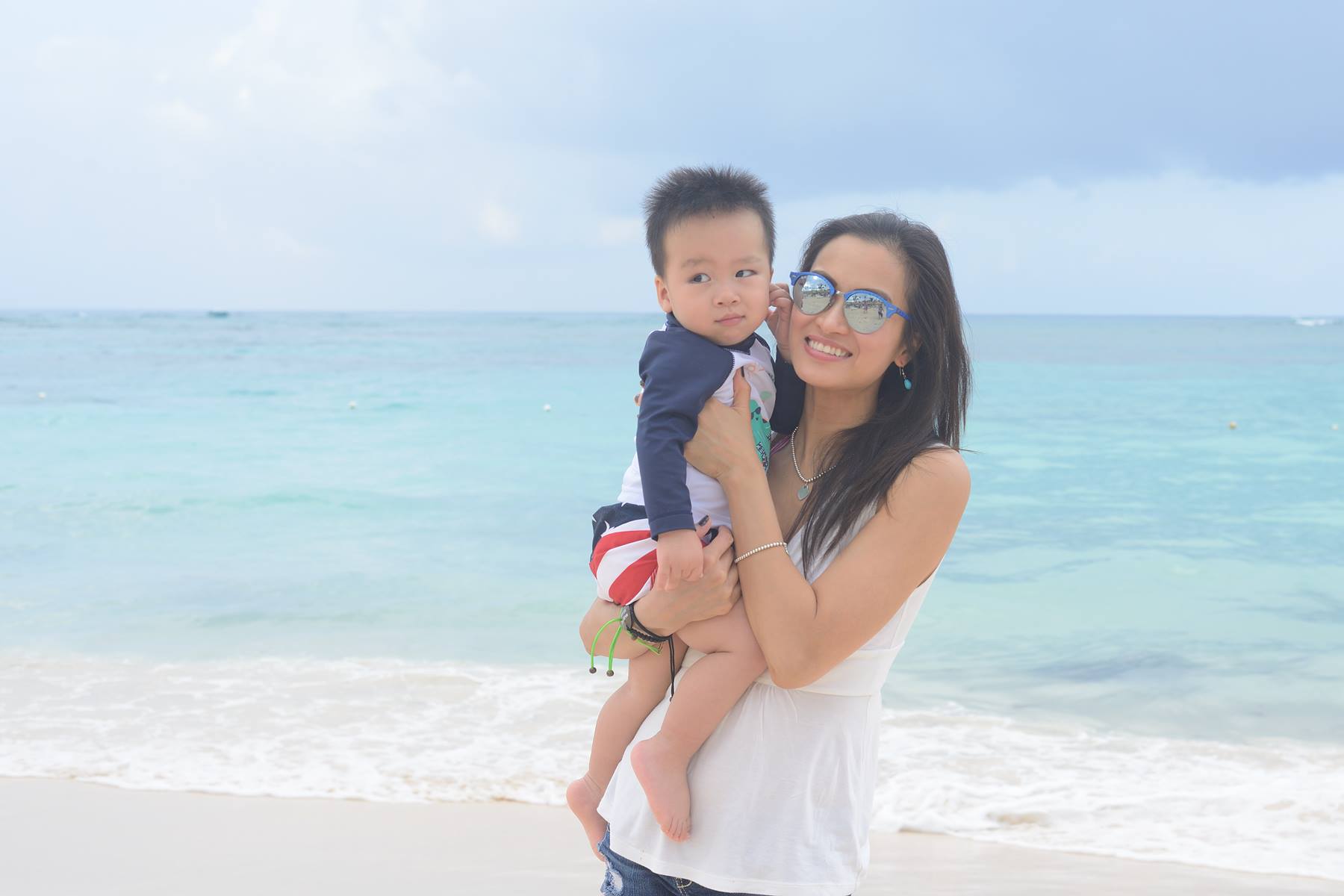
My kids are now 17 and 7, but they have been traveling since they were 4-5 months old. My eldest kid’s first overseas trip was to Canada at 5 months, then Vietnam at 6 months and Korea at 9 months. My youngest’s first trip was to Mexico at 4 months, then France at 7 months. And they have been traveling on average about 6 times per year since then.
Here are some tips when traveling with babies:
Breastfeeding
Nowadays, there are nursing rooms and lactation pods at the airports, making nursing more convenient. Not available at all airports, but they are at most international airports.
If the airport has a Minute Suites location, then you can reserve a 30-minute stay in one of its suites to nurse or pump at no cost. You can reserve online in advance using their online reservation system.
Another option is the lactation pods. Mamava lactation pods are located all over the U.S. and internationally. There are a few types of pod. Depending on the pod, it may have a sink or a smartphone booking capability. Each pod has an outlet and a lock for privacy. Once you’ve flipped the deadbolt, the lights and fans should turn on and stay on for as long as you are in the pod. To find a lactation pod, download their mobile app. Otherwise, you can find a location on the map on their website. The app also allows you to unlock the pod from your phone. It is advertised that Mamava lactation pods are also available at certain public facilities such as shopping centers, but I personally have only seen them at the airports myself.
TSA and breast milk
It’s worthy to note that breast milk is not subjected to the same quantity requirements as other liquids in your carry-on. You can carry on more than 3.4 ounces, or 100 milliliters, of breast milk because is a medically-necessary liquid. Ice packs, gel packs, and other items you need to keep your breast milk cool are also considered medically necessary.
You’ll need to let the TSA officer know that you’re carrying breast milk in your carry-on and then remove the liquid from your bag for screening. Most likely, you’ll be pulled over to the side so they can test the liquid to make sure that it doesn’t contain anything prohibited.
Formula
If your babies are drinking formula, then it’s best to bring the powder kind instead of the liquid (obviously). But what about water to mix?
From my past experiences, water filled in baby bottles are usually allowed to pass through TSA. To save the hassle of measuring the water on the go, I typically prefilled the baby bottle with (nursery or drinking) water. So when needed, I just pour in the formula from the portable portioned dispenser, shake and the bottle is ready. I have done this many times and every time was able to pass security without any problem. I would not prefill many bottles though. I typically just prefilled one or two bottles, as that justified my immediate need. Or if you’re worried about it not being able to pass, then right before it’s your turn to go through TSA, mix the formula in the bottle, then give it to the security officer. Considering now the bottle has milky liquid, they would need to test it before allowing it to pass.
For storing formula on the go, I recommend you purchasing a portable formula dispenser with several compartments (usually 3 or less), which allows you to prefill formula for several bottles. Of course this wouldn’t make sense if you need formula for more than 3 feedings.
Milk preference
What is your baby’s milk temperature preference? I normally fed my babies with milk at room temperature (for both breast milk and formula). This eases our travel so much better when warming up milk isn’t always an option. However, I understand parent or babies have their own preferences, so if you prefer warm milk then there’s a way to accommodate. Either at a coffee shop or on the plane, ask for a cup of hot water only. If breast milk, then soaking the bottle in hot water for a few minutes will warm up the milk. If formula, then just mix hot water with cold drinking water to achieve your preferred temperature before mixing. Hot water is free on all airlines, even on the low-budget ones. Coffee shops typically don’t charge either if asked to fill up for baby bottles.
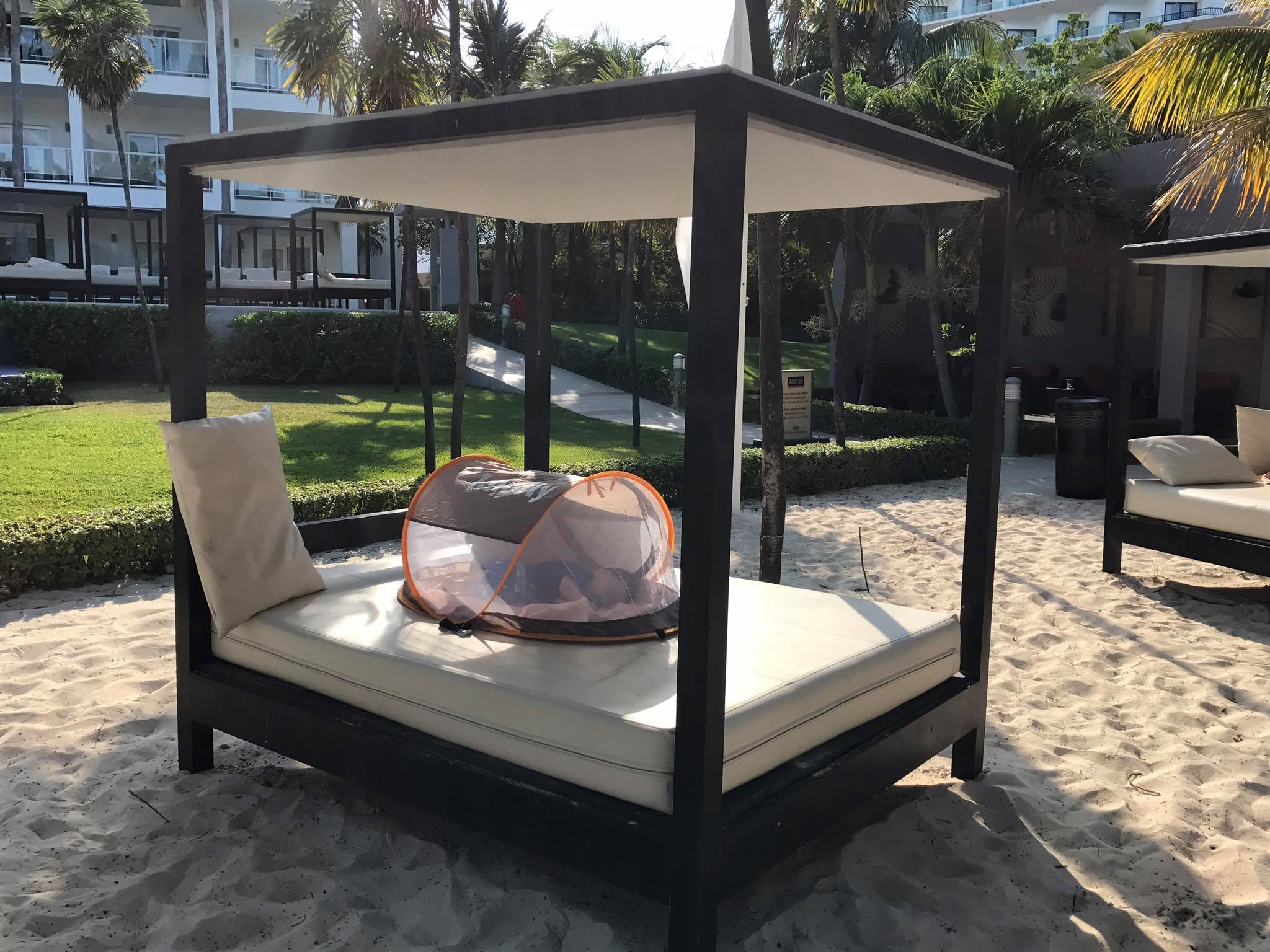
Baby’s first trip to Cancun, Mexico
Comfort and Convenience
- Babies get cranky when they don’t get enough sleep. So if you can, try to keep the baby active before the flight, so that he/she can sleep well during the flight.
- If your baby is not used to be in places with noise, opt for a seat nearer to the rear where the engine sound is more prominent. The jet’s engine is similar to the sounds in the womb (as with the vacuum cleaner) and can act as a white noise to mask other noises around them.
- During take off and landing, we often get ear barotrauma. Help your baby to pop their ears by feeding them. Have a bottle ready and let them suck on the bottle, which helps to pop the ears and relieves ear pain.
- If the mom is nursing then it’s better to breastfeed the baby directly. Otherwise, wait until when there’s less restroom traffic, then inform the female flight attendant that you need to pump and will occupy the restroom for a while.
- Dress babies properly for the temperature (it’s often colder on the plane). Usually, babies typically require 1 more layer than adults. Dress the baby in footed onesies would eliminate the mess of socks falling out, especially during diaper change.
- Bring some quite and light toys to alternate so the baby wouldn’t be too bored.
- Try using Playtex Drop-in bottles to avoid having to wash bottles while traveling, especially during the flight. You only need one bottle, some liners and nipples to switch out. Offer the baby this kind of bottle here and there before the trip so it wouldn’t be foreign to them.
- For long haul flights, call in after you booked the flight to reserve “bassinets seats” at the bulkhead row (for free). Usually, the weight limit for bassinets is 27.5 pounds, and the age limit is under 2. However, the bassinets usually only comfortably fit babies up to 8 or 9 months.
* Remember that for both domestic and international flights, you need to add the baby to the reservation even if the baby does not have his or her own seat. Babies under 2 years can travel as infant in-lap for free (sometimes you have to pay some taxes for international flights). - Bring more baby clothes and diapers than you think you’ll need. On international flights, there is usually a baby kit that includes a diaper, wipes, and a few other essentials. Ask your flight attendant for one if not offered or when in need; they usually have kits with diapers up to size 2 or so.
- If you go on beach vacations, I really loved the portable baby beach tents. It keeps the bugs and sand out, and allows the baby to nap at the beach. If the crib is not available, you can even use the tent in the hotel room when having to take your eyes off the baby for a few minutes. Keeping the baby in the tent for just a little bit ensures that he/she is safe while you’re busy with something nearby.
Travel with toddlers
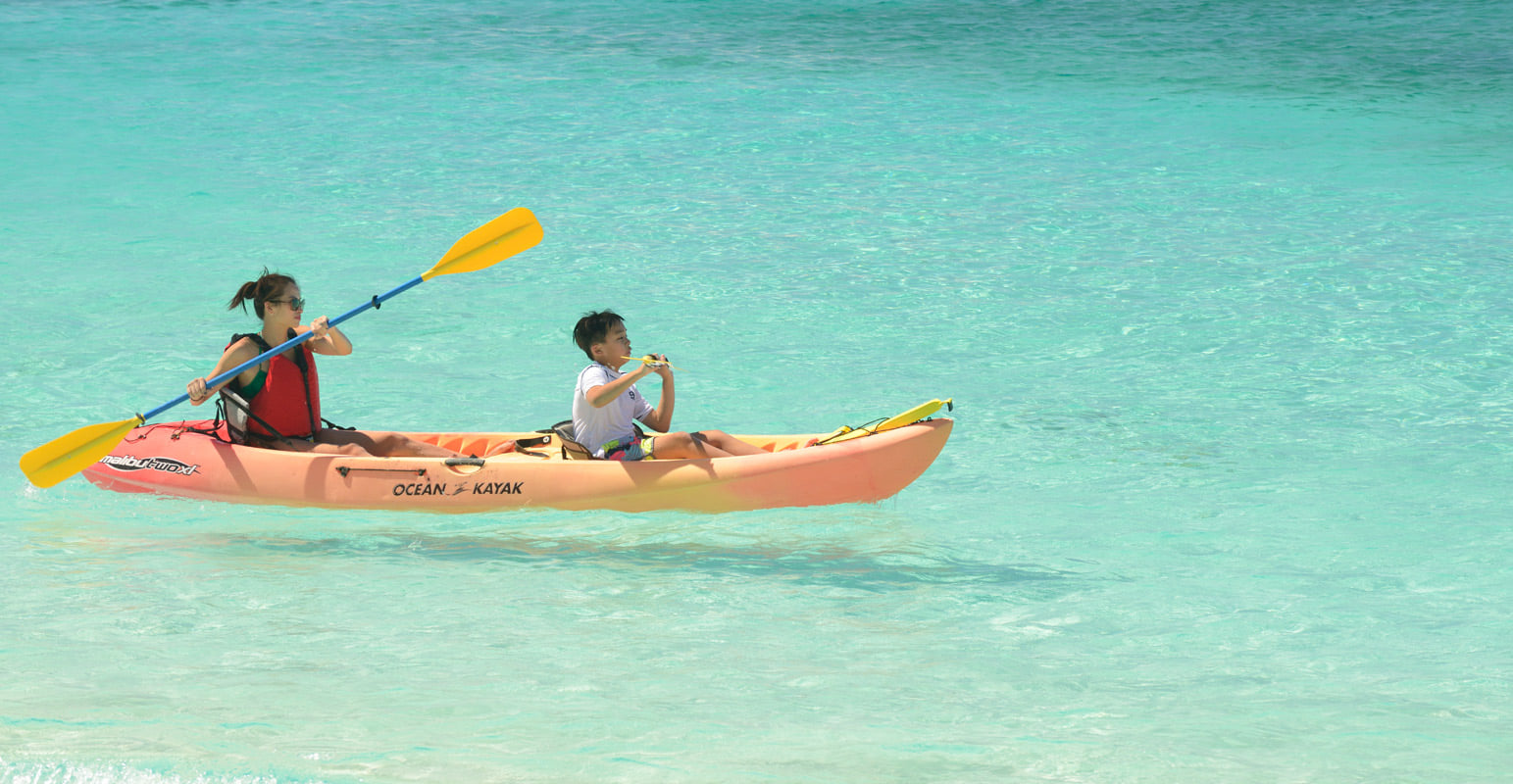
Welcome to toddlerhood! Now, your kid actually needs a ticket when flying! Sure, it’s more costly, but it sure will be more comfortable not having to carry the kid for many hours at a time. Here are some more tips to make your trip more comfortable with your active toddlers:
- TSA approved 2-in-1 car-seat/stroller – I find this to be very convenient any time, but especially for travel. I didn’t need to bring both a car seat and a stroller, and I can bring it on board for the my kid to sit more comfortably.
- Bring car seat on board – unless it is very large that doesn’t fit in the seats, you are allowed to bring the car seat on board if your kid has a his/her own seat. Just like in the car, your kid can sleep in the car seat snuggly and safely (instead of tossing and turning in the airplane seat that doesn’t fit them and has no head and neck support), giving you some time to rest as well.
- Big toddler stroller – if your kid is an older toddler (like 5 or 6), consider investing in strollers for big toddlers, which can be a lifesaver for trips that require a lot of walking. This was the case for us on trips to Europe where we had to walk everywhere all day long, which could be a little hard for toddlers to keep up.
- Favorite snacks/food – when we go abroad, we always pack the kids’ favorite snacks since most likely we won’t be able to find them overseas.
- Milk – I usually pack 1 or 2 milk singles with me in the suitcase, just in case we arrive very late and wouldn’t have time to go buy milk. So I would pack 1 for the night and 1 for the next morning.
- Dry milk – this is more applicable for overseas trip – if you move around a lot during your trip, then it would not be convenient to buy fresh milk as you won’t be able to finish a milk carton before you move to the next location (or if there’s no refrigerator at the hotel). In this case, dry milk would come in handy here. Just mix it with water and you’re ready to go. Milk would always be available and does not need to be refrigerated.
- If your kid is used to a certain brand of fresh milk (mine likes Horizon Organic), then some brands also have the dry version as well. So for us, it’s the Horizon Organic Dry Whole Milk.
- Dry milk – this is more applicable for overseas trip – if you move around a lot during your trip, then it would not be convenient to buy fresh milk as you won’t be able to finish a milk carton before you move to the next location (or if there’s no refrigerator at the hotel). In this case, dry milk would come in handy here. Just mix it with water and you’re ready to go. Milk would always be available and does not need to be refrigerated.
- Bring books or activities books, besides toys, to keep them busy. Toddlers’ attention span is short so they get bored quickly. On international flights, the plane provides movies and games to keep them entertained. On domestic flights, preload their favorite movies and download educational games on the device. Alternate between device and books and activities to keep them busy between meals and naps.
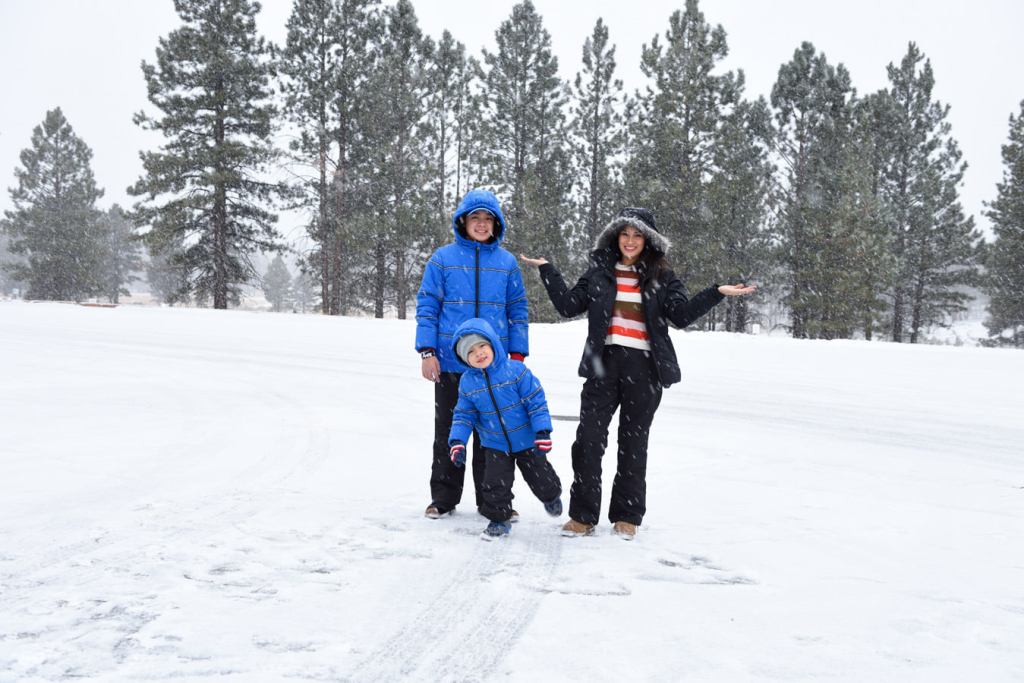
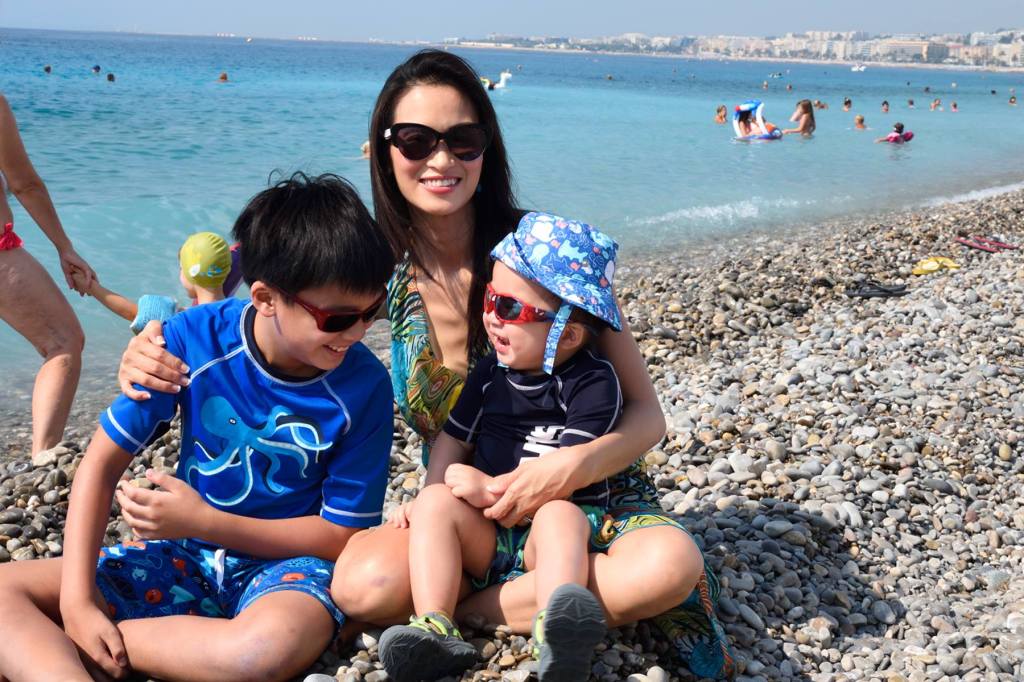
I believe that traveling together as a family is a fun way to create memories together. However, traveling with kids brings a new kind of challenge that you may have never experienced. So I hope the compiled list above could help to better prepare you for your next trip. Summer is a good time to try for that first trip as a new family, as spending time at beaches and resorts is the best type of vacation to start!



 Making Memories
Leave a comment