
Instead of writing about other destinations, I decided to write about our recent trip while it’s still fresh on my mind: Portugal! It is a friendly and affordable country (comparing to other destinations in Europe) with a little bit of everything for everyone. Whether you like nature, history, or the city hype, Portugal has it!
We spent a total of 10 days for our Spring getaway, but only about a week in Portugal, and only 2 days in Lisbon (Lisboa in Portuguese). If you fly to Portugal, most likely you’ll land or have a layover in Lisbon. So it typically is either the first or the last leg of your visit to the country. We saved Lisbon for last since it’s just easier for transit purposes. From Lisbon, we took the direct flight back to the U.S., not having to deal with layovers or transits.
Our stay wasn’t during the weekend, but since it was just 2 days, I think it fits perfectly in the schedule if you just have the weekend (or any 2-3 days) to visit. Also please note that spending such little time in a city only allows you to hit the most famous attractions and maybe bars and discotheques at night. If you’re not interested in the historical sites, then strolling through the neighborhoods for the city vibes is also ideal.
Flight
From the US, there are only a few airlines that have direct flights to Lisbon. For example, TAP Portugal has nonstop flights out of NYC and Boston; Delta/Virgin Atlantic out of Boston; American Airline out of Philadelphia.
If there isn’t a direct flight from where you live, instead of letting the airline choose the layover for you (sometimes there’s a long layover), you can proactively choose your layover city. This means you can book a direct flight from your city to one of the big hubs in Europe like Paris, Frankfurt, Madrid/Barcelona and then another flight from there to Lisbon.
How to get around
As the last leg of our trip, we arrived in Lisbon from Porto by train. The transportation in Lisbon is convenient, and there’s a mean for your every need: train, metro, bus, taxi/Uber, tuk tuk, boat. If you plan to use the public transportation a lot, then I suggest you buy day passes. There are also discounted rates for youths (ages 4 – 18 and 19 – 23) and seniors. Check out Lisbon’s Metro page for more information on current ticket and pass prices, where to buy and how to use the discounts.
Bus: If you choose not to buy the pass and only pay as you go, then you can purchase the ticket/pay for your ride when you board the bus. Note that credit cards cannot be used to pay on the bus, only cash is accepted. Typically, the driver doesn’t have change for large bills, so it’s best to have either exact change, or smaller bills/coins.
At the time of our visit, a one-way ride on the bus costed €2.10 per person, which isn’t expensive. But if you will be riding more than 3 one-way rides, then it’s a better deal to buy the day pass.
Where to stay
Do you want to stay in the new Lisbon or the old Lisbon? If you’re interested in visiting the historical sites, then I suggest you stay in Old Town. The best neighborhoods to stay are Baixa and Chiado as they are near most attractions. We stayed in Baixa, just next to Chiado. Note that since these neighborhoods are literally the center of the attractions, the prices are touristy as well. But we like the convenience and the liveliness at night.
These are the neighborhoods to consider:
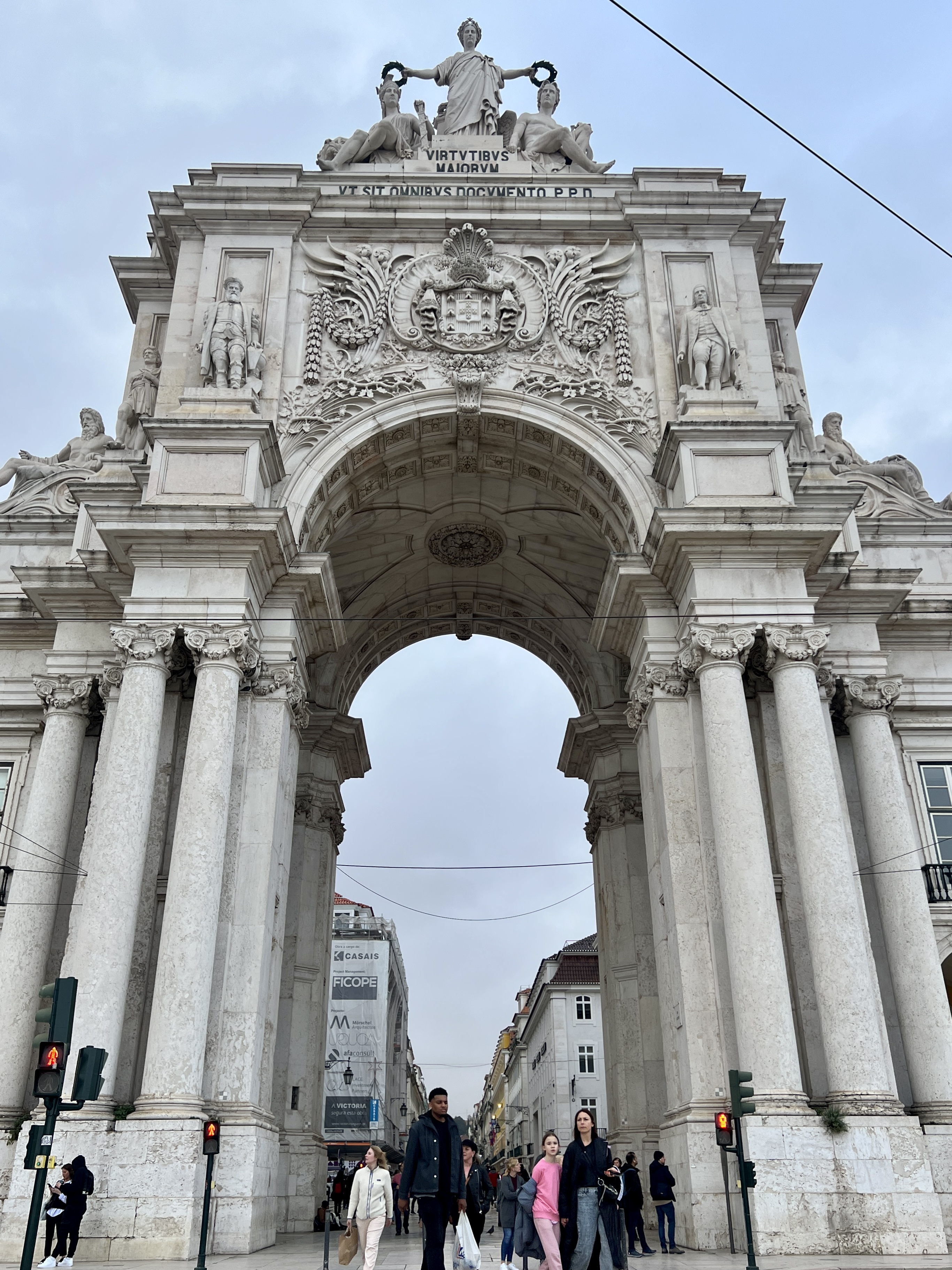
Baixa is the business district of Lisbon. Many Portuguese banks are headquartered here, and there are lots of shops and eateries in the area. The famous Arco Triunfal da Rua Augusta separates and Praça do Comercio and Rossio square. The area is lined with many clothing stores from popular brands.

Chiado is the fashionable shopping district just next to Baixa. Here, you can find high-end department stores and boutiques.
Alfama is the oldest district in Lisbon. This is where you find iconic buildings such as Castelo Sao Jorge, Casa dos Bicos. It’s a fun area to walk around the maze of narrow cobbled streets up the hill where you will have one of the most amazing panoramic views of the city.
Bairro Alto is on the hills and can be reached by trolley cars (Glória Funicular at Liberdade Avenue). It is home to art galleries. Here, there are lots of Fado clubs, antique shops, clubs and bars, making it one of the busiest districts in Lisbon. Note that this area may not be safe at night (known to have drug dealers and addicts hang outside of clubs and bars), so do your visit during daylight.
Belém is in the west of the city and contains some of the finest monuments of Portugal and lots of museums such as the Mosteiro dos Jerónimos and Museu Nacional dos Coches.
Cacilhas is the waterfront district on the southern bank of the Tagus river that offers one of the most beautiful views of Lisbon. It can be reached by riding a ferry from Cais do Sodré station. Upon leaving the ferry station in Cacilhas, you can take a bus to the beaches of Costa da Caparica.
What to do
Ride a Tuk Tuk
A lot of attractions are walking-distance from one another. However, some neighborhoods are further away and can be reached by public transportations. If you don’t have a lot of time or don’t want to walk everywhere, then try one of the Tuk Tuk tours. Our last day was a little wet and cold, so we decided to try out the Tuk Tuk. The ride to our panoramic viewpoint costed only a little less than if we were to take 1-hour tour (€10 vs. €15 per person), so decided to do the tour instead. You can choose to have 1 hour, 2 hours or more tour with the Tuk Tuk, which takes you to several attractions. The tour is flexible; you don’t have to visit all points of interested on the tour, and can spend more time at certain places if you want. As long as your tour finishes within the agreed time frame, you can stretch it however you want. This is especially handy if you don’t want to walk up the hills, or want to visit multiple places quickly. Our friendly Tuk Tuk driver/tour guide was a man from Nepal named Ramish, who could provide as much or little history about the attractions as you like. Note that almost all attractions in Lisbon require a ticket, and your Tuk Tuk tour does not include these tickets.
Ride Tram 28
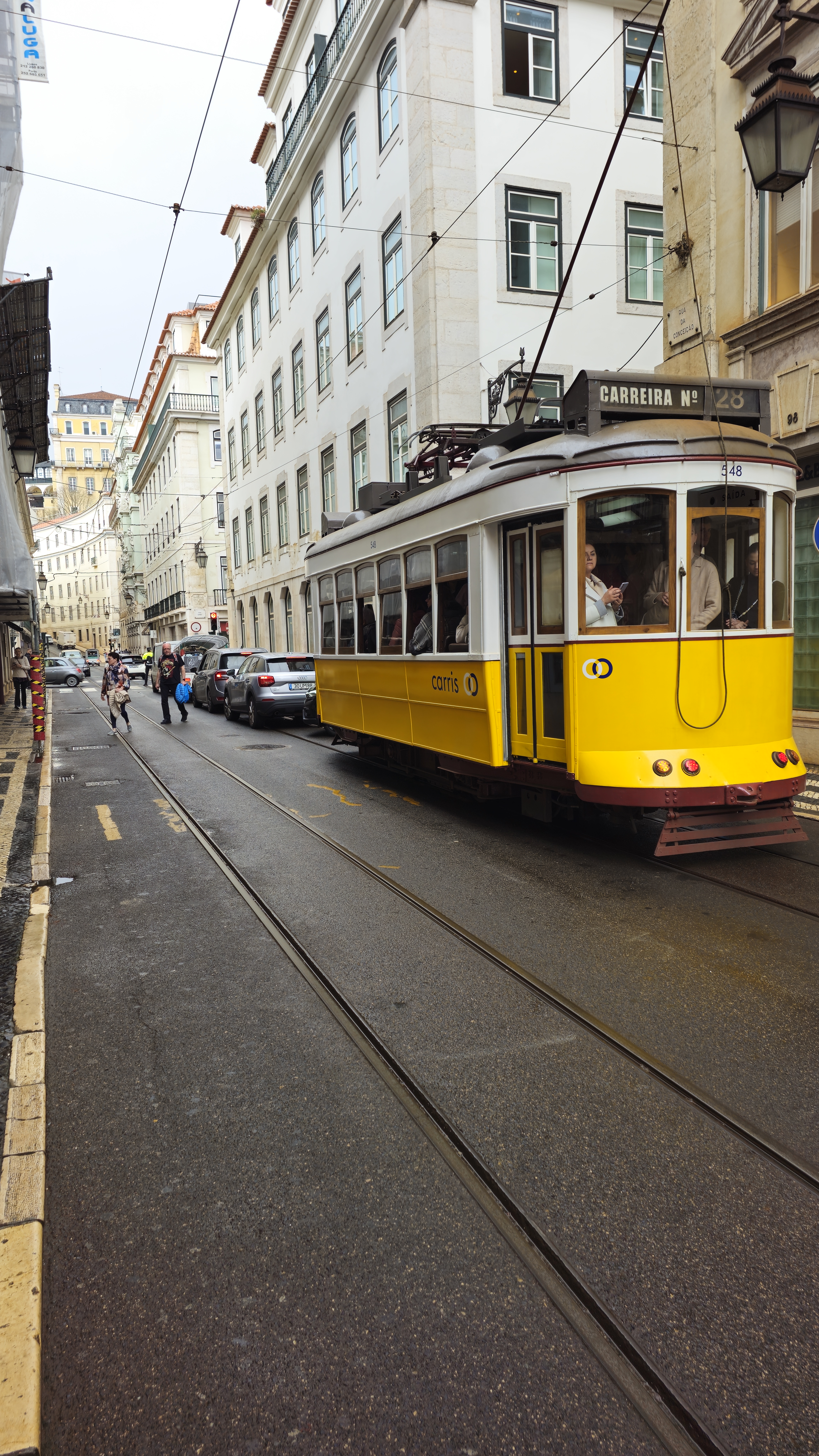
Classic yellow trams retaining original 1930s features like brass dials & polished wood interiors. Tram number 28 passes through many of the most interesting districts of Lisbon, and this section details the main tourist sights along the route. The Tram 28 route is approximately 7 km long and takes about 50 minutes to an hour to travel the entire route. You can get on and off wherever the stops are. You can buy your ticket from the tram driver (cash) or from ticket machine.
We didn’t ride this tram ourselves, but the queue to buy the ticket and get on the tram can be fairly long, so plan accordingly.
Sightseeing
The Great Lisbon Earthquake of 1755 and the tsunami that followed shaped Lisbon to what it is today. The disaster destroyed many landmarks and monuments. King Joseph I launched a massive effort to rebuild the city and reserved the buildings that survived the disaster. As a result, most of the attractions in Lisbon mark traces of this historical natural disaster.
For centuries, the region was ruled by Arabic-speaking Muslims known as Moors. Arabic influence is evidenced in the architecture and style of the historical buildings.
Some attractions to consider:
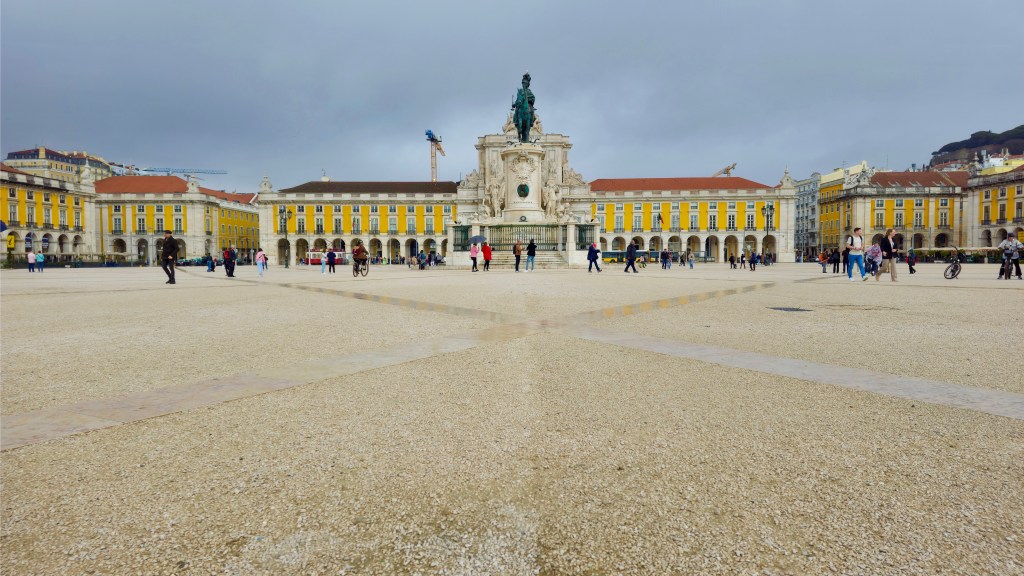
Praca do Comercio – our Airbnb was about 5-min walk away, so it made sense that we visited this largest square in Portugal first. Here, you will find Arco Triunfal da Rua Augusta and the statue of Dom Joseph I. The stone arch was built to commemorate the city’s reconstruction after the 1755 earthquake.
Santa Justa Elevator/Carmo Lift is as the name says, it’s an elevator! What’s significant about this elevator? The top observation deck provides a 360 view of Baixa. It is also the quickest way to travel between lower and upper Lisbon (Baixa and Bairro Alto districts). We passed by but didn’t personally use this lift. The ride requires a ticket, and there was a queue, as expected.

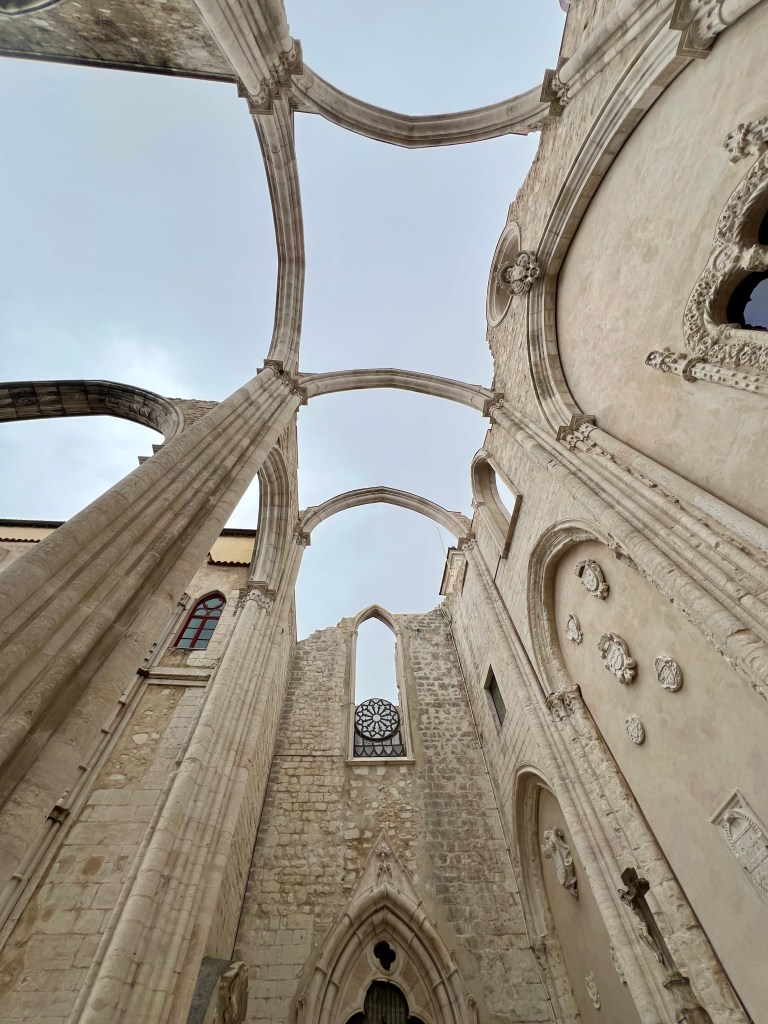
Convento do Carmo is located near Santa Justa Elevator. It was a former Catholic convent and was ruined during the 1755 earthquake; the church on the southern façade of the convent was also destroyed. The visit requires a ticket. The ticket allows you to visit the convent ruins and also the archaeological museum of where the church used to be.

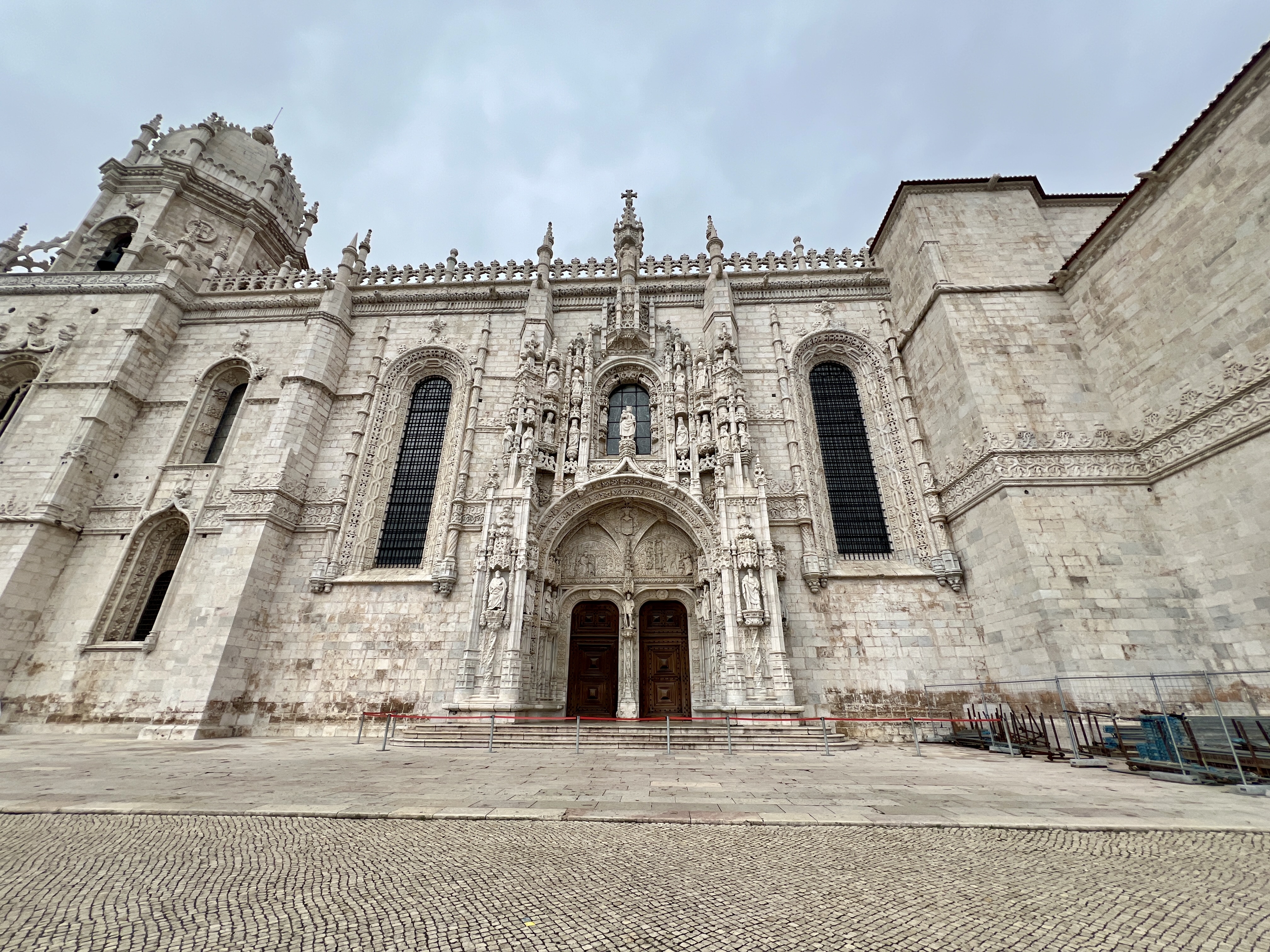
Mosteiro dos Jeronimos is the monastery which is the masterpiece of Portuguese Gothic Manueline style of architecture. The visit to the cloisters requires a ticket. Tickets can be purchased online or at the ticket counter. Note that if you visit as a family, it is cheaper to purchase the family pack, which is only available at the counter, not online. The entrance is controlled to avoid having too many people in the monastery at the same time. So be prepared to queue. When we visited in March, the wait was more than 20 minutes.
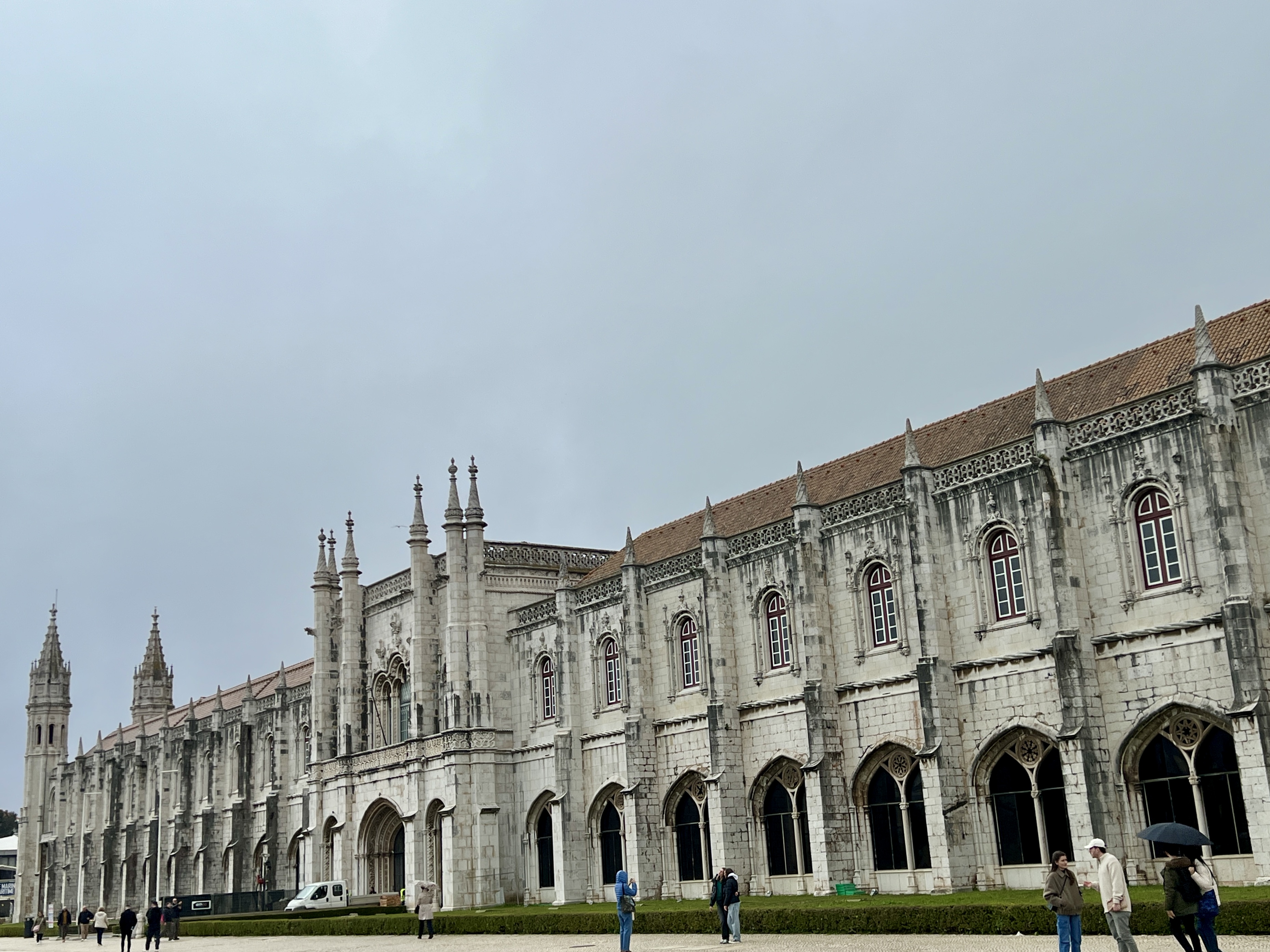
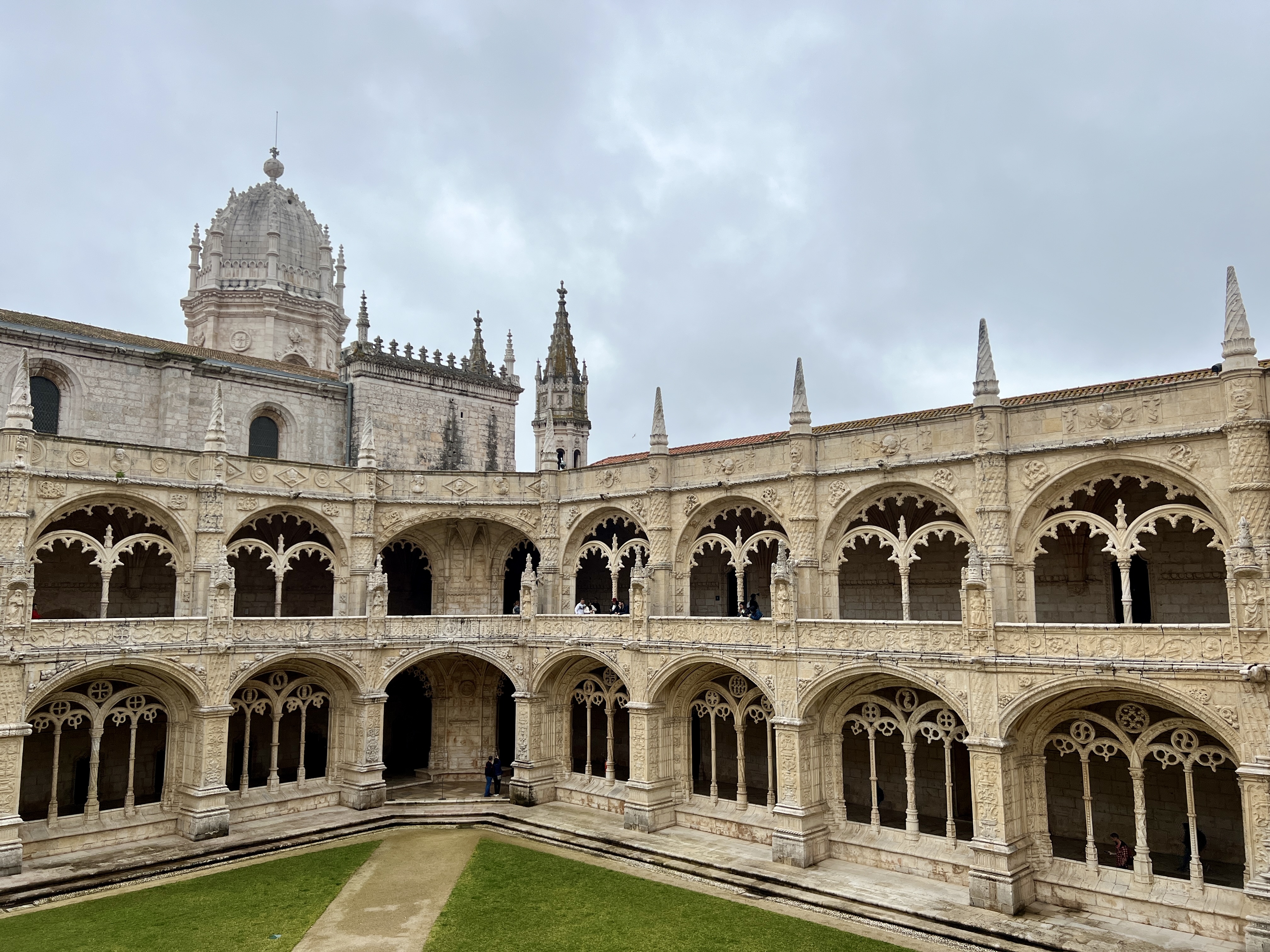
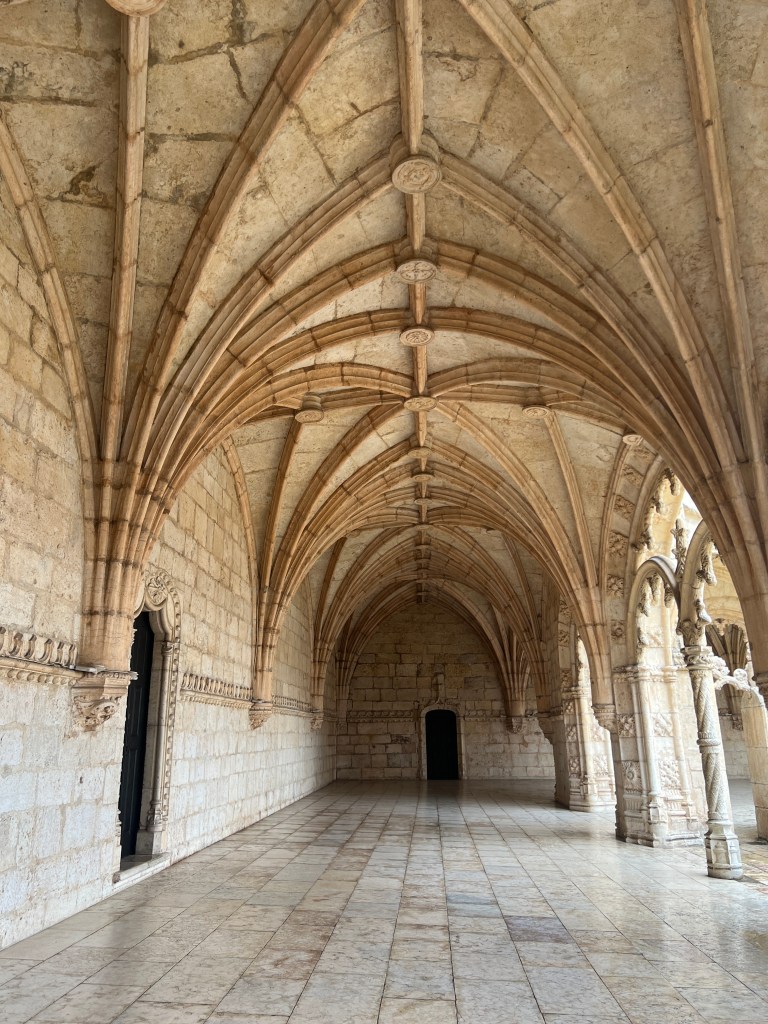
Santa Maria de Belem Church next to Mosteiro dos Jeronimos is free to visit. As with any attraction, there was also a line to get in. However, this line is shorter than of the monastery.
Torre de Belém – while in the area, it’s worthy to visit this 16th-century tower which serves as a monument to Portugal’s Age of Discovery on both land and sea.
Castelo de S. Jorge is situated on Lisbon’s highest hill so it offers a panoramic view of the city. This national monument requires a ticket to enter. Besides the view, there are also gardens to stroll and relax.
Miradouro da Senhora do Monte offers a beautiful panoramic view of Lisbon.
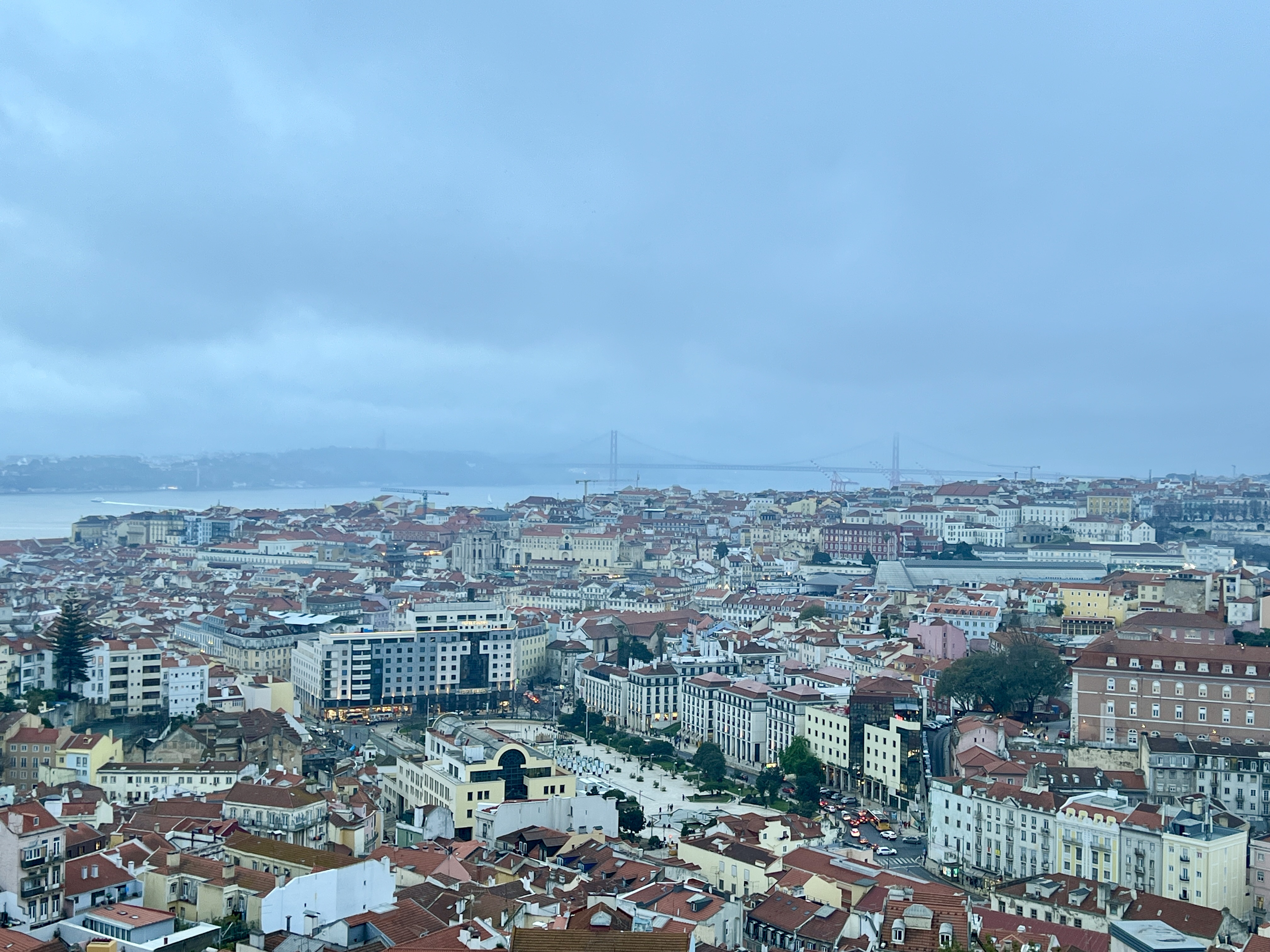
Far away, you can see the Ponte 25 de Abril (25th April bridge).
And to its left is the Sanctuary of Christ the King, a Catholic monument and shrine dedicated to the Sacred Heart of Jesus Christ overlooking the city of Lisbon. It was inspired by the Christ the Redeemer statue of Rio de Janeiro, in Brazil
Ponte 25 de Abril is the longest suspension bridge in Europe. It was renamed after the Carnation Revolution on April 25, 1974. It was designed by the American Bridge Company, also responsible for the San Francisco Bridge, and this is why the 25 de Abril Bridge looks a bit like the Golden Gate.
You can visit the Sanctuary of Christ the King by crossing the 25 de Abril bridge.
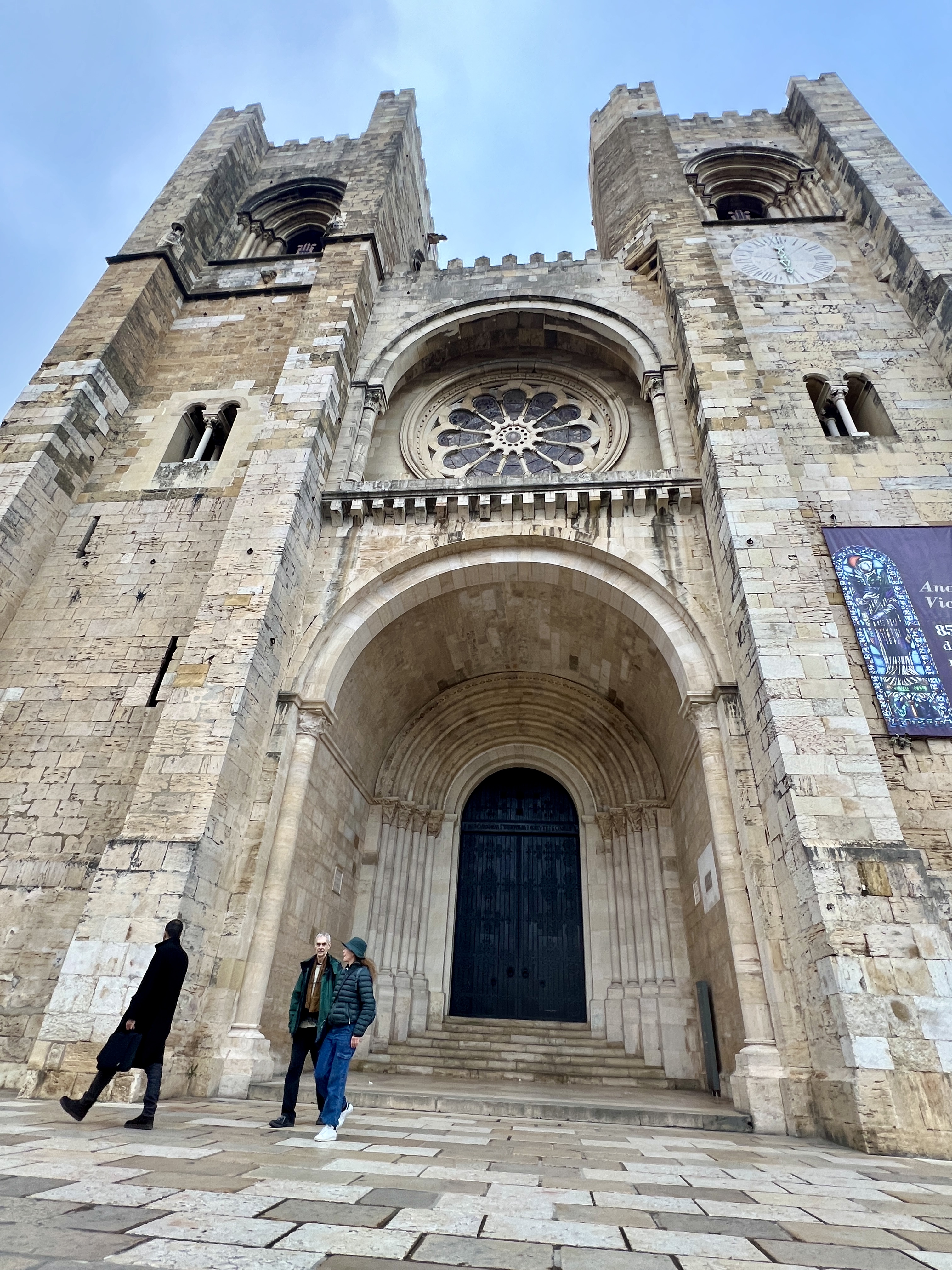
Sé de Lisboa – while in the area, it’s worthy to visit Lisbon Cathedral (The Cathedral of Saint Mary Major), the oldest (Catholic) church in Lisbon built on top of the Roman ruins from the 12th century.
Panteao Nacional – originally the Church of Santa Engrácia converted into a national pantheon in which important Portuguese personalities are buried. Our Tuk Tuk tour guide joked that this will be Cristiano Ronaldo’s second home, since he meets that criteria of being a very important Portuguese figure.

There are a lot more historic landmarks and buildings, but we only got to visit the most iconic ones during our short visit.
Experience Fado music
Fado means “fate”. It is the folk music of Lisbon’s rustic neighborhoods, typically mournful and haunting ballads about broken hearts and bittersweet romance, often involving Portuguese adventurers and the love and families they leave behind. For this reason, Fado music performers are often dressed in black.
Fado performances can often be found in bars and pubs. If you have never experienced a Fado concert, then you should try to see it once when visiting Lisbon. We attended the Fado performance in Porto.
Eat local foods
Part of experiencing a new culture is trying the local foods! Some of our favorites in Lisbon:
Codfish: Portugal is the world’s biggest consumer of cod. Codfish, which earned the nickname of fiel amigo (faithful friend) in Portugal, it’s deeply connected to Portuguese heritage, culture and local cuisine. There are many dishes using cod, even in soups.
Octopus is also popular in Portugal. We didn’t try this dish in Lisbon, but in Porto. The seasoning enhanced the taste of normally bland octopus to another level, and they were the best grilled octopus we have ever tasted.

Grilled sardines is a must-try in Lisbon. Sardines have become a cultural symbol in Portugal (besides the rooster), representing national identity and resilience.
Prego & bifana are local meat sandwiches that you should try if you’re a meat lover. Prego is the beef sandwhich, and bifana is the pork sandwich.
Nata (pastéis de nata) is the Portuguese egg custard tart that you need to try. It tastes similar to the Chinese egg tarts.
Street entertainment
As with many walking cities, you can find street performances at every other corner of the street. Being such a lively city, Lisbon is no different. As we walked around Baixa and Chiado, there were performances of all genres: one-man band playing international favorites, violin music, singing groups, poi fire dancing… Lisbon welcomes travelers from all over the world, so the music being performed are songs in different languages to please everyone in the crowd.
Shopping
Whether you’re trying to take advantage of the tax-refund or hoping to find a special local piece of clothing, or on a hunt for one-of-a-kind souvenir, I believe shopping is part of the travel experience. In Lisbon, the shop are mostly concentrated in the Baixa and Chiado districts. Even if just shopping at international brands like H&M, Zara, you may find styles that are not available in the US or your home country. And if you’re a luxury shopper and especially if you’re a Chanel fan hoping to score a bag overseas to take advantage of the tax refund, then you’ll be disappointed. Chanel has no boutique in Portugal. And up until 2 years ago, Chanel had a shop inside the Stivali Lisboa department store. After the Covid pandemic, Chanel even withdrew from the Stivali. However, there are other boutiques such as Hermes, and Stivali also carries YSL, Prada, Valentino, etc.
As always, if you did not get a chance to shop while in Lisbon, or just want to shop some more, then the shops in the airport are already duty-free you don’t have to deal with tax refund. What I found more interesting at the Lisbon airport comparing to other airports is the consignment shop called PreLoved, a luxury second-hand shop specialized in authentic bags and accessories from leading brands such as Chanel, Hermes, Dior, YSL, etc. Prices are similar to some of the vintage shops that I’ve browsed, minus the tax!

In general, the cost of living in Portugal seems very reasonable. Even for the capital Lisbon, accommodations and prices are not high comparing to other cities in Europe. With beautiful landscapes and interesting attractions suitable for many people, and affordable travel expenses, if Portugal is not on your travel radar, then it should be! If it is your first time in Portugal, then I suggest you visit Lisbon and then do day trips to nearby towns. With mild weather throughout the year, there’s not a wrong time to visit. So pack up and hop over, and let the charming Portugal sweep you away!
Note: All photos used in this article were taken with our phones so the quality is less than ideal. We haven’t had the time to sort through the photos from our camera, but I couldn’t wait to write about Lisbon, so I sacrificed the photo quality.




 Making Memories
Leave a comment