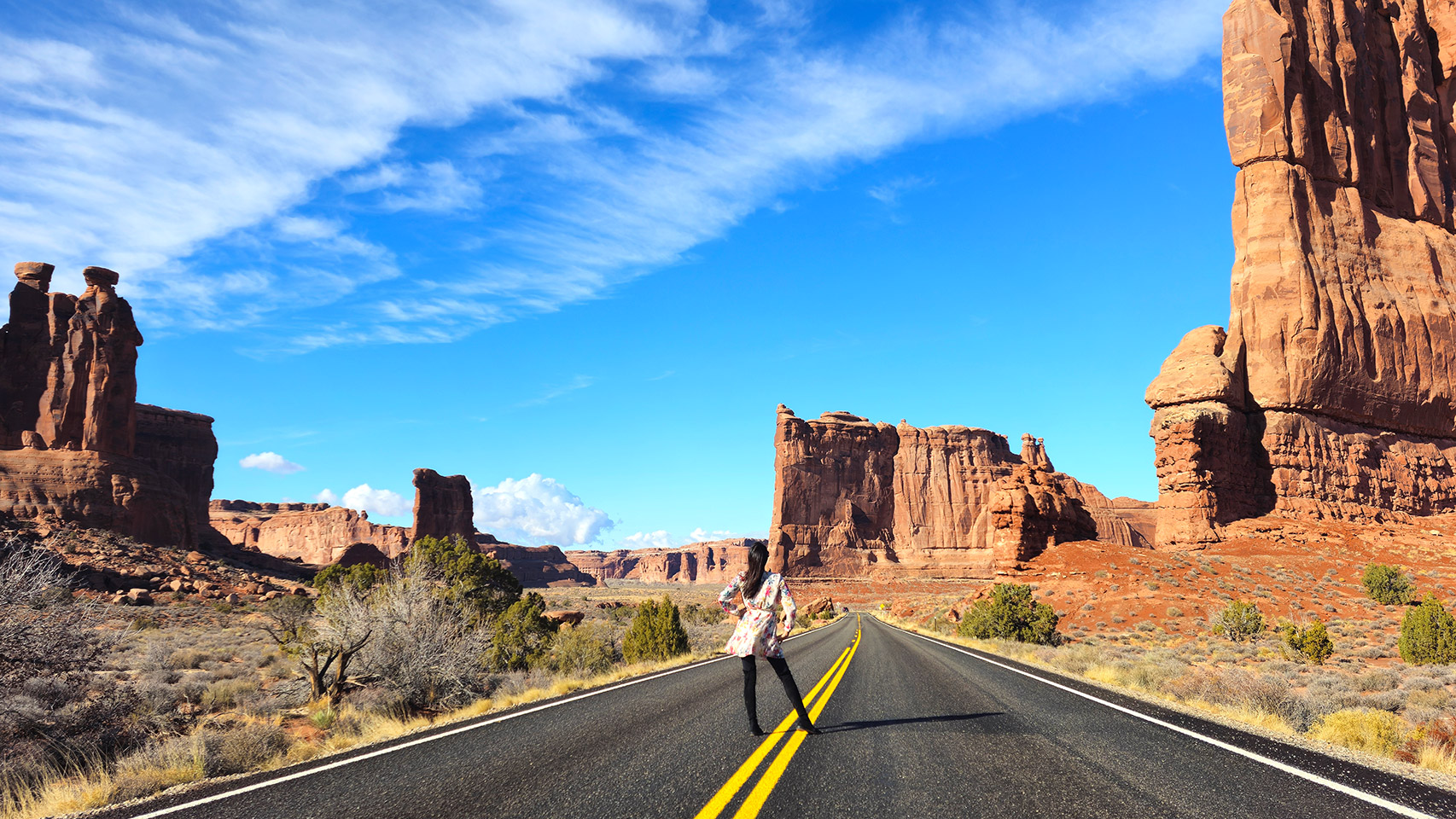
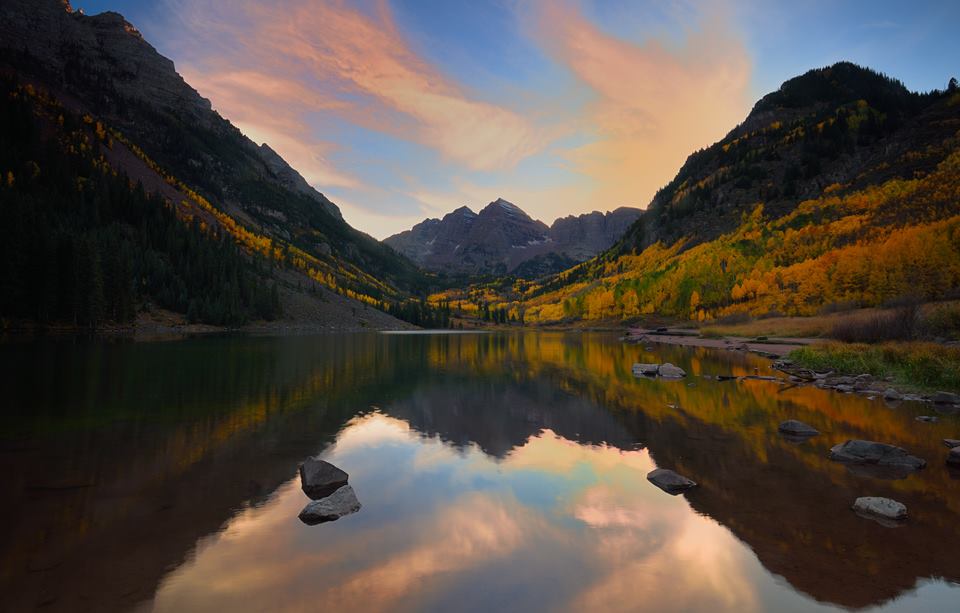
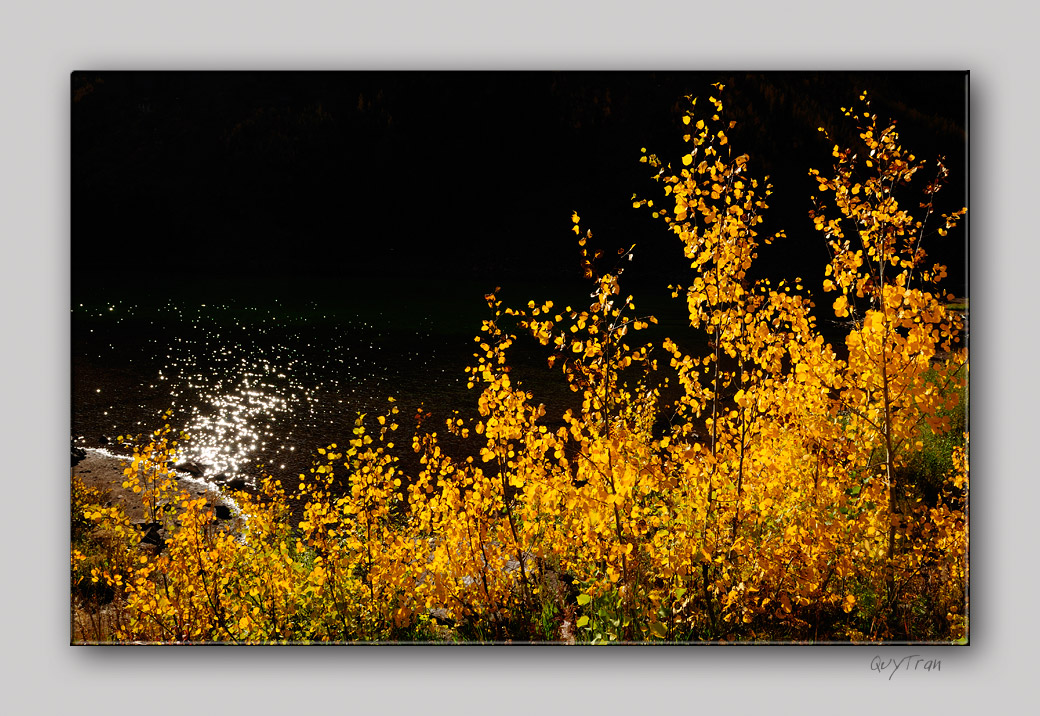
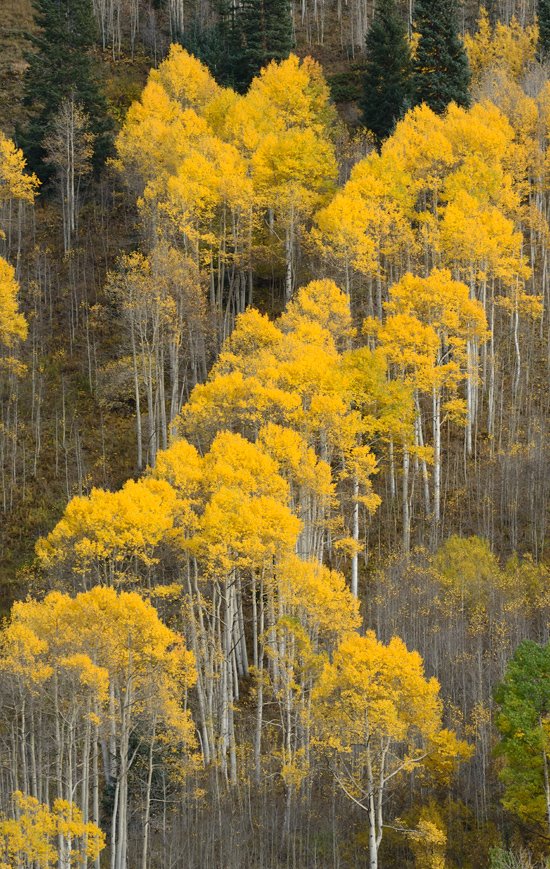
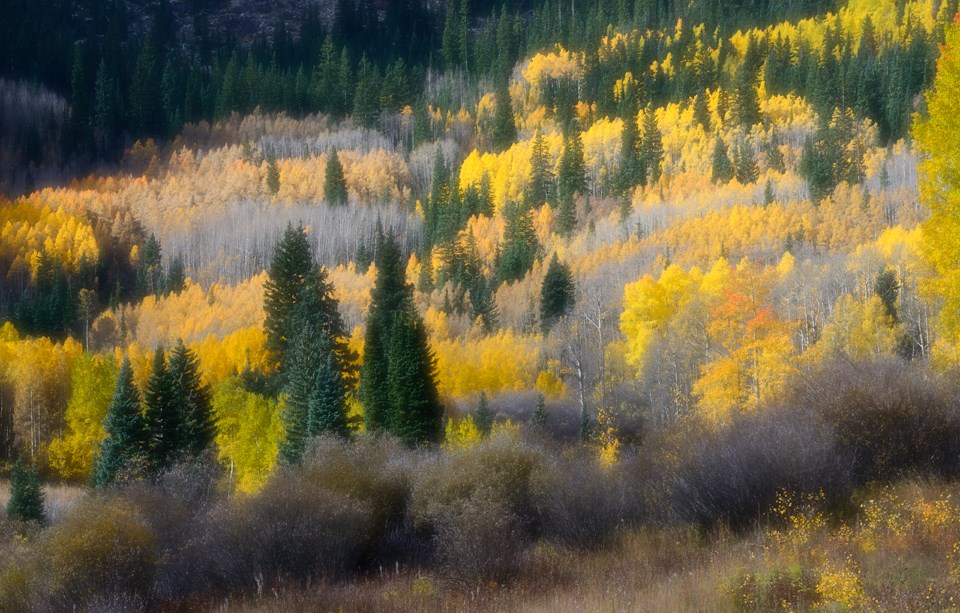
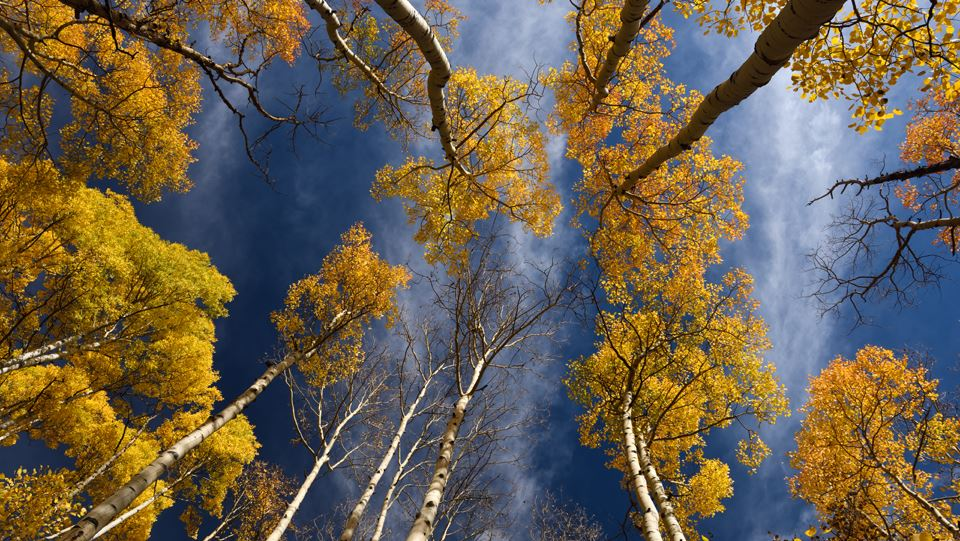
Lies within the White River National Forest, Aspen is a well-known skiing destination. Named for the local stands of Aspen trees in the area, Aspen in the Fall is mesmerizing with the abundance of Aspen trees in white bark and vibrant yellow leaves. Of course if you’re a skiing enthusiast, then late Autumn or Winter would be the better time to visit. However, if you love the beautiful Autumn foliage, then Aspen is a not-to-miss destination of the season!
Even though it varies each year based on weather and elevation, Autumn foliage takes over in Aspen around mid-September and lasts until early November. However this year due to the heat wave, it seems Autumn foliage is a little late this year. If you follow my Facebook, then you would know that we just visited Aspen 2 weeks ago, and majority of the Aspen trees are still very green. But honestly, the scenery is beautiful in any season. I especially love Autumn and the uniqueness of Aspen trees. Therefore, I will only share my experience when visiting in the Fall.
How to get there?
With fewer direct flights (and mostly more expensive), Aspen/Pitkin County Airport (ASE) is just 3 miles from downtown Aspen (in our more recent trip to Aspen, our hotel was 3 minutes away from this airport!) The other more popular option is to fly into Denver International Airport (DEN), which is about 3.5 hours away from Aspen by car. There are more (direct) flights into Denver, and airfare is much cheaper. The drive from Denver to Aspen is beautiful with a few stop-worthy destinations, so I think it’s worth the 3.5 extra hours.
Transportation
Car
Of course having a car to explore on your own is the most convenient option. Car requirement depends on the season you’re visiting. If you are visiting from mid-Autumn to early Winter, then renting a 4WD/AWD is a must because the mountain roads are even more dangerous in icy or snowy weather. If you visit during the Winter, then consider adding chained tires for safety.
Note there are areas along the route where there’s no phone service. Especially when driving during the inclimate weather, you should prepare an Emergency Kit (with things such as warm clothes and/or blankets, dry goods/food, flash light, etc.) just in case a sudden snow storm occurs and you’re stranded on the road. And due to lack of phone service, it is advised to preload an offline map to your phone.
Amtrak
If you don’t want to drive long distance or not comfortable driving on mountain roads, then using Amtrak is another option. Actually, Amtrak does not go directly to Aspen. From Denver, you can take Amtrak to Glenwood Spring. And from Glenwood Springs, take the RFTA bus to Aspen.
Bus
The slowest option to get to Aspen is by bus. If you have time, then the riding the bus would allow you to look at the scenery on the way. Amtrak runs too fast for you to see anything! From Denver’s Union Station, board the CDOT Westline bus to Glenwood Spring’s Westwood Park and Ride. From there, take the L bus to Aspen.
The Road to Aspen
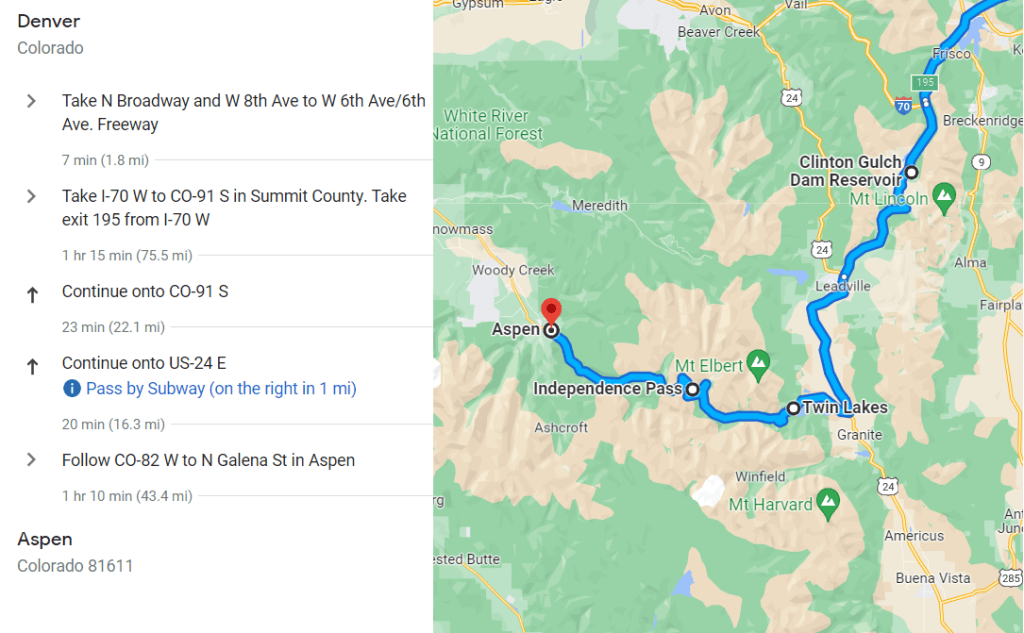
As previously mentioned, if you fly into Denver, then the drive to Aspen is very enjoyable. There quite a few picturesque stops along the way. If following this route from Google Map, then you’ll pass by the destinations below.
Clinton Gulch Dam Reservoir
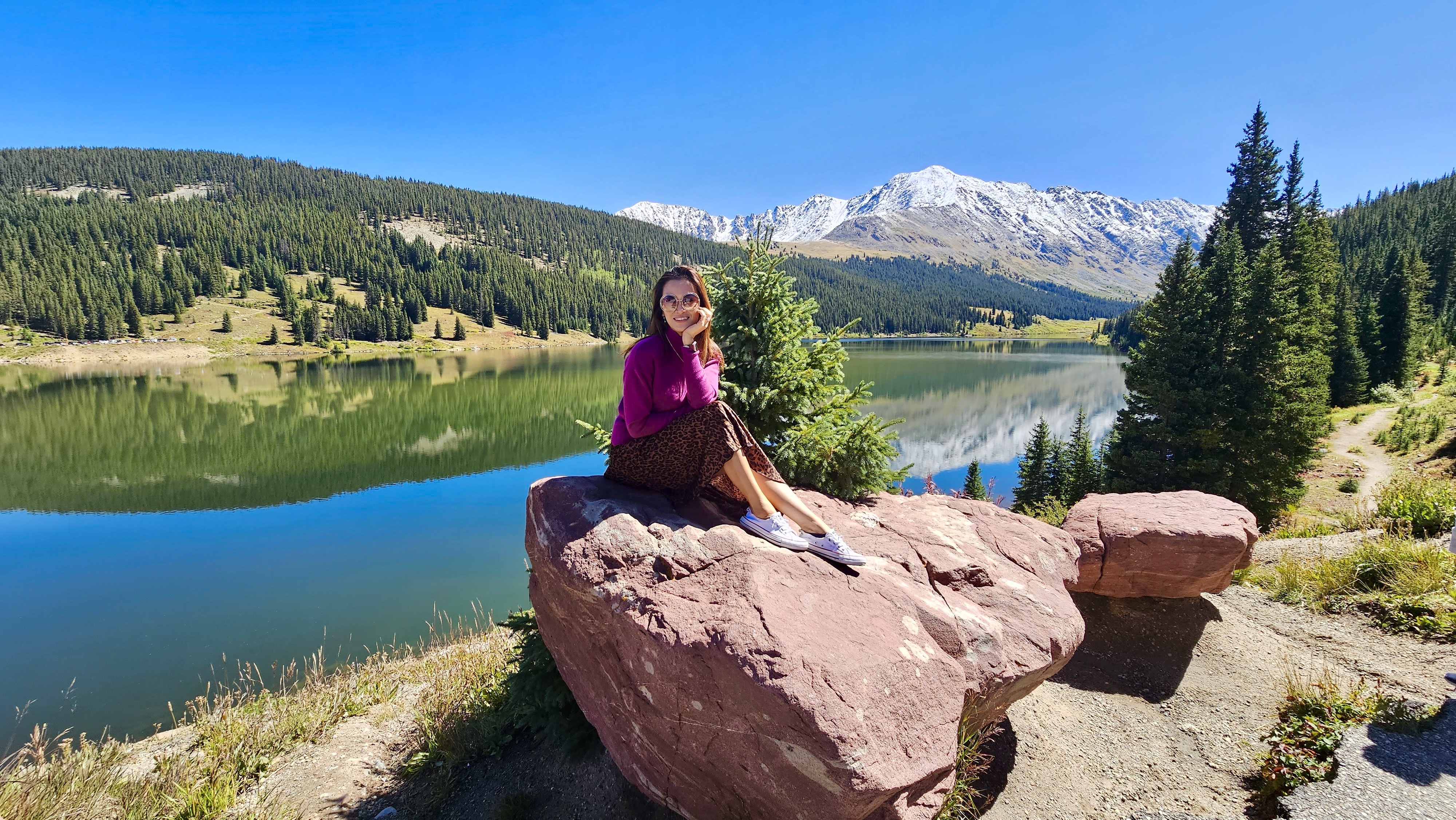
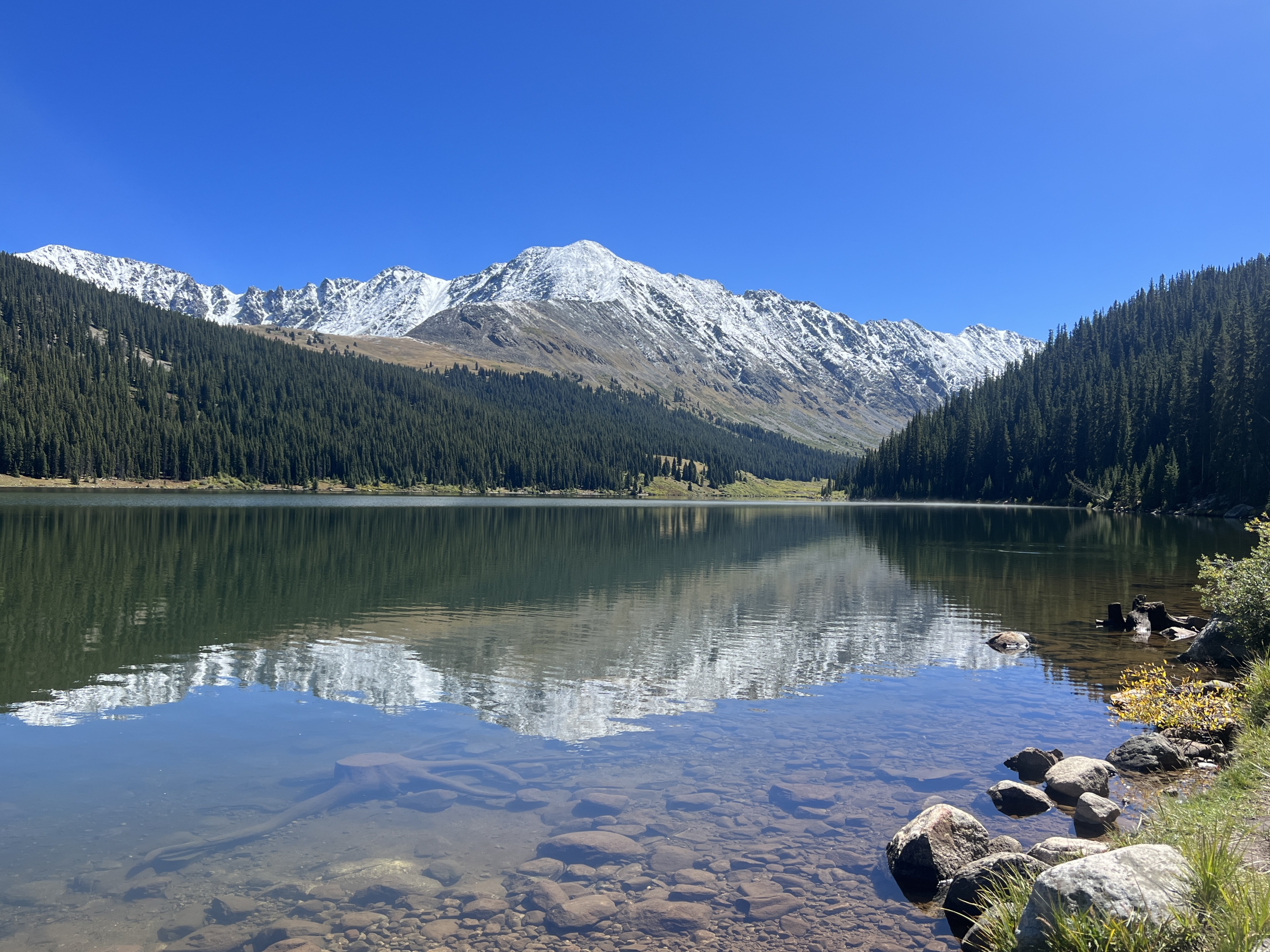
About 1.5 hours of driving pass Denver, you see this reservoir from the state highway CO-91 S, near Leadville. There’s a spacious and free parking area here. Surrounding the reservoir is the mountain range with the same name Clinton Peak.
- Fishing and hiking are the two common activities to do here. Note that a fishing permit provided by the state of Colorado is required, and you must of at least 16 years old. In the Winter, you are also allowed to do ice fishing.
- The 2.4-mile hiking trail around the reservoir to enjoy the scenery and the seasonal wild flowers, is easy to do.
Twin Lakes
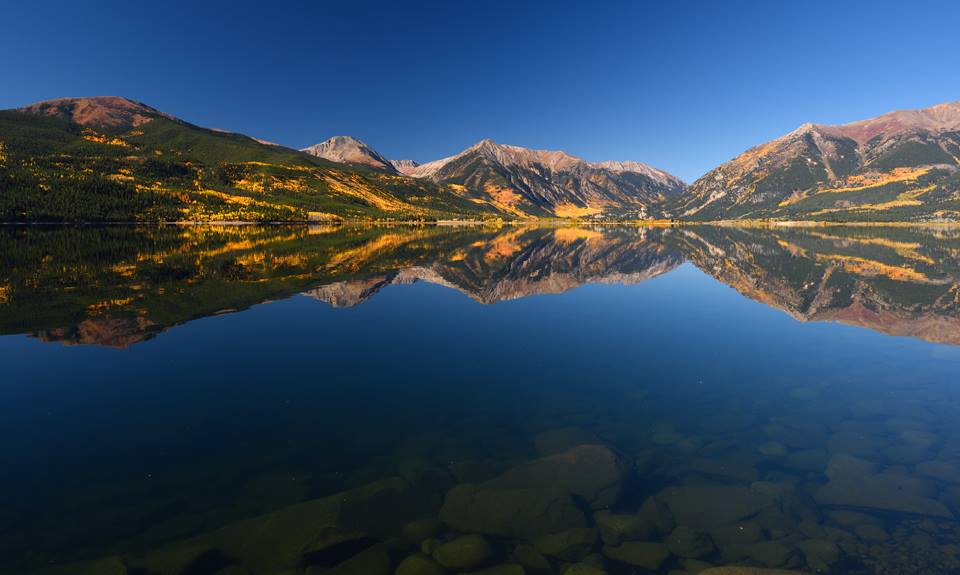
Just one hour from Aspen, as soon as your exit to CO-81 W from US-24 E, you will see Twin Lakes. The name is coined from the fact that the two lakes are connected. The glacier water in the lake is fed from the surrounding mountains.
A few activities to do here include kayaking, canoeing or paddleboarding; hiking to Elbert mountain; or either hiking or biking to Colorado Trail and Continental Divide Trail/Independence Pass. In the Winter, of course skiing the popular sport to do here.
There are a few little stores, inns, and a food trucks to serve the small community at Twin Lakes. If you want to spend more time at Twin Lakes, then another option is to stay in Leadville, where there are more convenience to meet your needs.
Independence Pass
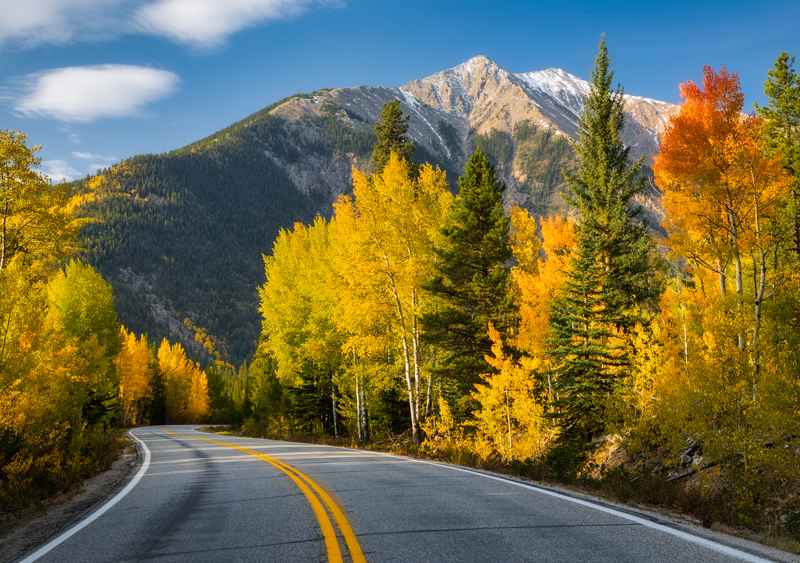
From Twin Lakes to Aspen, you will pass by an area on CO-82 with beautiful mountainous sceneries. Stretched along about 32 miles of winding roads, Independence Pass connects Twin Lakes an Aspen. There are many photo-worthy views along the route, as well as trail heads to beautiful hiking trails.
Note that the road is closed from beginning of November throughout the Winter for safety reasons. The road is open again at the end of May. Even though it would already be the end of Spring, there could be unexpected snow storms. So the safest time to visit would be from Summer to mid-Autumn (end of October).
Aspen
Maroon Bells
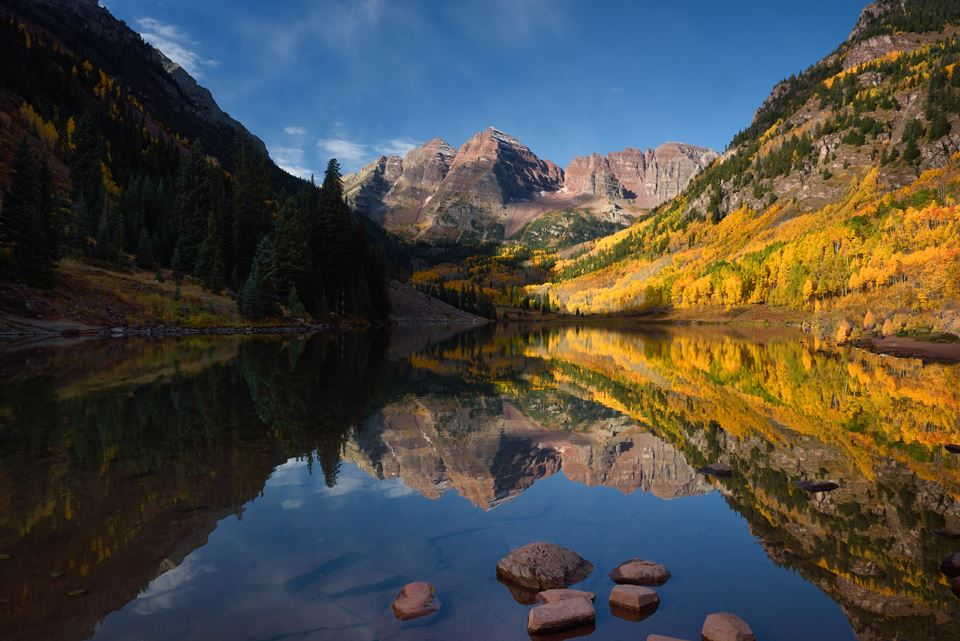
The number one place to visit in Aspen is Maroon Bells. Named for the twin peaks in the Rocky Mountain National Park, Maroon Bells are one of the most photographed mountain settings in North America. The reflection of their majestic peaks on Maroon Lake is postcard-worthy, even more so during Autumn when the already beautiful scenery is enhanced by the vibrant Aspen trees.
The park’s breathtaking beauty is ideal for landscape photography and hiking. And of course to emerge yourself with nature as well as being able to see the first and last light, it is recommended that you camp here. There are numerous hiking trails in Maroon Bells. Note that the mountain is true to its name, Rocky Mountain. The hiking trails are mostly rocky, so be sure to equip yourself with proper hiking shoes. Some of the popular hiking trails are:
- Maroon Lake Trail is very easy, only about 1 mile long. Along the trail, there are forks to other trails.
- Maroon Bells Scenic Loop Trail is about 1.5 miles long, and fairly easy. However, the trail isn’t flat like the Maroon Lake trail. There are rocky parts and a slight change in elevation.
- Maroon-Snowmass Trail to Crater Lake is 3.6 miles long. Comparing to the 2 previous trails, this trail is much harder. Almost the entire trail is very rocky. And even though the ascending is not steep, you will experience high elevation going up and of course the opposite going down. Having hiking sticks would be helpful on this hike. It is definitely more tiresome going up, but the returning hike had me more alert because the descending could be slippery due to the rocky surface. We had a 6-year-old with us (who has hiked more than 8 miles on more flat-surface trails just 2 months prior), and he was fine, although we had to take more stops.
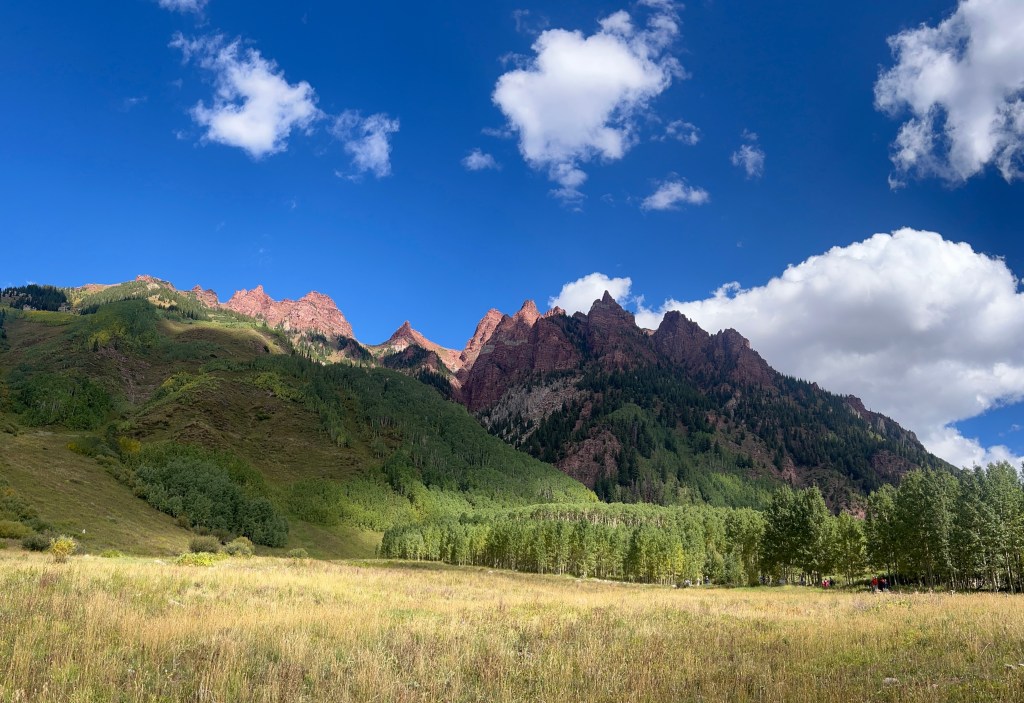
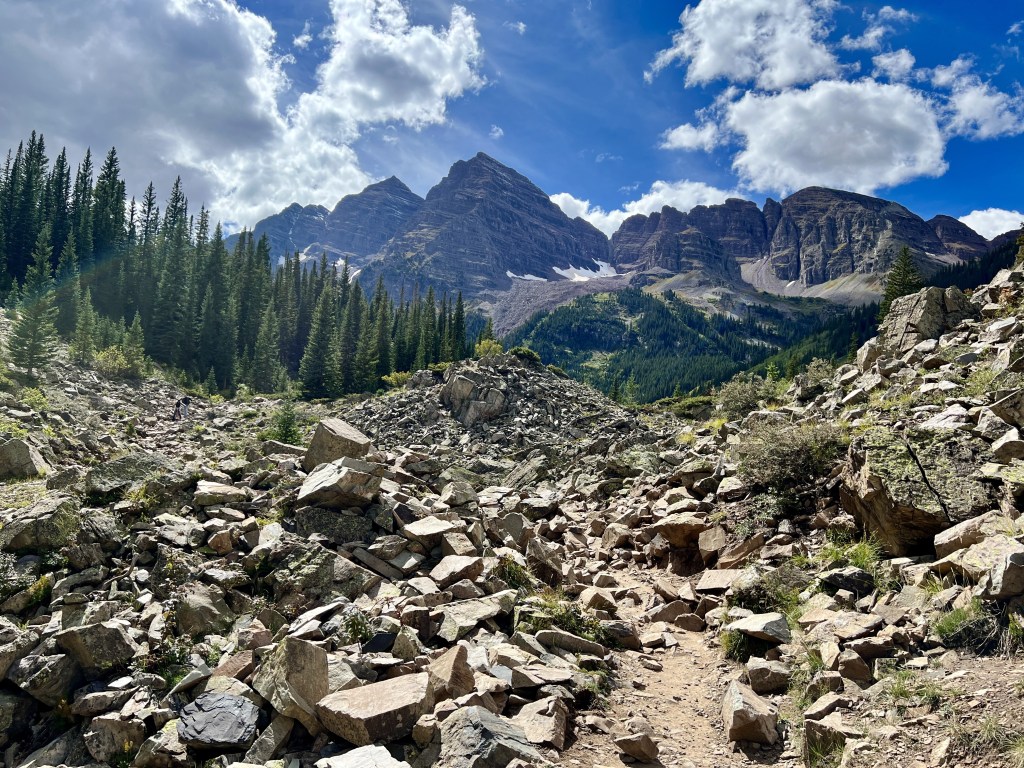
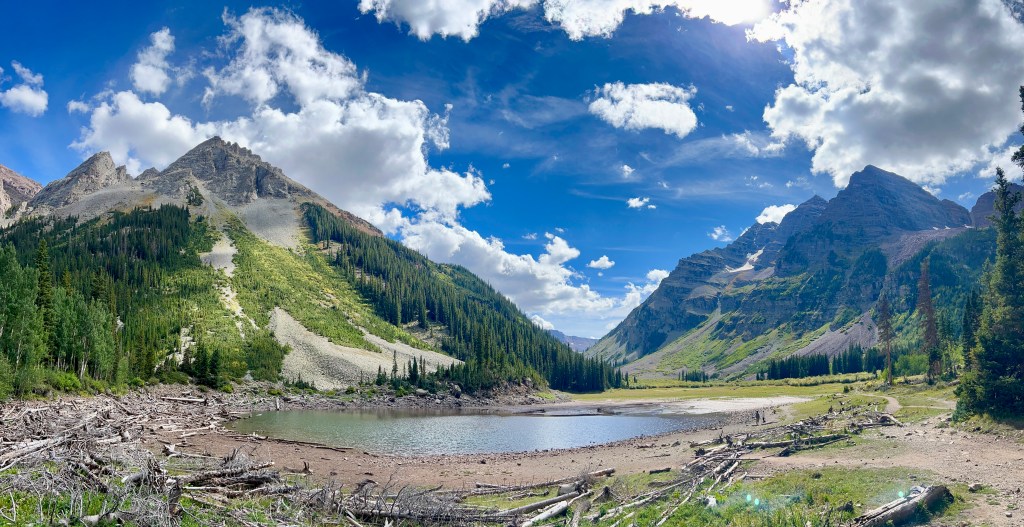
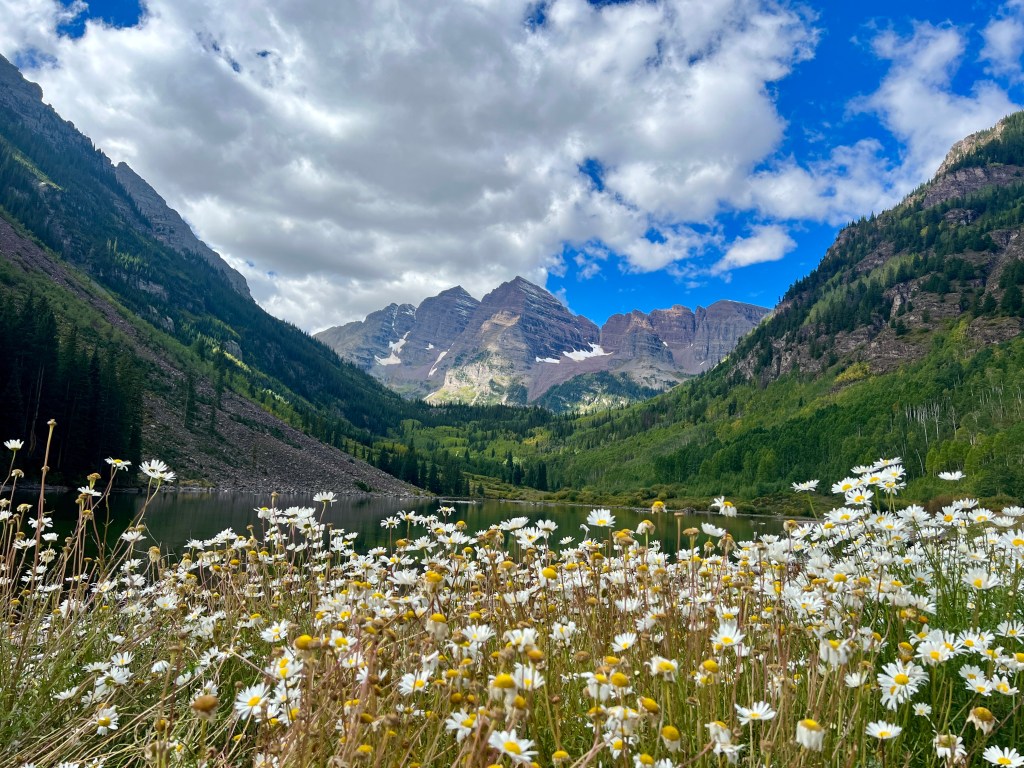
If you’re not an experienced hikers, then the 3 hiking trails above are enough to fill your day. On the difficulty scale, they are easy to moderate, so they are suitable for the entire family. The Maroon Lake Trail is suitable for everyone, young or old, because it’s just like a walk in the park. The Scenic Loop Trail does require more mobility. And only do the trail to Crater Lake if you don’t mind walking on rocky surface the entire hike – not recommended for people with back pain.
Be sure to reserve enough time for the trip back, or if you need more breaks during the hike. For example, the park ranger told us the hike to Crater Lake would take about 1 hour. But in reality, it took our family 2 hours to the lake, and 2 hours back, because the hike was so rocky and elevated so we had to take more breaks.
If you are a more experienced hiker or if you have better physique, then the following more difficult trails may provide more challenge and fun for you:
- Willow Lake Trail – Following the trail to Crater Lake until you get to the fork with a sign that splits out the routes to Crater Lake and Maroon-Snowmass Trail. The route from there will be more strenuous with steep climbs. After that, you will see the sign toward Maroon-Snowmass and Willow Lake Trail. Follow the direction up to the peak of Willow Pass, then you will descend toward Willow Lake. The trail is about 6.5 miles and considered to be very difficult.
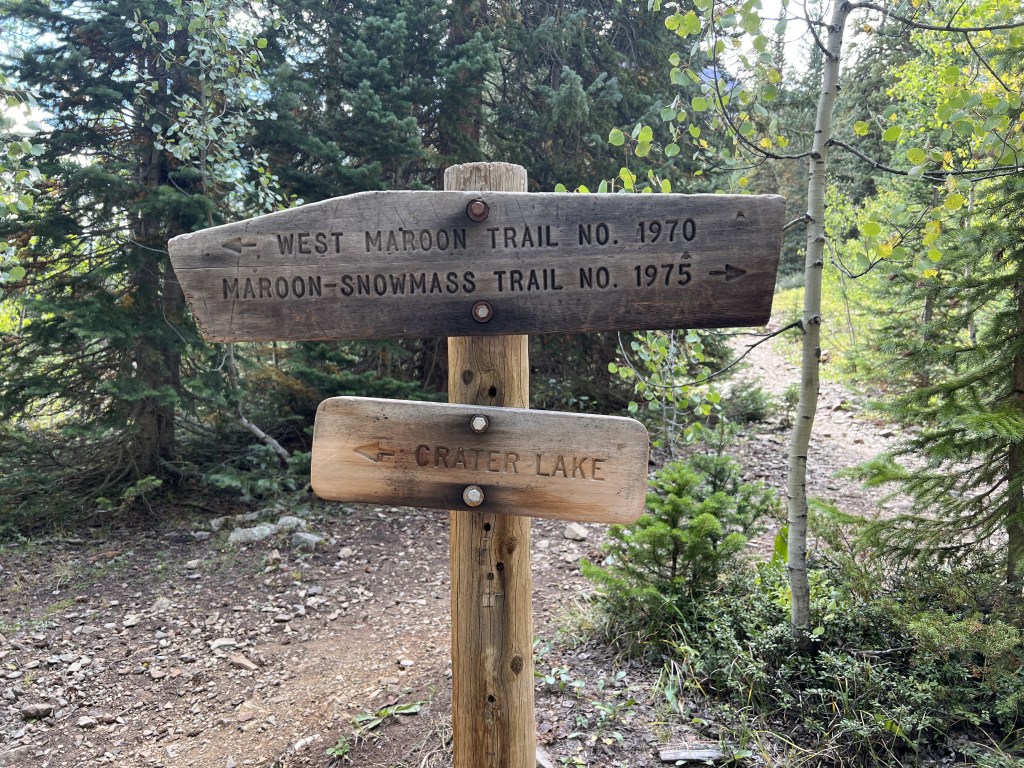
- Buckskin Pass is in the same direction as Willow Lake trail. But at the fork where it splits right to Maroon-Snowmass and Willow Lake, take a left toward Buckskin Pass. The trail is 4.6 miles and also very difficult.
- East Maroon Trail is about 10 miles long. The hike is moderate, but you need to be able to endure the long distance and reserve enough time for the return trip.
- West Maroon Pass is more difficult than the East Maroon Trail. It is also about 10 miles long, but the elevation is almost twice as high as the East Maroon Trail. It can be quite slippery if wet (due to rain or snow).
Visiting Maroon Bells

You are not permitted to freely enter Maroon Bells. There are 3 ways to visit:
- By car – from May 15 to October 31, it is required to reserve for a parking permit. If you do not have a parking permit, then you are not allowed to enter the park. There are designated time for the permit, and you’re only allowed to enter the park within the hours you have reserved. There are permits for daytime (from midnight to 4:30pm), nighttime (from 5pm to midnight), or for 2 nights (from 6am until 6pm the next 2 days – total of 60 hours). Reservations can be made on the website of Aspen Chamber.
- By shuttle – from Aspen Highlands Village, the ride is about 30 minutes to Maroon Bells. From 7am until 3pm, there are reservations for every 15 minutes. Reservations can be made online. The confirmation e-mail is not your ticket. You need to arrive at Aspen Highlands Village about 45 minutes before your reserved time to find parking (not free) and also to pick-up your tickets. If you do not pick up your tickets 15 minutes before departure time, then your tickets will be given to guests on stand-by.
There are no stores nor restaurants in Maroon Bells. So to save time and spare yourself from inconvenience of riding the shuttle back and forth, pack lunch and snacks with you. Find a resting spot to enjoy lunch while admiring the surrounding scenery. - By reserving a campsite – in the case where you don’t want to camp in Maroon Bells, but failed to reserve for a parking permit or shuttle tickets, then reserving for a campsite is another option. With a campsite reservation, you can enter Maroon Bells anytime during your reserved dates.
Snowmass
Only 6 miles from Aspen, Snowmass is a popular skiing destination. There’s a Snowmass Village with resorts, shopping mall and restaurants to serve visitors. Besides skiing, you can try mountain-biking. If you visit during Summer, then The Lost Forest is filled with outdoor activities for the entire family to enjoy. If you feel adventurous and don’t mind the height, then Hot Air Ballooning could be a new activity to try. No one in my family are skiers, so I didn’t do much research on skiing. If interested, you can do more research on Snowmass’ website.

There are many picture-perfect destinations in Colorado, especially for Autumn foliage viewing. The areas surrounding Aspen are also gorgeous; however in this post, I wanted to focus on Maroon Bells and the stop-worthy spots along the route from Denver to Aspen. 2 weeks after our last visit, as I am writing these words, the entire Aspen town is painted yellow. With the Summer heat wave, Fall foliage peak was delayed. But this is actually an advantage if you have not planned your Fall travel! Plan a visit to Aspen to experience slow, carefree days, and to admire the colorful changes of the season.
 Making Memories
Leave a comment